


What makes a human different from a chimp? Researchers from the European Molecular Biology Laboratory's European Bioinformatics Institute [EMBL-EBI] have come one important step closer to answering such evolutionary questions correctly. In the current issue of Science they uncover systematic errors in existing methods that compare genetic sequences of different species to learn about their evolutionary relationships. They present a new computational tool that avoids these errors and provides accurate insights into the evolution of DNA and protein sequences. The results challenge our understanding of how evolution happens and suggest that sequence turnover is much more common than assumed.

| Environment | June 19, 2008 08:48 PM |
The plant, Kalanchoe fedtschenkoi, is unique because, unlike normal plants, it captures most of its carbon dioxide at night when the air is cooler and more humid, making it 10 times more water-efficient than major crops such as wheat. Scientists will use the latest next-generation DNA sequencing to analyse the plant's genetic code and understand how these plants function at night.
| Full story | 0 Comments | 8370 views |

| Biology | June 19, 2008 08:48 PM |
Krakow/Halle. Major Histocompatibility Complex (MHC) genes produce proteins that are crucial in fighting pathogen assault. Researchers from the Jagiellonian University in Krakow and from the Helmholtz Centre for Environmental Research (UFZ) characterized genetic variation and detected more than one MHC class II locus in a tailed amphibian. Unlike mammals, not much has been known until now about the immune defence of amphibians. Globally, amphibian populations are in an unprecedented decline, to a considerable extent caused by rapidly spreading infectious diseases, such as the fungal infection Chytridiomycosis.
| Full story | 0 Comments | 7462 views |
| Biology | June 19, 2008 08:48 PM |
A historic meeting next week may decide the fate of tuna in the Eastern Pacific Ocean, one of the world's most important marine resources.
| Full story | 0 Comments | 9812 views |

| Microarray | June 19, 2008 08:48 PM |
Gene-expression data from liver tissue or whole blood can be used to classify histopathologic differences in the effects of hepatotoxins. It is hoped that these findings, published in BioMed Central's open access journal, Genome Biology, will lead to a more precise way of defining the potential hepatotoxicity of new compounds.
| Full story | 0 Comments | 10594 views |

| Microbiology | June 19, 2008 08:48 PM |
Yale University researchers have shed new light how bacteria like the ones that cause Legionnaires' disease and Q-fever raise such havoc in human patients.
| Full story | 0 Comments | 6294 views |

| Molecular & Cell Biology | June 19, 2008 08:48 PM |
UCLA cellular neuroscientists are providing new insights into the mechanisms that underlie long-term memory — research with the potential to treat long-term memory disorders.
| Full story | 0 Comments | 5861 views |
| Microbiology | June 19, 2008 08:48 PM |
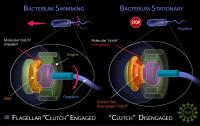
Scientists have learned a tiny molecular clutch disengages the flagellum's tail from the engine that powers its rotation. To see the full image, click the link below. A tiny but powerful engine that propels the bacterium Bacillus subtilis through liquids is disengaged from the corkscrew-like flagellum by a protein clutch, Indiana University Bloomington and Harvard University scientists have learned. Their report appears in this week's Science.
| Full story | 0 Comments | 5913 views |

- In some genetic cases of microcephaly, stem cells fail to launch
- Yale team discovers how Zika virus causes fetal brain damage
- Scientists uncover the way a common cell enzyme alerts the body to invading bacteria
- Arctic gives clues on worst mass extinction of life
- Calcium channel blockers caught in the act at atomic level
Search Bio News Net
Free Biology Newsletter
- Flexibility That A.C.A. Lent to Work Force Is Threatened by...International Herald Tribune
- Bacteria Behind Legionnaires’ Disease Found at New York Police StationInternational Herald Tribune
- Prescription Price Crisis? 28 Million Americans See Spike in Drug...MSNBC.com: Health
- Seizing on Opioid Crisis, a Drug Maker Lobbies Hard for...International Herald Tribune
- Republicans are taking a big political risk on health careAP Health News
- Why We're So Divided Over Saving WolvesNational Geographic News