


Indigenous peoples have contributed the least to world greenhouse gas emissions and have the smallest ecological footprints on Earth. Yet they suffer the worst impacts not only of climate change, but also from some of the international mitigation measures being taken, according to organizers of a United Nations University co-hosted meeting April 3 in Darwin, Australia.

| Molecular & Cell Biology | April 2, 2008 10:05 PM |
Reshaping of the DNA scaffolding that supports and controls the expression of genes in the brain may play a major role in the alcohol withdrawal symptoms, particularly anxiety, that make it so difficult for alcoholics to stop using alcohol.
| Full story | 0 Comments | 7925 views |

| Biology | April 2, 2008 09:05 PM |
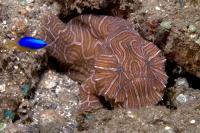
The leglike pectoral fin for walking is the clue that this newly found fish is an anglerfish, even though it does not have a lure on its head for attracting... A fish that would rather crawl into crevices than swim, and that may be able to see in the same way that humans do, could represent an entirely unknown family of fishes, says a University of Washington fish expert.
| Full story | 0 Comments | 6314 views |

| Biotechnology | April 2, 2008 08:05 PM |
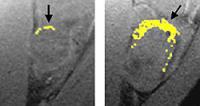
A tumor treated with fumagillin nanoparticles (left) is smaller than an untreated tumor. Nanoparticles containing an image-enhancing metal (yellow) show that the treated tumor has much less blood vessel growth than the untreated tumor. Credit: Washington University School of Medicine Anyone facing chemotherapy would welcome an advance promising to dramatically reduce their dose of these often harsh drugs. Using nanotechnology, researchers at Washington University School of Medicine in St. Louis have taken a step closer to that goal.
| Full story | 0 Comments | 7346 views |

| Health & Medicine | April 2, 2008 07:05 PM |
Researchers at Johns Hopkins, as part of a large, multi-institutional study, have found one gene variant that is linked to an increased risk of lung cancer. The study will be published in the April 3 issue of Nature Genetics.
| Full story | 0 Comments | 7335 views |
| Molecular & Cell Biology | April 2, 2008 06:05 PM |
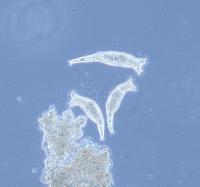
The bdelloid rotifer Philodina roseola. Bdelloids live in ephemeral aquatic habitats, such as temporary freshwater pools. Birds and bees may do it, but the microscopic animals called bdelloid rotifers seem to get along just fine without sex, thank you. What’s more, they have done so over millions of years of evolution, resulting in at least 370 species. These hardy creatures somehow escape the usual drawback of asexuality – extinction – and the MBL’s David Mark Welch, Matthew Meselson, and their colleagues are finding out how.
| Full story | 0 Comments | 7959 views |

- In some genetic cases of microcephaly, stem cells fail to launch
- Yale team discovers how Zika virus causes fetal brain damage
- Scientists uncover the way a common cell enzyme alerts the body to invading bacteria
- Arctic gives clues on worst mass extinction of life
- Calcium channel blockers caught in the act at atomic level
Search Bio News Net
Free Biology Newsletter
- Flexibility That A.C.A. Lent to Work Force Is Threatened by...International Herald Tribune
- Bacteria Behind Legionnaires’ Disease Found at New York Police StationInternational Herald Tribune
- Prescription Price Crisis? 28 Million Americans See Spike in Drug...MSNBC.com: Health
- Seizing on Opioid Crisis, a Drug Maker Lobbies Hard for...International Herald Tribune
- Republicans are taking a big political risk on health careAP Health News
- Why We're So Divided Over Saving WolvesNational Geographic News