

The same rules of physics that govern molecules as they condense from gas to liquid, or freeze from liquid to solid, also apply to the activity patterns of neurons in the human brain. University of Chicago mathematician Jack Cowan will offer this and related insights on the physics of brain activity this week in Boston during the annual meeting of the American Association for the Advancement of Science.

| Bioinformatics | February 16, 2008 08:32 PM |
To meet the demands of biologists who work with the model worm C. elegans in the laboratory, a new anatomical atlas has just been published. It is the most detailed and comprehensive atlas of C. elegans in print to date and will be an essential laboratory reference tool for all working worm biologists.
| Full story | 0 Comments | 7658 views |

| Environment | February 16, 2008 07:32 PM |
Bottom trawling, an industrial fishing method that drags large, heavy nets across the seafloor stirs up huge, billowing plumes of sediment on shallow seafloors that can be seen from space.
| Full story | 0 Comments | 6871 views |

| Biology | February 16, 2008 06:32 PM |
Contrary to our previous beliefs, identical twins are not genetically identical. This surprising finding is presented by American, Swedish, and Dutch scientists in a study being published today in the prestigious journal American Journal of Human Genetics. The finding may be of great significance for research on hereditary diseases and for the development of new diagnostic methods.
| Full story | 0 Comments | 10560 views |
| Biology | February 16, 2008 05:32 PM |
Frozen in time… frozen in place… frozen solid… All of these phrases have been used to describe Antarctica, and yet they all belie the truth about this southerly point on the globe. Although the area is covered in ice and bears witness to some of the most extreme cold on the planet, this ecosystem is dynamic, not static, and change here has always been dramatic and intense. A report published in the March issue of Ecology argues that the extreme cold and environmental conditions of past Ice Ages have been even more severe than seen today and changed life at the Antarctic, forcing the migration of many animals such as penguins, whales and seals. Understanding the changes of the past may help scientists to determine how the anticipated temperature increases of the future will work to further transform this continent.
| Full story | 0 Comments | 23359 views |

| Microbiology | February 16, 2008 04:32 PM |
Humans live in the midst of a seething, breathing microbial world. Microorganisms populate every conceivable habitat, both familiar and exotic, from the surface of the human skin, to rainforest floors, to hydrothermal vents in the ocean floors.
| Full story | 0 Comments | 6379 views |
| Biology | February 16, 2008 02:32 PM |
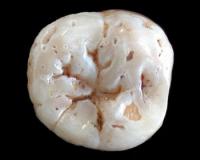
The 40,000-year-old Neanderthal tooth that has given scientists the first direct evidence that Neanderthals moved from place to place during their lifetimes. A 40,000-year-old tooth has provided scientists with the first direct evidence that Neanderthals moved from place to place during their lifetimes. In a collaborative project involving researchers from the Germany, the United Kingdom, and Greece, Professor Michael Richards of the Max Planck institute for Evolutionary Anthropology in Leipzig, Germany and Durham University, UK, and his team used laser technology to collect microscopic particles of enamel from the tooth. By analysing strontium isotope ratios in the enamel - strontium is a naturally occurring metal ingested into the body through food and water - the scientists were able to uncover geological information showing where the Neanderthal had been living when the tooth was formed (Journal of Archaeological Science, February 11th, 2008).
| Full story | 0 Comments | 5917 views |
| Microbiology | February 16, 2008 12:32 PM |
The Uukuniemi virus helps to explain the infection mechanism of bunyaviruses causing hemorrhagic fevers and encephalitis
| Full story | 0 Comments | 6531 views |

| Biotechnology | February 16, 2008 10:32 AM |
New understanding of a protein that spurs the growth of pancreatic cancer could lead to a new vaccine against the deadly disease, said researchers at Baylor College of Medicine in Houston in a report appearing in the current edition of the journal Molecular Cancer Therapeutics.
| Full story | 0 Comments | 6799 views |

- In some genetic cases of microcephaly, stem cells fail to launch
- Yale team discovers how Zika virus causes fetal brain damage
- Scientists uncover the way a common cell enzyme alerts the body to invading bacteria
- Arctic gives clues on worst mass extinction of life
- Calcium channel blockers caught in the act at atomic level
Search Bio News Net
Free Biology Newsletter
- Flexibility That A.C.A. Lent to Work Force Is Threatened by...International Herald Tribune
- Bacteria Behind Legionnaires’ Disease Found at New York Police StationInternational Herald Tribune
- Prescription Price Crisis? 28 Million Americans See Spike in Drug...MSNBC.com: Health
- Seizing on Opioid Crisis, a Drug Maker Lobbies Hard for...International Herald Tribune
- Republicans are taking a big political risk on health careAP Health News
- Why We're So Divided Over Saving WolvesNational Geographic News