

Carnegie Mellon University scientists have made an important discovery that aids the understanding of why HIV enters immune cells with ease. The researchers found that after HIV docks onto a host cell, it dramatically lowers the energy required for a cell membrane to bend, making it easier for the virus to infect immune cells. The finding, in press in Biophysical Journal, will provide vital data to conduct future computer simulations of HIV dynamics to help further drug discovery and prevent deadly infections.

| Microbiology | July 31, 2007 11:46 PM |
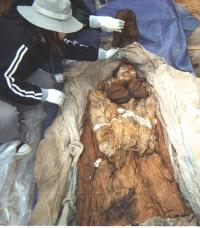
Handong Mummy – One of the mummies being excavated in South Korea. Mummies that have recently been unearthed in South Korea may provide clues on how to combat hepatitis B, according to Prof. Mark Spigelman of the Kuvin Center for the Study of Infectious and Tropical Diseases at the Hebrew University of Jerusalem.
| Full story | 0 Comments | 9322 views |

| General | July 31, 2007 11:40 PM |
First real vacations in three years, whats the worse that could happen? My hosting provider having trouble on the server hosting the Biology News Net, of course. The outage lasted at least for 5 days, but now were on a dedicated server and things should improve significantly - I hope it wont happen again, troubleshooting server problems on the other side of the world (australia) without a reliable internet connection isnt exactly fun!
Sorry for the trouble this outage might have caused!
| 0 Comments | 11733 views |

| Biology | July 26, 2007 04:57 PM |
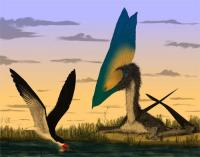
Physical and theoretical models show that pterosaurs (Thalassodromeus, right) could not meet the energy requirements of skimming, a rare feeding strategy practiced habitually by just a few extant Rynchops species (black skimmer, left). Credit: Image: Mark Witton In order to envisage the behaviors and lifestyles of now extinct animals, palaeontology often relies on extrapolating from modern species. Scientists identify shared anatomical features and infer from these shared ways of life. This method is often used to predict the diet of an extinct species based on comparisons of fossilized teeth, or used to conclude that species with large eyes were nocturnal. However, a new paper from Stuart Humphries, Richard Bonser, and colleagues, published in the open access journal PLoS Biology, provides a cautionary tale. Previous work on pterosaurs concluded that some species fed by skimming along the surface of the water with their mouths held open, but this paper overturns that inference, showing that this kind of feeding was highly unlikely to have occurred in pterosaurs after all.
| Full story | 0 Comments | 8188 views |
| Biology | July 26, 2007 02:57 PM |
Cochlear implants—electronic devices inserted surgically in the ear to allow deaf people to hear—may restore normal auditory pathways in the brain even after many years of deafness.
| Full story | 0 Comments | 6824 views |

| Bioinformatics | July 26, 2007 12:57 PM |
Cancer patients don’t have time to waste. Many go through several different treatments, however, to find one that is more effective against their particular type of tumor.
| Full story | 0 Comments | 6466 views |

| AIDS & HIV | July 26, 2007 10:57 AM |
Researchers at the University of Minnesota’s Center for Drug Design have developed a new method to combat HIV/AIDS, potentially replacing the traditional cocktail drug approach.
| Full story | 0 Comments | 6734 views |

| Molecular & Cell Biology | July 25, 2007 10:57 PM |
Scientists thought that most new genes were formed from existing genes, but Cornell researchers have discovered a gene in some fruit flies that appears to be unrelated to other genes in any known genome.
| Full story | 0 Comments | 7877 views |
| AIDS & HIV | July 25, 2007 08:57 PM |
Two new studies emphasize the importance of delivering measles and influenza vaccines to HIV-infected individuals. Both studies are published in the August 1 issue of The Journal of Infectious Diseases, now available online.
| Full story | 0 Comments | 7538 views |
| Molecular & Cell Biology | July 25, 2007 07:57 PM |
University of New South Wales (UNSW) researchers have uncovered an important naturally occurring mechanism in the body where "bad" cells that cause blockages in our blood vessels are kept under strict growth control, while "good" cells that keep our blood vessels free of clots and growths are left unaffected.
| Full story | 0 Comments | 6938 views |

| Health & Medicine | July 25, 2007 06:57 PM |
A follow up to a previous study on group therapy in breast cancer patients finds group therapy does not prolong the lives of women with metastatic breast cancer. Published in the September 1, 2007 issue of CANCER, a peer-reviewed journal of the American Cancer Society, the new case-control trial finds patients with metastatic breast cancer who took part in weekly group psychotherapy had similar survival rates as those given literature-based patient education. Earlier results from the same researcher had suggested a survival benefit of group therapy for women with metastatic breast cancer. However, the new study did find that women with estrogen receptor (ER) negative tumors did show survival benefit, and that group therapy improved quality of life (QOL).
| Full story | 0 Comments | 7252 views |
| Molecular & Cell Biology | July 25, 2007 04:57 PM |
Neuroscientists are attempting to understand if structural changes in the brain are related to sensory experience or the performance of learned behavior, and now University of Washington researchers have found evidence that one species of songbird apparently has something in common with a few baseball sluggers. Both rely on steroids, birds to increase the size of song production areas of their brain and some players, apparently, to knock a fastball out of the park.
| Full story | 0 Comments | 7201 views |
| Molecular & Cell Biology | July 25, 2007 02:57 PM |
Surprising findings by Queen’s University researchers have shed new light on how the “sunshine vitamin” D – increasingly used to treat and prevent cancer and other diseases – is broken down by our bodies.
| Full story | 0 Comments | 7210 views |
| Molecular & Cell Biology | July 25, 2007 12:57 PM |
In the psychological phenomenon known as “synesthesia,” individuals’ sensory systems are a bit more intertwined than usual. Some people, for example, report seeing colors when musical notes are played.
| Full story | 0 Comments | 7325 views |
| Health & Medicine | July 25, 2007 10:57 AM |
A controversial new government-funded report, which found that meditation does not improve health, is methodologically flawed, incomplete, and should be retracted.
| Full story | 0 Comments | 6560 views |
| AIDS & HIV | July 24, 2007 11:57 PM |
Three clinical trials in Africa found that adult male circumcision reduced the risk of men acquiring HIV infection from heterosexual sex by 51-60%. While adult male circumcision may also have a role to play in preventing HIV transmission in the US, say scientists at the US Centers for Disease Control (CDC) in a paper in PLoS Medicine, "the extent of this role on a population basis is unknown."
| Full story | 0 Comments | 8657 views |
| Biology | July 24, 2007 10:57 PM |
Working in the Department of Ecology and Organismal Biology, Justin Boyles and Jonathan Storm examined the possibility of a link between dietary specialization and the risk of extinction for bats in Australia, Europe and North America.
| Full story | 0 Comments | 6466 views |
| Bioinformatics | July 24, 2007 09:56 AM |
Faster growth, darker leaves, a different way of branching - wild varieties of the plant Arabidopsis thaliana are often substantially different from the laboratory strain of this small mustard plant, a favorite of many plant biologists. Which detailed differences distinguish the genomes of strains from the polar circle or the subtropics, from America, Africa or Asia has been investigated for the first time by research teams from Tübingen, Germany, and California led by Detlef Weigel from the Max Planck Institute for Developmental Biology. The results were surprising: The extent of the genetic differences far exceeds the expectations for such a streamlined genome, as the scientists write in this week’s edition of Science magazine. 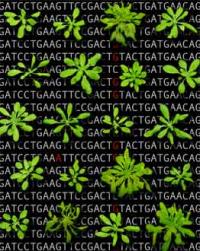
Arabidopsis plants from different geographical origins differ in many traits (the background shows schematically sequence variation in the DNA of these plants).
| Full story | 0 Comments | 7038 views |
| AIDS & HIV | July 24, 2007 06:56 AM |
This international collaboration has been the largest ever to have taken place in a large scale study on genetic differences between patients infected by HIV, and is the first study of this kind in the field of infectious disease. Catalan participants have been coordinated by Javier Martínez-Picado, ICREA research professor in the Foundation irsiCaixa of Hospital Germans Trias i Pujol, and Josep M. Miró, consultant of the Unit of Infectious Diseases and AIDS of Hospital Clínic-IDIBAPS of Barcelona, and had the collaboration of Hospital de la Santa Creu i Sant Pau, and Hospital Mútua de Terrassa.
| Full story | 0 Comments | 7350 views |
| Biology | July 24, 2007 03:56 AM |
Nature is a valued source of inspiration for artists. But what have artists offered the natural world" Would a bird even like rock and roll"
| Full story | 0 Comments | 6442 views |
| Molecular & Cell Biology | July 24, 2007 01:56 AM |
When nicotine binds to a neuron, how does the cell know to send the signal that announces a smoker’s high"
| Full story | 0 Comments | 7578 views |
| Biology | July 22, 2007 04:45 PM |
Fossils discovered in the oft-painted arroyos of northern New Mexico show for the first time that dinosaurs and their non-dinosaur ancestors lived side by side for tens of millions of years, disproving the notion that dinosaurs rapidly replaced their supposedly outmoded predecessors.
| Full story | 0 Comments | 7815 views |
| Bioinformatics | July 22, 2007 02:45 PM |
Instead of immutable proprietary software, any species’ genetic information resembles open source code that is constantly tweaked and optimized to meet the users’ specific needs. But which parts of the code have withstood the test of time and which parts have undergone rapid evolutionary change has been difficult to assess.
| Full story | 0 Comments | 6897 views |
| Molecular & Cell Biology | July 22, 2007 12:45 PM |
A protein that is largely absent in one type of skin cancer protects an important gene in a cell's defense against harmful mutations from being silenced, researchers at The University of Texas M. D. Anderson Cancer Center report in the July 20 edition of Molecular Cell.
| Full story | 0 Comments | 8136 views |
| Molecular & Cell Biology | July 22, 2007 10:45 AM |
In order for the B cells of the immune system to identify and fight disease pathogens, they produce a protein called activation-induced cytidine deaminase (AID). Once a B cell is activated by the presence of a disease pathogen, it begins to make AID which directs and strengthens the B cells’ response to the infection by mutating the antibodies produced by the B cells.
| Full story | 0 Comments | 6989 views |

| Environment | July 21, 2007 11:45 PM |
Protecting the Great Barrier Reef from the impacts of climate change, natural disasters and rising human pressures will be a key test of Australia’s ability to keep our natural environment healthy and resilient.
| Full story | 0 Comments | 9881 views |
| Molecular & Cell Biology | July 21, 2007 10:45 PM |
HOUSTON, July 19, 2007 -- Rice University physicists have unveiled an innovative way of finding out how proteins get their shape based on how they unfold when pulled apart. The experimental method could be of widespread use in the field of protein folding science, which has grown dramatically in the past decade, due in part to the discovery that misfolded proteins play a key role in diseases like Alzheimer's and Parkinson's.
| Full story | 0 Comments | 7312 views |

| Biotechnology | July 21, 2007 09:45 PM |
Usually, the synthesis of short protein chains (polypeptides) begins with the production of their components, the amino acids. But it can be done differently: In the journal Angewandte Chemie, Chinese researchers report a considerably more convenient method that is similar to olefin polymerization, which is used for the mass production of plastics such as polyethylene. The advantage of this reaction is that it uses inexpensive starting materials and would be ideal for industrial production.
| Full story | 0 Comments | 7628 views |
| Microbiology | July 21, 2007 06:45 PM |
Joint research by Dr. Leonid Brodsky, of the Institute of Evolution of the University of Haifa, and Dr. Milton Taylor, of Indiana University, led to the discovery of a mathematical method which can identify which genes in our bodies conduct the battle against the various viruses that attack us. In their research, they identified 37 genes out of 22,000 possible genes which fight the hepatitis C virus.
| Full story | 0 Comments | 5410 views |
| Biology | July 21, 2007 03:45 PM |
Our experiences –the things we see, hear, or do—can trigger long-term changes in the strength of the connections between nerve cells in our brain, and these persistent changes are how the brain encodes information as memory. As reported in Neuron this week, Johns Hopkins researchers have discovered a new biochemical mechanism for memory storage, one that may have a connection with addictive behavior.
| Full story | 0 Comments | 8181 views |
| Health & Medicine | July 21, 2007 12:45 PM |
Decreasing the number of nurses on duty in an intensive care unit (ICU) increases the risk of serious infection, according to a report published in the open access journal Critical Care.
| Full story | 0 Comments | 7180 views |
| Health & Medicine | July 21, 2007 09:45 AM |
Statins are not all equal when it comes to their potential to guard against dementia, according to a study published in the online open access journal BMC Medicine. Statins are cholesterol-lowering drugs used by those with heart disease. The new findings suggest that simvastatin is associated with a lower incidence of dementia and Parkinson’s disease. Disagreement over whether statins could guard against these conditions has meant the benefits to dementia sufferers to date have been unclear.
| Full story | 0 Comments | 6876 views |
| Biology | July 21, 2007 06:45 AM |
New species are evading detection using a foolproof disguise – their own unchanged appearance. Research published in the online open access journal, BMC Evolutionary Biology, suggests that the phenomenon of different animal species not being visually distinct despite other significant genetic differences is widespread in the animal kingdom. DNA profiles and distinct mating groups are the only way to spot an evolutionary splinter group from their look-alike cousins, introducing uncertainty to biodiversity estimates globally.
| Full story | 0 Comments | 5747 views |
| Molecular & Cell Biology | July 21, 2007 03:45 AM |
Researchers have found a gene variant that can more than double the risk of developing the degenerative eye disease, age-related macular degeneration.
| Full story | 0 Comments | 5234 views |
| Biology | July 20, 2007 09:45 PM |
The metamorphosis of biology into a science offering numerically precise descriptions of nature has taken a leap forward with a Princeton team's elucidation of a key step in the development of fruit fly embryos -- discoveries that could change how scientists think not just about flies, but about life in general.
| Full story | 0 Comments | 8172 views |
| Biology | July 20, 2007 06:45 PM |
New research published in the journal Nature (19 July) has proved the single origin of humans theory by combining studies of global genetic variations in humans with skull measurements across the world. The research, at the University of Cambridge and funded by the Biotechnology and Biological Sciences Research Council (BBSRC), represents a final blow for supporters of a multiple origins of humans theory.
| Full story | 0 Comments | 6639 views |
| Molecular & Cell Biology | July 20, 2007 03:45 PM |
Pediatrics researchers have identified a gene variant that raises a child’s risk of Crohn’s disease, a chronic and painful condition attributed to inflammation of the gastrointestinal tract.
| Full story | 0 Comments | 7305 views |
| Biotechnology | July 20, 2007 12:45 PM |
Scientists report they have merged two of nature’s most elegant strategies for wet and dry adhesion to produce a synthetic material that one day could lead to more durable and longer-lasting bandages, patches, and surgical materials. As published in this week’s issue of the journal Nature, the scientists, supported by the National Institute of Dental and Craniofacial Research (NIDCR), part of the National Institutes of Health, have designed a synthetic material that starts with the dry adhesive properties of the gecko lizard and supplements it with the underwater adhesive properties of a mussel. The hybrid material, which they call a geckel nanoadhesive, proved in initial testing to be adherent under dry and wet conditions. It also adhered much longer under both extremes than previous gecko-based synthetic adhesives, a major issue in this area of research.
| Full story | 0 Comments | 5974 views |
| Molecular & Cell Biology | July 20, 2007 09:45 AM |
Scientists have shown for the first time that a protein involved in the transfer of fat in the blood may also influence how fat cells store fat. Richard E. Morton and Lahoucine Izem, research scientists at the Cleveland Clinic Foundation, have shown that the protein, called cholesteryl ester transfer protein (CETP), is involved in the cellular storage and regulation of cholesterol and other fats and, as a result, probably has unexpected contributions to obesity and diabetes.
| Full story | 0 Comments | 5680 views |
| Molecular & Cell Biology | July 20, 2007 06:45 AM |
A typical human mouth teems with as many as 700 different species of microbes. A handful of these have been specifically implicated in promoting gum disease, dental cavities, and bad breath, but for the most part, the make-up of this complex ecosystem and its impact on human health remain largely unexplored. A new device created by Howard Hughes Medical Institute (HHMI) researchers, however, may make some of the most reclusive members of this and other microscopic communities much more accessible for laboratory study.
| Full story | 0 Comments | 5606 views |

- In some genetic cases of microcephaly, stem cells fail to launch
- Yale team discovers how Zika virus causes fetal brain damage
- Scientists uncover the way a common cell enzyme alerts the body to invading bacteria
- Arctic gives clues on worst mass extinction of life
- Calcium channel blockers caught in the act at atomic level
Search Bio News Net
Free Biology Newsletter
- Flexibility That A.C.A. Lent to Work Force Is Threatened by...International Herald Tribune
- Bacteria Behind Legionnaires’ Disease Found at New York Police StationInternational Herald Tribune
- Prescription Price Crisis? 28 Million Americans See Spike in Drug...MSNBC.com: Health
- Seizing on Opioid Crisis, a Drug Maker Lobbies Hard for...International Herald Tribune
- Republicans are taking a big political risk on health careAP Health News
- Why We're So Divided Over Saving WolvesNational Geographic News