


UCLA researchers have uncovered new clues that may explain why Graves’ disease (GD) attacks the muscle tissue behind the eyes, often causing them to bulge painfully from their sockets, as in the late actor Marty Feldman.

| Molecular & Cell Biology | March 1, 2007 10:36 PM |
Researchers have long said they won't be able to understand the brain until they can put together a "wiring diagram" – a map of how billions of neurons are interconnected. Now, researchers at the Salk Institute for Biological Studies have jumped what many believe to be a major hurdle to preparing that chart: identifying all of the connections to a single neuron.
| Full story | 0 Comments | 4625 views |

| Biology | March 1, 2007 09:36 PM |
Flexibly drawing inferences about the intentions of other individuals in order to cooperate in complex tasks is a basic part of everyday life that we humans take for granted. But, according to evolutionary psychologist Brian Hare at the Max Planck Institute in Germany, this ability is present in other species as well.
| Full story | 2 Comments | 6202 views |

| Microarray | March 1, 2007 08:36 PM |
New research shows that a form of vitamin A used to treat acute promyelocytic leukemia induces changes in an unusual class of small molecules called microRNAs (miRNAs) in the leukemic cells.
| Full story | 0 Comments | 5973 views |

| Microbiology | March 1, 2007 08:14 PM |
An international group of scientists has announced a major expansion of a lingua franca used to describe the activities of genes in living organisms. The expansion provides terms that scientists can use to describe the complex events that occur when a pathogenic or beneficial microbe encounters its host. Understanding these events is crucial for developing new interventions for preventing infections by disease-causing microbes while preserving or encouraging the presence of beneficial microbes.
| Full story | 0 Comments | 6962 views |
| Biology | March 1, 2007 07:36 PM |
An international team of scientists led by the Wildlife Conservation Society working in Iran has successfully fitted two Asiatic cheetahs with Global Positioning System (GPS) collars, marking the first time this highly endangered population of big cats can be tracked by conservationists. Once found throughout the continent, Asiatic cheetahs now live only in extremely arid habitat on the edges of Iran's Kavir Desert. WCS's government partner in Iran, the Department of Environment/CACP project estimates their remaining numbers between 60 and 100 animals, making the Asiatic cheetah one of the most imperiled cats on earth.
| Full story | 0 Comments | 6128 views |
| Biology | March 1, 2007 07:14 PM |
While Al Gore's film, An Inconvenient Truth, has generated greater awareness of global warming, most people remain unaware of the more rapid warming that has occurred within major cities. In fact, large cities can be more than 10 degrees hotter than their surroundings. These metropolitan hot spots, which scientists refer to as urban heat islands, can stress the animals and plants that make their home alongside humans. Until recently, biologists had focused so much on the effects of global climate change, that they had overlooked the effects of urban warming.
| Full story | 0 Comments | 5759 views |
| Molecular & Cell Biology | March 1, 2007 06:36 PM |
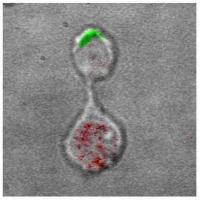
Listeria-specific T cell in final stages of cellular division. Using three dimensional microscopy, researchers were able to show how each new daughter cell inherited different types of proteins that regulate cell fate. Credit: John Chang, M.D., and Steven Reiner, M.D., University of Pennsylvania School of Medicine; Science How do immune cells decide to respond to invading microbes by either fighting to the death or becoming the body’s memory for future infections? Researchers at the University of Pennsylvania School of Medicine have discovered that immune cells can differ in their inheritance of molecules that regulate cell fate, and therefore what role they play in fighting infection. The research appears this week in an early online issue of Science.
| Full story | 0 Comments | 5341 views |
| Molecular & Cell Biology | March 1, 2007 06:14 PM |
To function, each living cell needs both to build new and to degrade old or damaged proteins. To accomplish that, a number of intracellular systems work in concert to keep the cell healthy and from clogging up with damaged proteins. When proteins or peptides mutate, they can present major problems to the clearing up of the intracellular environment. In Huntington's disease (HD) the disease provoking mutation in the huntingtin gene eventually causes the cell to build up intranuclear and cellular inclusions of protein-aggregates, made up primarily of huntingtin. One cellular organelle with a central role of clearing such protein build up in the cell is the ubiquitin proteasome system (UPS).
| Full story | 0 Comments | 6041 views |
| Microarray | March 1, 2007 05:36 PM |
Much like how a person's genetic code differs from other individuals, the level at which those genes are activated in the body differs from one person to another, scientists have learned. And though some of those differences in gene activity are seen between different populations – Asians versus Europeans, for instance – more of those variations are due to individual-level factors, further obscuring the biological meaning of "race."
| Full story | 0 Comments | 6635 views |
| Biology | March 1, 2007 04:14 PM |
Digital atlases of the brains of humans, monkeys, dogs, cats, mice, birds and other animals have been created and posted online by researchers at the UC Davis Center for Neuroscience.
| Full story | 0 Comments | 6794 views |

| Biotechnology | March 1, 2007 02:14 PM |
A new vaccine delivery system using microspheres of a biodegradable polymer may not only reduce the need for booster shots in some cases, but also appears to stimulate an immune response that traditional vaccines do not. Researchers from Iowa State University report their findings today at the ASM Biodefense and Emerging Disease Research Meeting.
| Full story | 0 Comments | 6831 views |
| Biology | March 1, 2007 12:14 PM |
Among the central mysteries of neurobiology is what properties of the young brain enable it to so adeptly wire itself to adapt to experience—a quality known as plasticity. The extraordinary plasticity of the young brain occurs only during a narrow window of time known as the critical period. For example, children deprived of normal visual stimulation during an early critical period of the first few years of life suffer the permanent visual impairment of amblyopia.
| Full story | 0 Comments | 5929 views |
| Biology | March 1, 2007 10:14 AM |
Using a state-of-the-art technique to map neurons in the spinal cord of a larval zebrafish, Cornell University scientists have found a surprising pattern of activity that regulates the speed of the fish’s movement. The research may have long-term implications for treating injured human spinal cords and Parkinson’s disease, where movements slow down and become erratic.
| Full story | 0 Comments | 6295 views |

- In some genetic cases of microcephaly, stem cells fail to launch
- Yale team discovers how Zika virus causes fetal brain damage
- Scientists uncover the way a common cell enzyme alerts the body to invading bacteria
- Arctic gives clues on worst mass extinction of life
- Calcium channel blockers caught in the act at atomic level
Search Bio News Net
Free Biology Newsletter
- Flexibility That A.C.A. Lent to Work Force Is Threatened by...International Herald Tribune
- Bacteria Behind Legionnaires’ Disease Found at New York Police StationInternational Herald Tribune
- Prescription Price Crisis? 28 Million Americans See Spike in Drug...MSNBC.com: Health
- Seizing on Opioid Crisis, a Drug Maker Lobbies Hard for...International Herald Tribune
- Republicans are taking a big political risk on health careAP Health News
- Why We're So Divided Over Saving WolvesNational Geographic News