

Many people think they can safely drive while talking on their cell phones. Vanderbilt neuroscientists Paul E. Dux and René Marois have found that when it comes to handling two things at once, your brain, while fast, isn't that fast.

| AIDS & HIV | January 18, 2007 10:42 PM |
Twenty years after its introduction, gene therapy still holds great promise as a way to harness the insidious power of viruses such as human immunodeficiency syndrome (HIV). But scientists have yet to solve a vexing problem: developing an efficient transport system that is capable of delivering therapeutic payloads to specific cells.
| Full story | 0 Comments | 5933 views |

| Health & Medicine | January 18, 2007 09:42 PM |
A new study concludes that low birthweight babies born with low sodium (salt) in their blood serum will likely consume large quantities of dietary sodium later in life. In the study, researchers also found that newborns with the most severe cases of low sodium blood serum consumed ~1700 mg more sodium per day and weighed some 30 percent more than their peers. These data, taken together with other recent findings, make it clear that very low serum sodium in pre-term and new born infants is a consistent and significant contributing factor for long-term sodium intake, a key marker for obesity.
| Full story | 0 Comments | 5687 views |

| Molecular & Cell Biology | January 18, 2007 09:42 PM |
Autophagy is a cellular process that enables cells to turnover their contents, something that they do frequently. Autophagy is initiated in tumor cells by chemotherapy and radiation, but it is not known if this contributes to tumor cell death or helps tumor cells survive the anti-cancer therapy. However, in a study using a mouse model of B cell lymphomas, researchers from the University of Pennsylvania have now shown that autophagy represents a survival mechanism for tumor cells treated with agents that initiate tumor cell death by a process known as apoptosis.
| Full story | 0 Comments | 8413 views |

| Biotechnology | January 18, 2007 08:42 PM |
Scientists at Rice University and pediatric specialists at Baylor College of Medicine have discovered a new way to use Rice's famed buckyball nanoparticles as passkeys that allows drugs to enter cancer cells.
| Full story | 0 Comments | 5444 views |
| Health & Medicine | January 18, 2007 08:42 PM |
Building on newly discovered genetic threads in the rich tapestry of biochemical signals that cause cancer, a Johns Hopkins Kimmel Cancer Center team has dramatically killed brain cancer cells by blocking those signals with a statin and an experimental antitumor drug.
| Full story | 0 Comments | 5613 views |

| Biology | January 18, 2007 07:42 PM |
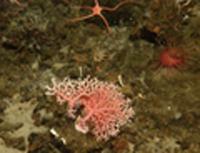
Delicate pink hydrocorals and various echinoderms were observed by the ROV. Remotely Operated Vehicles (ROV) remain an efficient technology to uncover the secrets of Antarctic seafloor fauna. As a precursor to the International Polar Year 2007/2008, the current Polarstern expedition conducted by the Alfred Wegener Institute for Polar and Marine research releases short seafloor video clips taken by ROV only a few hours after the robot has been recovered.
| Full story | 0 Comments | 6051 views |
| Molecular & Cell Biology | January 18, 2007 07:42 PM |
Some 50 million Americans have hypertension, that is, blood pressure measuring above the normal range (less than 120/80 mmHg). If untreated, it can lead to heart attacks, strokes, or kidney disease. Lifestyle changes are the first-stage treatment for the disease, but if they fail, medications are prescribed.
| Full story | 0 Comments | 5162 views |
| Health & Medicine | January 18, 2007 06:54 PM |
Narcotic drugs (opioids) are commonly prescribed for short-term relief of chronic back pain, but their effectiveness long-term has been questioned in a review article by researchers at Yale School of Medicine, who also found that behaviors consistent with opioid abuse was reported in 24 percent of cases.
| Full story | 0 Comments | 7294 views |
| Health & Medicine | January 18, 2007 06:42 PM |
A reanalysis of nicotine yield from major brand name cigarettes sold in Massachusetts from 1997 to 2005 has confirmed that manufacturers have steadily increased the levels of this agent in cigarettes. This independent analysis, based on data submitted to the Massachusetts Department of Public Health (MDPH) by the manufacturers, found that increases in smoke nicotine yield per cigarette averaged 1.6 percent each year, or about 11 percent over a seven-year period (1998-2005). Nicotine is the primary addictive agent in cigarettes.
| Full story | 0 Comments | 5353 views |
| Biology | January 18, 2007 06:42 PM |

Flexible, highly articulated wings give bats more options for flight than birds: more lift, less drag, greater maneuverability. The maneuverability of a bat in flight makes even Harry Potter's quidditch performance look downright clumsy. While many people may be content to simply watch these aerial acrobats in wonder, Kenneth Breuer and Sharon Swartz are determined to understand the detailed aerodynamics of bat flight – and ultimately the evolutionary path that created it.
| Full story | 0 Comments | 5535 views |
| Health & Medicine | January 18, 2007 04:54 PM |
A steady rise in autoimmune diseases such as multiple sclerosis (MS) has been noted in recent decades, and environmental factors could be the cause of this increase. One theory, similar to the "hygiene hypothesis" in which an excessively germ-free environment may contribute to an increase in allergies, holds that a decline in infectious diseases may play a role in increasing autoimmune disease incidence. The first study examining the relationship between parasite infections and MS in humans suggests that such infections may affect the immune response in a way that alters the course of MS. The study was published in the January 2007 issue of Annals of Neurology (http://www.interscience.wiley.com/journal/ana), the official journal of the American Neurological Association.
| Full story | 0 Comments | 5120 views |
| Molecular & Cell Biology | January 18, 2007 02:54 PM |
Two studies in the January 18, 2007, issue of the journal Neuron, published by Cell Press, shed significant light on how the brain processes numerical information--both abstract quantities and their concrete representations as symbols. The researches said their findings will contribute to understanding how the brain processes quantitative information as well as lead to studies of how numerical representation in the brain develops in children. Such studies could aid in rehabilitating people who suffer from dyscalculia--an inability to understand, remember, and manipulate numbers. The researchers also said their findings offer insight into the mystery of how the brain learns to associate abstract symbols precisely with quantities.
| Full story | 0 Comments | 4827 views |

| Microbiology | January 18, 2007 12:54 PM |
Trichomonas vaginalis colonises the urogenital tract and causes the infection also known as "trick", the most common non-viral STI.
| Full story | 0 Comments | 5024 views |
| Microbiology | January 18, 2007 10:54 AM |
In a study of non-human primates infected with the influenza virus that killed 50 million people in 1918, an international team of scientists has found a critical clue to how the virus killed so quickly and efficiently.
| Full story | 0 Comments | 5411 views |

- In some genetic cases of microcephaly, stem cells fail to launch
- Yale team discovers how Zika virus causes fetal brain damage
- Scientists uncover the way a common cell enzyme alerts the body to invading bacteria
- Arctic gives clues on worst mass extinction of life
- Calcium channel blockers caught in the act at atomic level
Search Bio News Net
Free Biology Newsletter
- Flexibility That A.C.A. Lent to Work Force Is Threatened by...International Herald Tribune
- Bacteria Behind Legionnaires’ Disease Found at New York Police StationInternational Herald Tribune
- Prescription Price Crisis? 28 Million Americans See Spike in Drug...MSNBC.com: Health
- Seizing on Opioid Crisis, a Drug Maker Lobbies Hard for...International Herald Tribune
- Republicans are taking a big political risk on health careAP Health News
- Why We're So Divided Over Saving WolvesNational Geographic News