

When a portion of a zebrafish's heart is removed, the dynamic interplay between a mass of stem cells that forms in the wound and the protective cell layer that covers the wound spurs the regeneration of functional new heart tissue, Duke University Medical Center scientists have found.

| Biotechnology | November 2, 2006 10:55 PM |
Fundamental theories regarding consciousness, emotion and quality of life in sufferers of paralysis from Amyotrophic Lateral Sclerosis (ALS, also known as 'Lou Gerhig's disease') are being challenged based on new research on brain-computer interaction. ALS is a progressive disease that destroys neurons affecting movement. The study appears in the latest issue of Psychophysiology. The article reviews the usefulness of currently available brain-computer –interfaces (BCI), which use brain activity to communicate through external devices, such as computers.
| Full story | 0 Comments | 5061 views |

| Health & Medicine | November 2, 2006 09:55 PM |
A breakthrough in the harnessing of 'T-rays' - electromagnetic terahertz waves - which could dramatically improve the detecting and sensing of objects as varied as biological cell abnormalities and explosives has been announced.
| Full story | 0 Comments | 4742 views |

| Biology | November 2, 2006 09:18 PM |
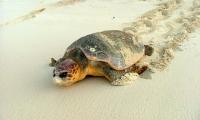
A Cayman Islands loggerhead turtle. Ecology and conservation experts from the University of Exeter today urge international governments to work together to protect threatened Caribbean sea turtle populations.
| Full story | 0 Comments | 10204 views |

| Molecular & Cell Biology | November 2, 2006 08:55 PM |
New evidence to explain how a common tropical fish mends a broken heart may suggest methods for coaxing the damaged hearts of mammals to better heal, researchers report in the November 3, 2006 issue of Cell, published by Cell Press.
| Full story | 0 Comments | 7070 views |
| Health & Medicine | November 2, 2006 08:18 PM |
Scientists have shown for the first time why a feeling of control helps us reduce pain. The research, carried out at the Wellcome Trust Centre for Neuroimaging at UCL, London, has implications for how patients with persistent pain can cope with what is often a debilitating condition.
| Full story | 0 Comments | 5103 views |

| Environment | November 2, 2006 07:55 PM |
Marine species loss is accelerating and threatening human well-being, according to a report published in the 3 November issue of the journal Science published by AAAS, the nonprofit science society.
| Full story | 0 Comments | 6396 views |
| Biology | November 2, 2006 06:55 PM |
Grainy photographs of America's Old West recall a time when large bison herds migrated across wide prairie lands, 30 million strong, with the changing seasons determining their path and destination. Now, NASA satellite data and computer modeling and U.S. Department of Agriculture (USDA) information are helping track the remnants of this once mighty herd in Yellowstone National Park as they migrate with the melting snowpack.
| Full story | 0 Comments | 6773 views |
| Biotechnology | November 2, 2006 05:55 PM |
Anyone who's overheated vegetable oil or sweet syrup knows that neither oil nor sugar evaporates--oil smokes and turns brown, sugar turns black, and both leave a nasty film of carbon on the cookware. Now, a University of Minnesota team has invented a "reactive flash volatilization process" that heats oil and sugar about a million times faster than you can in your kitchen and produces hydrogen and carbon monoxide, a mixture called synthesis gas, or syngas, because it is used to make chemicals and fuels, including gasoline. The new process works 10 to 100 times faster than current technology, with no input of fossil fuels and in reactors at least 10 times smaller than current models. The work could significantly improve the efficiency of fuel production from renewable energy sources. It will be published Nov. 3 in Science.
| Full story | 0 Comments | 7162 views |
| Molecular & Cell Biology | November 2, 2006 04:55 PM |
Infant abuse may be perpetuated between generations by changes in the brain induced by early experience, research shows at the University of Chicago shows.
| Full story | 0 Comments | 6652 views |
| Biology | November 2, 2006 04:18 PM |
The most detailed world map of mammals, birds and amphibians ever produced shows that endangered species from these groups do not inhabit the same geographical areas, says new research published today.
| Full story | 0 Comments | 7376 views |
| Health & Medicine | November 2, 2006 02:18 PM |
Clay is most commonly associated with the sublime experience of the European spa where visitors have been masked, soaked and basted with this touted curative since the Romans ruled. If ASU geochemist Lynda Williams and microbiologist Shelley Haydel's research on the antibacterial properties of clays realizes its full potential, smectite clay could one day rise above cosmetic use to take its place comfortably with antibacterial behemoths like penicillin.
| Full story | 0 Comments | 5337 views |
| Environment | November 2, 2006 12:18 PM |
A $2.5 million grant will fund a 5-year study examining why dead zones have returned to Lake Erie, and researchers hope the findings will allow them to detect the cause and stop the spread before the fishery and tourism industries suffer.
| Full story | 0 Comments | 6505 views |
| Molecular & Cell Biology | November 2, 2006 10:18 AM |
Researchers have used a single compound to increase the lifespan of obese mice, and found that the drug reversed nearly all of the changes in gene expression patterns found in mice on high calorie diets--some of which are associated with diabetes, heart disease, and other significant diseases related to obesity. The research, led by investigators at Harvard Medical School and the National Institute on Aging, is the first time that the small molecule resveratrol has been shown to offer survival benefits in a mammal. The study is reported in the November 1 advanced online edition of Nature.
| Full story | 0 Comments | 5905 views |

- In some genetic cases of microcephaly, stem cells fail to launch
- Yale team discovers how Zika virus causes fetal brain damage
- Scientists uncover the way a common cell enzyme alerts the body to invading bacteria
- Arctic gives clues on worst mass extinction of life
- Calcium channel blockers caught in the act at atomic level
Search Bio News Net
Free Biology Newsletter
- Flexibility That A.C.A. Lent to Work Force Is Threatened by...International Herald Tribune
- Bacteria Behind Legionnaires’ Disease Found at New York Police StationInternational Herald Tribune
- Prescription Price Crisis? 28 Million Americans See Spike in Drug...MSNBC.com: Health
- Seizing on Opioid Crisis, a Drug Maker Lobbies Hard for...International Herald Tribune
- Republicans are taking a big political risk on health careAP Health News
- Why We're So Divided Over Saving WolvesNational Geographic News