

New research has revealed for the first time the catastrophic effect of a deadly virus on Britain's native red squirrels.

| Bioinformatics | August 21, 2006 10:53 PM |
A computer model newly developed by researchers combines ocean current simulations and genetic forecasting to help scientists predict animal dispersion patterns and details of the ecology of coral reefs across the Caribbean Sea. The work is reported by Heather M. Galindo and Stephen R. Palumbi of Stanford University, and Donald B. Olson of the University of Miami, and appears in the August 22nd issue of Current Biology, published by Cell Press.
| Full story | 0 Comments | 5240 views |

| Microarray | August 21, 2006 08:27 PM |
Microscopic examination of tumor specimens cannot always predict a cancer's aggressiveness, leading to increased interest in molecular approaches to diagnosis. Now, researchers in the Children's Hospital Informatics Program (CHIP) at the Harvard-MIT Division of Health Sciences and Technology report that a genetic profile indicating chromosomal instability -- an increased tendency to develop chromosomal aberrations, critical in cancer development -- is predictive of clinical outcome in a broad range of cancer types.
| Full story | 0 Comments | 5879 views |

| Microbiology | August 21, 2006 06:27 PM |
Incomplete vaccination of poultry flocks could make the spread of deadly strains of avian flu such as H5N1 worse, scientists at the Universities of Edinburgh and Warwick have found. The research shows that even though the available vaccines are effective on individual birds, the disease is likely to spread unless almost all of a flock has been protected. The study, published in Nature journal, is the first to quantify how incomplete vaccination of flocks can contribute to the undetected spread of the disease.
| Full story | 0 Comments | 6220 views |
| Microbiology | August 21, 2006 04:27 PM |
A chewing gum containing good bacteria that can destroy the bad bacteria that cause tooth decay could be in the shops soon reports Marina Murphy in C&I. The gum is one of several products being developed by German chemical company BASF using the bacteria Lactobacillus, which is normally found in live yoghurt.
| Full story | 0 Comments | 9040 views |

| AIDS & HIV | August 21, 2006 02:27 PM |
American and South African scientists working at the epicenter of the AIDS epidemic in South Africa have discovered how the human immunodeficiency virus (HIV) "exhausts" killer T cells that would otherwise attack the virus. The researchers found that HIV can simply "turn off" fully functional T cells by flipping a molecular switch on the cells. In test tube studies, however, the scientists showed that they could reinvigorate the killer T cells by blocking that inhibitory switch, which is called programmed death-1 (PD-1).
| Full story | 0 Comments | 7162 views |

| Molecular & Cell Biology | August 21, 2006 12:27 PM |
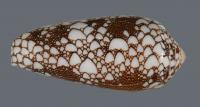
A shell from the venomous cone snail Conus omaria, which lives in the Pacific and Indian oceans and eats other snails. University of Utah researchers isolated an unusual nerve toxin in an ocean-dwelling snail, and say its ability to glom onto the brain's nicotine receptors may be useful for designing new drugs to treat a variety of psychiatric and brain diseases.
| Full story | 0 Comments | 5056 views |

| Health & Medicine | August 21, 2006 10:27 AM |
Mayo Clinic researchers have found that years after experiencing childhood polio, most survivors do not experience declines greater than expected in their elderly counterparts, but rather experience only modest increased weakness which may be commensurate with normal aging.
| Full story | 0 Comments | 4334 views |

- In some genetic cases of microcephaly, stem cells fail to launch
- Yale team discovers how Zika virus causes fetal brain damage
- Scientists uncover the way a common cell enzyme alerts the body to invading bacteria
- Arctic gives clues on worst mass extinction of life
- Calcium channel blockers caught in the act at atomic level
Search Bio News Net
Free Biology Newsletter
- Flexibility That A.C.A. Lent to Work Force Is Threatened by...International Herald Tribune
- Bacteria Behind Legionnaires’ Disease Found at New York Police StationInternational Herald Tribune
- Prescription Price Crisis? 28 Million Americans See Spike in Drug...MSNBC.com: Health
- Seizing on Opioid Crisis, a Drug Maker Lobbies Hard for...International Herald Tribune
- Republicans are taking a big political risk on health careAP Health News
- Why We're So Divided Over Saving WolvesNational Geographic News