Biology News Net
RSS 2.0 Feed
Environment

sea_ice.jpg
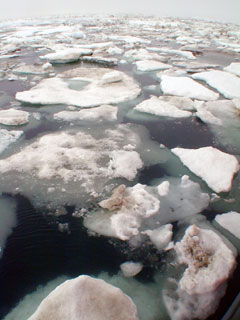
Melting Arctic sea ice. Photo credit: Peter West, National Science Foundation
The current warming trends in the Arctic may shove the Arctic system into a seasonally ice-free state not seen for more than one million years, according to a new report. The melting is accelerating, and a team of researchers were unable to identify any natural processes that might slow the de-icing of the Arctic.

Such substantial additional melting of Arctic glaciers and ice sheets will raise sea level worldwide, flooding the coastal areas where many of the world's people live.

Biotechnology

Scientists have successfully converted human embryonic stem cells into lung cells, taking a first step towards building human lungs for transplantation.

Health & Medicine

Research in monkeys suggests that a new drug can temporarily improve performance and reverse the effects of sleep deprivation on the brain, which would be a breakthrough in helping shift workers, health professionals, military personnel and others who must function at top performance in spite of sleep deficits.

Health & Medicine

Sham painkiller prompts brain to release endorphins, bringing real relief to those in pain

Just thinking that a medicine will relieve pain is enough to prompt the brain to release its own natural painkillers, and soothe painful sensations, a new University of Michigan study finds.

Biology

ucdavis082305.1.jpg
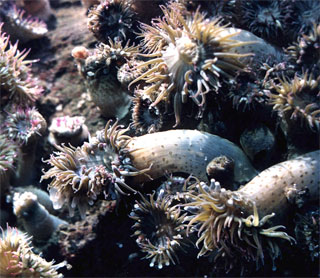
Warrior anemones reach over from several rows behind the front to attack animals from a neighboring colony. (Rick Grosberg/UC Davis photo)
Clashing colonies of sea anemones fight as organized armies with distinct castes of warriors, scouts, reproductives and other types, according to a new study.

Molecular & Cell Biology

Genetic finding may have implications for farsightedness and nearsightedness, too.Working with an Amish-Mennonite family tree, Johns Hopkins researchers at the Wilmer Eye Institute have discovered what appears to be the first human gene mutation that causes extreme farsightedness.

Biotechnology

Engineered bug makes key chemical precursor from grain sorghum

Trials have begun in Kansas on a "green" production method for succinate, a key ingredient of many plastics, drugs, solvents and food additives. Developed at Rice University, the technology uses a genetically modified form of the bacteria E. coli that metabolizes glucose and produces almost pure succinate.

Microbiology

A new technique for measuring hidden malaria parasites and assessing severity of disease is described in a paper published on Aug 23rd in PLoS Medicine. Researchers led by Professor Nick White from Mahidol University, Thailand, looked at patients with the most dangerous type of malaria, falciparum malaria. Usually the severity of disease is measured by counting the number of parasites in the blood under the microscope, but this method ignores parasites which are in red blood cells trapped (sequestered) in the capillaries--the smallest blood vessels in the body.

Health & Medicine

A forthcoming paper in the international, open-access journal PLoS Medicine makes the strongest association yet between a newly identified virus and the pediatric respiratory disease commonly known as croup. Following their recent description of the coronavirus HCoV-NL63, Lia van der Hoek and colleagues suggest this is one of the most frequently detected viruses in children with lower respiratory tract infections (LRTIs). These infections are estimated by the World Health Organization to be responsible for one fifth of all deaths in children under five years old.

Biology

Magnetic orientation is critical to the migratory success of many bird species. By studying the influence of light on the ability of migratory birds to orient to magnetic signals, researchers have found clues to suggest that birds' orientation abilities may be more complex than previously thought and that birds may be able to interpret magnetic signals by more than one mechanism. The work is reported in Current Biology by a team including Thorsten Ritz, of the University of California, Irvine, and Wolfgang and Roswitha Wiltschko, of the University of Frankfurt, Germany.