
Biology News Net
RSS 2.0 Feed
Biology

vtech061305_2sm.jpg
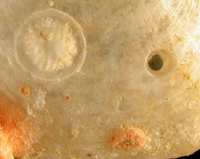
Hole drilled in the shell of a brachiopod. Photo courtesy Daniel Miller (University of Michigan).
A study of fossils from the Paleozoic Era, collected across the world, reveals that ancient brachiopods were little bothered by predators. However, the rare predation traces left on brachiopod shells by unknown assailants coupled with a subtle increase in their frequency through time may be the shadows on the wall that show killers were in the room and their numbers increased with time.

From 550 million years ago until 250 million years ago, brachiopods, or "lampshells," were plentiful in the earth's oceans. Today these shelly creatures that superficially resemble clams are rare, mostly lingering in cryptic habitats and subpolar regions of the oceans. But the fossil record, generously endowed with lampshells of diverse shapes, offers an impressive testament to the bygone glory of brachiopods.

Biology
BiologyJune 17, 2005 06:01 PM

Results of the latest full range survey indicate that tiger numbers in Russia appear to be stable, say the coordinators of a 2005 winter effort to count the animals, led by the New York-based Wildlife Conservation Society. After a massive winter endeavor to determine distribution and abundance of tigers in the Russian Far East, the last stronghold of Siberian tigers, researchers report that approximately 334-417 adult tigers remain in the region, along with 97-112 cubs. While stressing that results are preliminary, the news is welcome relief to tiger conservationists around the world, who have seen spiraling decreases in tiger numbers in other parts of Asia. The announcement also comes just a few months after WCS conservationists learned the Olga, a 14-year-old Siberian tiger had been killed by poachers, after scientists had been continuously monitoring her whereabouts from more than a decade.

Biotechnology

Air Force personnel will soon know within minutes if they or their equipment are contaminated with a biological agent, thanks to a new technology developed by the Air Force and a national laboratory.

Personnel will use the biosensor system to collect and isolate samples, detect and identify agents, and assess the seriousness of the threat.

Microbiology

In one of the first molecular studies of the human antibody response to yellow fever, Howard Hughes Medical Institute (HHMI) researchers and their colleagues have found the crucial bit of virus that people's immune systems need to spot and quash this often-fatal re-emerging disease.

The findings may help scientists improve the existing vaccine, which has rare but severe side effects, said Jan ter Meulen, an HHMI international research scholar and associate professor of virology at Leiden University Medical Center in The Netherlands.

Microarray

A pilot study at the National Institute of Standards and Technology (NIST), in support of the National Cancer Institute's Early Detection Research Network (EDRN), has validated the measurement accuracy of new techniques that use mitochondrial DNA as an early indicator for certain types of cancer. Additional results suggest that a relatively simple diagnostic test using a DNA microarray "chip" could enable early detection of some solid tumors, including lung cancer.

Molecular & Cell Biology

Scientists have tracked down the biological trigger that gives rise to Van Buchem disease, a hereditary, disfiguring bone disorder that can cause blindness and deafness. The findings provide insight into long-range gene regulation and could lead to new treatments for osteoporosis and other crippling bone disorders.

Molecular & Cell Biology

Researchers report today that regions of the human genome have been hotspots for acquiring duplicated DNA sequences – but only at specific time-points during evolution. It appears that long periods of genomic stasis, at least with regard to the accretion of duplicated DNA fragments, are "punctuated" by relatively brief episodes of duplicative activity. This is the first time that such temporal bias has been documented for DNA duplications, and it challenges the evolutionary paradigm that continuous alterations occur during the course of genome evolution.

Health & Medicine

Researchers at the Johns Hopkins Bloomberg School of Public Health and other institutions found high rates of herpes simplex virus 2 and syphilis among young drug users in Baltimore, Md. The study found that women had significantly higher rates compared to their male counterparts, but did not find significant differences between injection drug users and non-injection drug users. Few of the infected study participants were aware of their sexually transmitted infection. The study is published in the June 2005 issue of Sexually Transmitted Infections.