
Biology News Net
RSS 2.0 Feed
Biotechnology

gtech050905_1sm.jpg
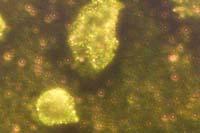
Gold nanoparticles stick to cancer cells and make them shine.
Binding gold nanoparticles to a specific antibody for cancer cells could make cancer detection much easier, suggests research at the Georgia Institute of Technology and the University of California at San Francisco (UCSF). The report is published online as an ASAP article in the journal Nano Letters.

"Gold nanoparticles are very good at scattering and absorbing light," said Mostafa El-Sayed, director of the Laser Dyanamics Laboratory and chemistry professor at Georgia Tech. "We wanted to see if we could harness that scattering property in a living cell to make cancer detection easier. So far, the results are extremely promising."

Microbiology

As science gets wiser, so do the bugs. The rates of drug-resistant bacteria infecting patients in the community and in the hospital have been increasing steadily in recent years, according to two new studies in the June 15 issue of Clinical Infectious Diseases, now available online.

Biotechnology

Transferrin, a plasma protein found in blood, can be fused with large, protein-based drugs such as granulocyte colony-stimulating factor (G-CSF) to create a new oral compound that is capable of surviving the journey through the gastrointestinal (GI) tract and then able to cross over into the bloodstream to be used by the body, according to research from the University of Southern California School of Pharmacy.

Molecular & Cell Biology

University of Iowa Biological Sciences Professor Daniel F. Eberl and his colleagues at Duke University have uncovered genetic defects leading to deafness in fruit flies that may shed light on deafness in humans. Their research paper, "Myosin VIIA Defects, which Underlie the Usher 1B Syndrome in Humans, Lead to Deafness in Drosophila," is scheduled for publication in the May 10 issue of the journal Current Biology.

Microbiology

Sea squirts around the world are breathing a sigh of relief, as they no longer run the risk of being harvested for their natural disease-fighting substances. Scientists recently discovered that the bacterium Prochloron didemnii, which lives symbiotically inside the sea squirt, actually produces the desired patellamides, compounds that may one day be used in cancer treatment.

Biology

Agriculture is not unique to humans: some insect groups have also evolved this way of life. One such group is the fungus-farming termites, which cultivate fungi as food inside their nests. Such termites can be found in both rain forest and savannah habitats in the Old World tropics, from Africa to Asia. But as researchers report this week, a combination of DNA sequence analysis and computer modelling suggests that termite agriculture originated in the African rain forest, and gave rise to the many fungus-cultivating termite species alive today in various parts of the Old World.

Biology

A biologist at Washington University in St. Louis has shown that for some fish species, females prefer males with larger sexual organs, and actually choose them for mating. That does not exclude males with an average-sized sex organ, called a gonopodium. These fish out-compete the larger-endowed males in a predator-laden environment because they have a faster burst speed than the males with larger genitalia, who lose out because the size of their organ slows them down, making them ripe for capture by larger fish.

Bioinformatics

The International Myeloma Foundation (IMF) today announces the launch of Bank On A Cure®, the first myeloma-specific, cancer-patient DNA bank in history. Bank On A Cure was created to advance research, to provide better treatments in the short term, and to find a cure for multiple myeloma, a cancer of the plasma cells in the bone marrow.

Biotechnology

New findings show an iron storage molecule in the cell can serve as an advanced tool for mapping gene expression. Future gene therapy may use a technique in which non-invasive magnetic resonance imaging (MRI) is used to track this molecule. The results of this research, conducted by Prof. Michal Neeman of the Weizmann Institute's Biological Regulation Department, were published in the research journal Neoplasia.

Molecular & Cell Biology

By studying mice with skin cancer, researchers at the Huntsman Cancer Institute at the University of Utah discovered a way to inhibit a mutant gene found in up to 30 percent of human tumors.