


A University of Colorado Cancer study published today in the Journal of the American Medical Informatics Association (JAMIA) describes a new tool that interprets the raw data of whole exome tumor sequencing and then matches the cancer's unique genetics to FDA-approved targeted treatments.

| Environment | March 29, 2016 08:03 PM |

Fishing boats at the harbor in Luderitz, Namibia. The small town is known for its crayfish industry. New groundbreaking research shows that with improved fishing approaches -- compared to business as usual -- the majority of the world's wild fisheries could be at healthy levels in just 10 years and global fish populations could double by 2050.
| Full story | 0 Comments | 7529 views |

| Biotechnology | March 29, 2016 08:03 PM |
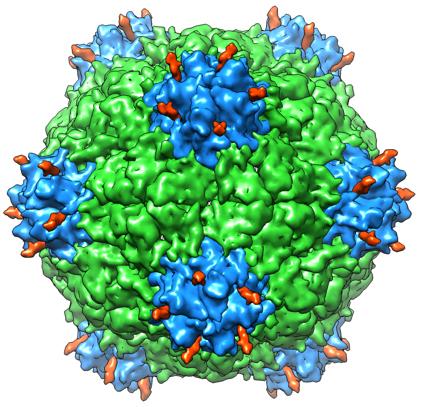
A new study shows that a hollowed-out version of cowpea mosaic virus could be useful in human therapies. Viruses aren't always bad. In fact, scientists can harness the capabilities of some viruses for good--modifying the viruses to carry drug molecules, for example.
| Full story | 0 Comments | 7864 views |

| Molecular & Cell Biology | March 29, 2016 08:03 PM |
A novel investigation of how enzymatic reactions can direct the motion and organization of microcapsules may point toward a new theory of how protocells - the earliest biological cells - could have organized into colonies and thus, could have ultimately formed larger, differentiated structures.
| Full story | 0 Comments | 5535 views |

| Microbiology | March 29, 2016 08:03 PM |
Bacteria are the most abundant form of life on Earth, and they are capable of living in diverse habitats ranging from the surface of rocks to the insides of our intestines. Over millennia, these adaptable little organisms have evolved a variety of specialized mechanisms to move themselves through their particular environments. In two recent Caltech studies, researchers used a state-of-the-art imaging technique to capture, for the first time, three-dimensional views of this tiny complicated machinery in bacteria.
| Full story | 0 Comments | 7435 views |
| Molecular & Cell Biology | March 29, 2016 12:02 AM |
According to epigenetics -- the study of inheritable changes in gene expression not directly coded in our DNA -- our life experiences may be passed on to our children and our children's children. Studies on survivors of traumatic events have suggested that exposure to stress may indeed have lasting effects on subsequent generations. But how exactly are these genetic "memories" passed on?
| Full story | 0 Comments | 6731 views |
| Molecular & Cell Biology | March 29, 2016 12:02 AM |
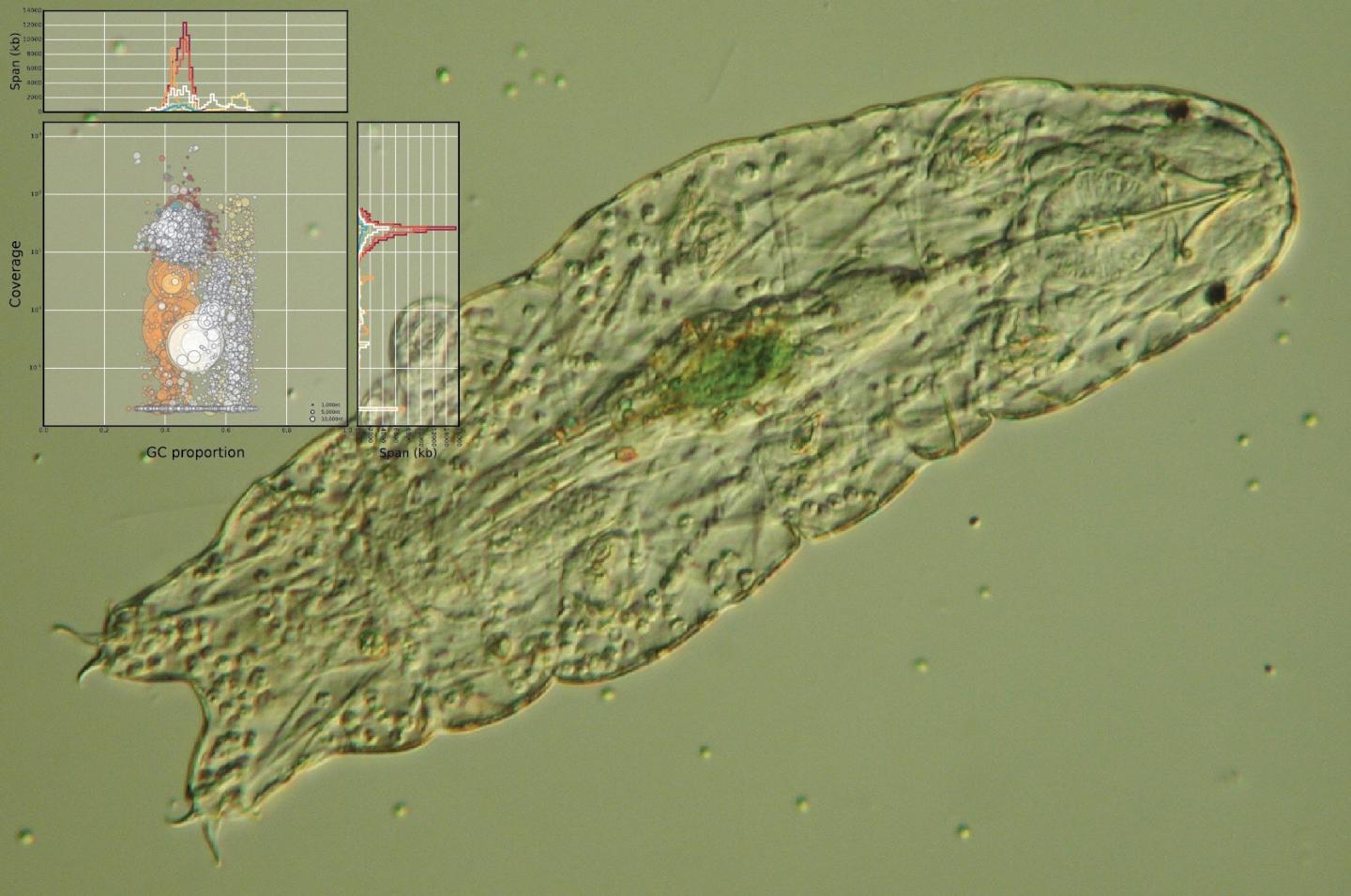
Tardigrades have not acquired a significant proportion of their DNA from other organisms, a new study shows. Tardigrades, also known as moss piglets or water bears, are eight-legged microscopic animals that have long fascinated scientists for their ability to survive extremes of temperature, pressure, lack of oxygen, and even radiation exposure.
| Full story | 0 Comments | 5528 views |
| Molecular & Cell Biology | March 29, 2016 12:02 AM |
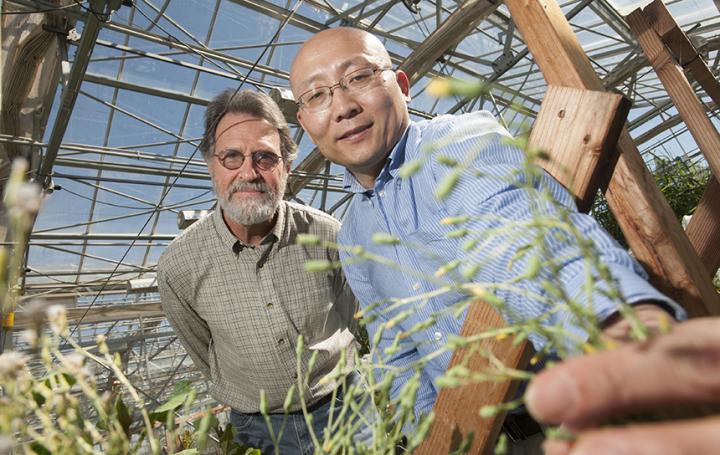
Kent Bradford, left, and Alfred Huo, seen here with a flowering lettuce plant, found that lettuce could be prevented from flowering by increasing the expression of a specific microRNA Like most annuals, lettuce plants live out their lives in quiet, three-act dramas that follow the seasons. Seed dormancy gives way to germination; the young plant emerges and grows; and finally in the climax of flowering, a new generation of seeds is produced. It's remarkably predictable, but the genetics that coordinates these changes with environmental cues has not been well understood.
| Full story | 0 Comments | 4980 views |
| Molecular & Cell Biology | March 29, 2016 12:02 AM |
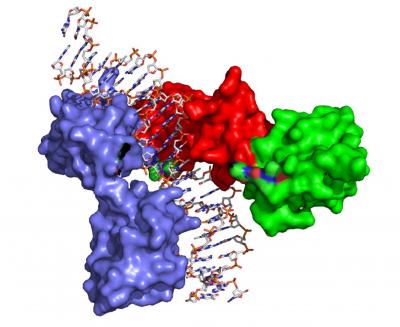
Space-filling model of Reb1 bound to DNA. In a study published on 28 March 2016 in the Proceedings of the National Academy of Sciences, researchers at the Medical University of South Carolina (MUSC) and Virginia Commonwealth University have resolved the first protein structure in a family of proteins called transcription terminators. The crystal structure of the protein, called Reb1, provides insight into aging and cancer, according to Deepak Bastia, Ph.D., Endowed Chair for Biomedical Research in the MUSC Department of Biochemistry and Molecular Biology and co-senior author of the study.
| Full story | 0 Comments | 5202 views |

- In some genetic cases of microcephaly, stem cells fail to launch
- Yale team discovers how Zika virus causes fetal brain damage
- Scientists uncover the way a common cell enzyme alerts the body to invading bacteria
- Arctic gives clues on worst mass extinction of life
- Calcium channel blockers caught in the act at atomic level
Search Bio News Net
Free Biology Newsletter
- Flexibility That A.C.A. Lent to Work Force Is Threatened by...International Herald Tribune
- Bacteria Behind Legionnaires’ Disease Found at New York Police StationInternational Herald Tribune
- Prescription Price Crisis? 28 Million Americans See Spike in Drug...MSNBC.com: Health
- Seizing on Opioid Crisis, a Drug Maker Lobbies Hard for...International Herald Tribune
- Republicans are taking a big political risk on health careAP Health News
- Why We're So Divided Over Saving WolvesNational Geographic News