


In a surprise result, James Cook University scientists have found female blacktip reef sharks and their young stay close to shore over long time periods, with adult males only appearing during the breeding season.

| Biotechnology | February 26, 2016 04:12 PM |
A novel HIV-based lentiviral vector can introduce a gene to pancreatic tumor cells that makes them more sensitive to the chemotherapeutic drug gemcitabine, without integrating into cellular DNA. This integrase-defective lentiviral delivery system greatly reduces the risk of insertional mutagenesis and replication-competent lentivirus production, as describe in a new study published in Human Gene Therapy, a peer-reviewed journal from Mary Ann Liebert, Inc., publishers. The article is available free to read on the Human Gene Therapy website until March 31, 2016.
| Full story | 0 Comments | 6843 views |

| Health & Medicine | February 26, 2016 04:12 PM |
Understanding the scale and range of neurological disease associated with Zika virus infection is an urgent priority, warn researchers from the University of Liverpool's Institute of Infection and Global Health.
| Full story | 0 Comments | 6934 views |

| Molecular & Cell Biology | February 26, 2016 04:12 PM |
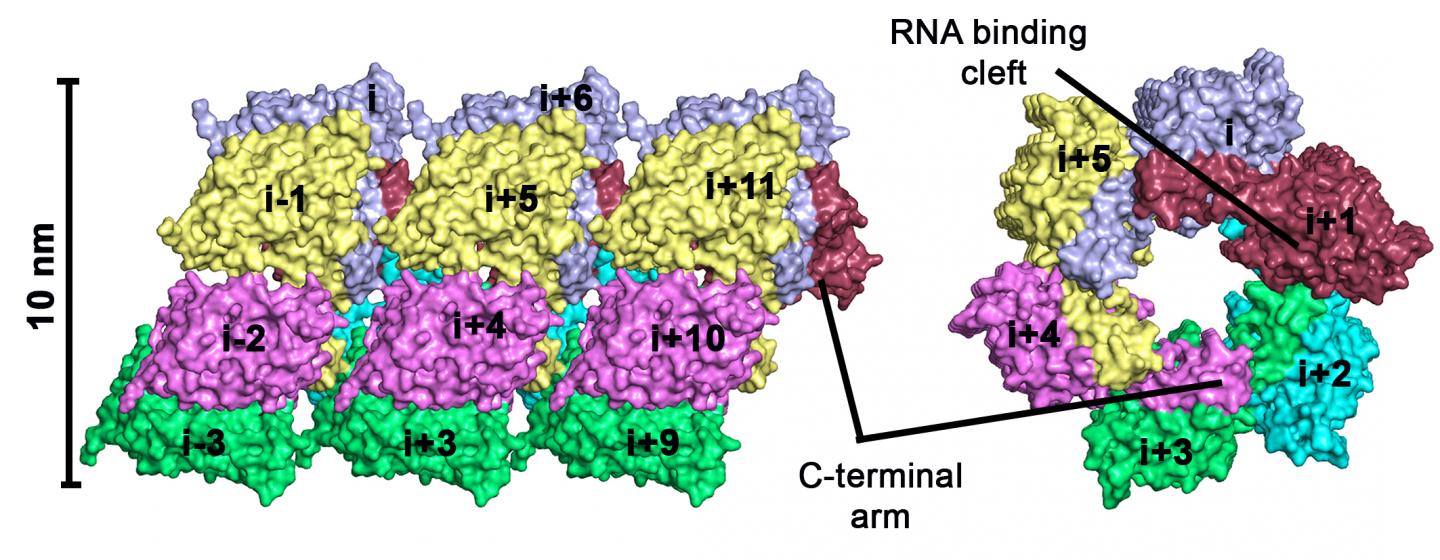
Left: Hexameric rings form a tube of viral capsid. Right: view from the other side of the protein oligomer. Bank voles are small rodents that are not dangerous by themselves, but their excreta can contain one of the dangerous hantaviruses. While bank voles are unaffected by the infection, hantaviruses can cause potentially fatal diseases in humans for which no treatments exist. In central and northern Europe, infection is accompanied by fever, headache, or even renal failure. The strain that occurs in East Asia -- the Hantaan virus -- is even more dangerous: up to five percent of infected patients die of hemorrhagic fever, renal failure, or severe respiratory disorders.
| Full story | 0 Comments | 5050 views |

- In some genetic cases of microcephaly, stem cells fail to launch
- Yale team discovers how Zika virus causes fetal brain damage
- Scientists uncover the way a common cell enzyme alerts the body to invading bacteria
- Arctic gives clues on worst mass extinction of life
- Calcium channel blockers caught in the act at atomic level
Search Bio News Net
Free Biology Newsletter
- Flexibility That A.C.A. Lent to Work Force Is Threatened by...International Herald Tribune
- Bacteria Behind Legionnaires’ Disease Found at New York Police StationInternational Herald Tribune
- Prescription Price Crisis? 28 Million Americans See Spike in Drug...MSNBC.com: Health
- Seizing on Opioid Crisis, a Drug Maker Lobbies Hard for...International Herald Tribune
- Republicans are taking a big political risk on health careAP Health News
- Why We're So Divided Over Saving WolvesNational Geographic News