

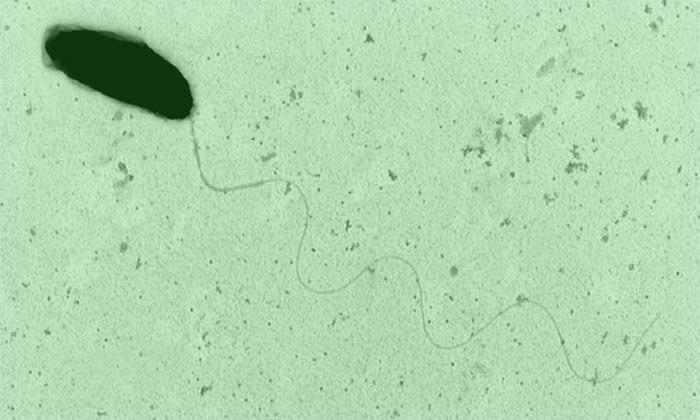
Electron micrograph of the marine bacteria Marinomonas mediterranea is shown. Scientists from The University of Texas at Austin, the Stanford University School of Medicine and two other institutions have discovered that bacteria have a system that can recognize and disrupt dangerous viruses using a newly identified mechanism involving ribonucleic acid (RNA). It is similar to the CRISPR/Cas system that captures foreign DNA. The discovery might lead to better ways to thwart viruses that kill agricultural crops and interfere with the production of dairy products such as cheese and yogurt.

| Microbiology | February 25, 2016 06:09 PM |
| Full story | 0 Comments | 7972 views |

| Biotechnology | February 25, 2016 06:09 PM |
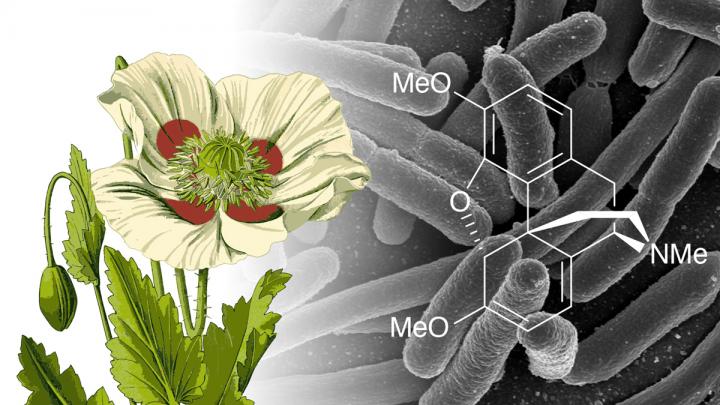
Japanese bioengineers have tweaked Escherichia coli genes so that they pump out thebaine, a morphine precursor that can be modified to make painkillers. A common gut microbe could soon be offering us pain relief. Japanese bioengineers have tweaked Escherichia coli genes so that they pump out thebaine, a morphine precursor that can be modified to make painkillers. The genetically modified E. coli produces 300 times more thebaine with minimal risk of unregulated use compared to a recently developed method involving yeast.
| Full story | 0 Comments | 6710 views |

- In some genetic cases of microcephaly, stem cells fail to launch
- Yale team discovers how Zika virus causes fetal brain damage
- Scientists uncover the way a common cell enzyme alerts the body to invading bacteria
- Arctic gives clues on worst mass extinction of life
- Calcium channel blockers caught in the act at atomic level
Search Bio News Net
Free Biology Newsletter
- Flexibility That A.C.A. Lent to Work Force Is Threatened by...International Herald Tribune
- Bacteria Behind Legionnaires’ Disease Found at New York Police StationInternational Herald Tribune
- Prescription Price Crisis? 28 Million Americans See Spike in Drug...MSNBC.com: Health
- Seizing on Opioid Crisis, a Drug Maker Lobbies Hard for...International Herald Tribune
- Republicans are taking a big political risk on health careAP Health News
- Why We're So Divided Over Saving WolvesNational Geographic News