


The dinoflagellates aren't happy. In good times, these tiny ocean creatures live free-floating in the ocean or symbiotically with corals, serving up--or as--lunch to a host of mollusks, tiny fish and coral species. Some of them make glowing waves at night because they are bioluminescent. But when conditions are wrong, dinoflagellates poison shellfish beds with red tides and abandon coral reefs to a slow, bleached death.

| Biology | November 5, 2015 07:22 PM |
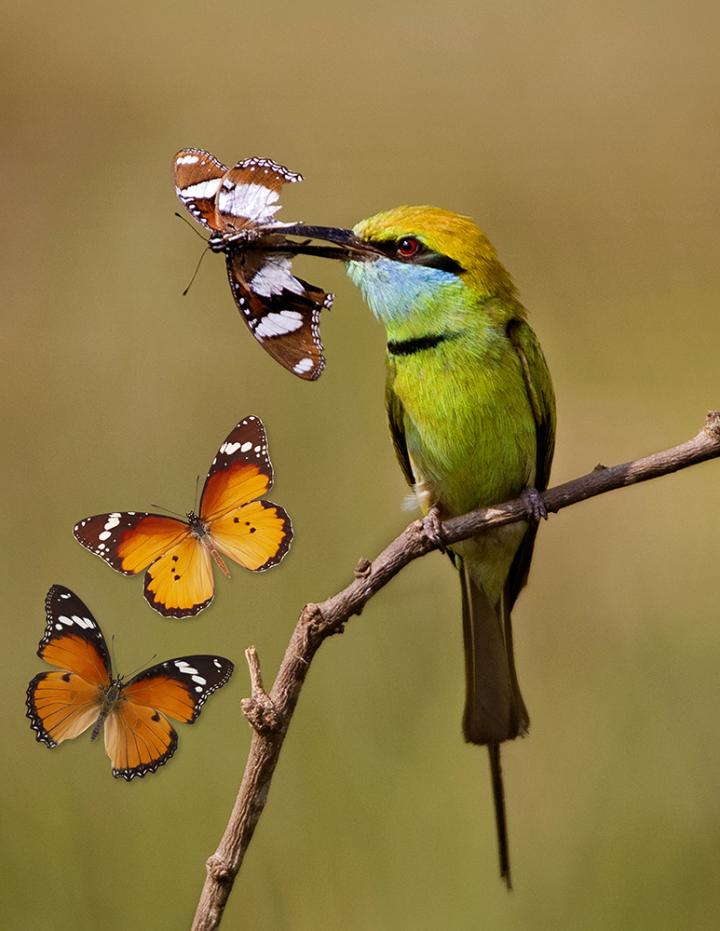
Wing color patterns of butterflies must perform different signalling functions to avoid predators and attract potential mates. In the natural world, mimicry isn't entertainment; it's a deadly serious game spanning a range of senses - sight, smell and hearing. Some of the most striking visual mimics are butterflies. Many butterflies become noxious and unpalatable to predators by acquiring chemical defences from plants they ingest as caterpillars. Other butterflies mimic the 'aposematic' or warning colouration and conspicuous wing patterns of these toxic or just plain foul-tasting butterflies.
| Full story | 0 Comments | 8946 views |
| Biology | November 5, 2015 07:22 PM |
Two captive elephants blast air through their trunks to grasp hard-to-reach food, suggests an initial study published today in Springer's journal Animal Cognition. This behaviour, studied in a zoo population of Asian elephants (Elephas maximus), is altered according to the distance to the food, which may indicate advanced mental ability and awareness of their physical environment.
| Full story | 0 Comments | 8020 views |

| Health & Medicine | November 5, 2015 07:22 PM |
Most people who think they're allergic to penicillin have been told so by a doctor after they've had a reaction to the drug. And the majority, even though they've never been allergy tested, never take penicillin again.
| Full story | 0 Comments | 5586 views |

| Biotechnology | November 5, 2015 07:22 PM |
University of Birmingham (UK) scientists have created a plant that rejects its own pollen or pollen of close relatives, according to research published in the journal Science today (5 November 2015).
| Full story | 0 Comments | 7443 views |

- In some genetic cases of microcephaly, stem cells fail to launch
- Yale team discovers how Zika virus causes fetal brain damage
- Scientists uncover the way a common cell enzyme alerts the body to invading bacteria
- Arctic gives clues on worst mass extinction of life
- Calcium channel blockers caught in the act at atomic level
Search Bio News Net
Free Biology Newsletter
- Flexibility That A.C.A. Lent to Work Force Is Threatened by...International Herald Tribune
- Bacteria Behind Legionnaires’ Disease Found at New York Police StationInternational Herald Tribune
- Prescription Price Crisis? 28 Million Americans See Spike in Drug...MSNBC.com: Health
- Seizing on Opioid Crisis, a Drug Maker Lobbies Hard for...International Herald Tribune
- Republicans are taking a big political risk on health careAP Health News
- Why We're So Divided Over Saving WolvesNational Geographic News