


Altering the protein recycling complexes in human cells, including cancer cells, allows the cells to resist treatment with a class of drugs known as proteasome inhibitors, according to Whitehead Institute scientists.

| Biotechnology | September 2, 2015 04:39 PM |
Advances in 3-D printing have led to new ways to make bone and some other relatively simple body parts that can be implanted in patients. But finding an ideal bio-ink has stalled progress toward printing more complex tissues with versatile functions -- tissues that can be loaded with pharmaceuticals, for example. Now scientists, reporting in the journal ACS Biomaterials Science & Engineering, have developed a silk-based ink that could open up new possibilities toward that goal.
| Full story | 0 Comments | 6747 views |

| Biology | September 2, 2015 04:39 PM |
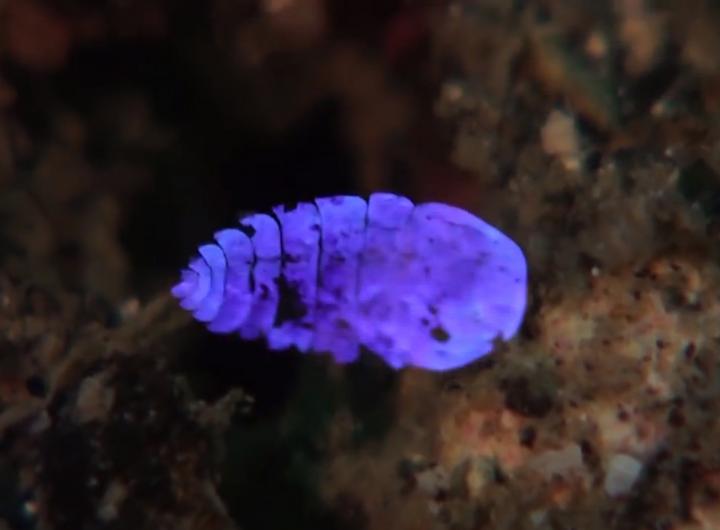
Tiny sea sapphires' iridescence, created by a regular array of thin transparent crystal plates, is also the secret of their "disappearance. " Tiny ocean creatures known as sea sapphires perform a sort of magic trick as they swim: One second they appear in splendid iridescent shades of blue, purple or green, and the next they may turn invisible (at least the blue ones turn completely transparent). How do they get their bright colors and what enables them to "disappear?" New research at the Weizmann Institute has solved the mystery of these colorful, vanishing creatures, which are known scientifically as Sapphirinidae. The findings, which recently appeared in the Journal of the American Chemical Society, could inspire the development of new optical technologies.
| Full story | 0 Comments | 8283 views |

| Bioinformatics | September 2, 2015 04:39 PM |
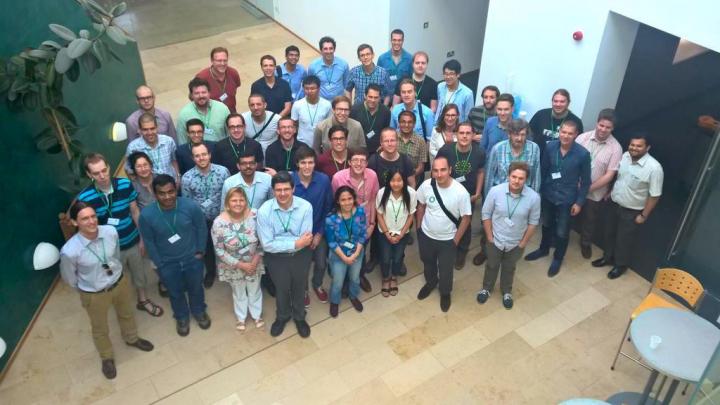
BioJS conference group is shown. Drawing upon reusable components to visualise and analyse biological data on the web, BioJS data is freely available to users and developers where they can modify, extend and redistribute the software with few restrictions, at no cost. With a vision for 'every online biological dataset in the world should be visualised with BioJS tools', the community hopes to achieve the largest, most comprehensive repository of JavaScript tools to visualise online biological data, available for all.
| Full story | 0 Comments | 5707 views |

- In some genetic cases of microcephaly, stem cells fail to launch
- Yale team discovers how Zika virus causes fetal brain damage
- Scientists uncover the way a common cell enzyme alerts the body to invading bacteria
- Arctic gives clues on worst mass extinction of life
- Calcium channel blockers caught in the act at atomic level
Search Bio News Net
Free Biology Newsletter
- Flexibility That A.C.A. Lent to Work Force Is Threatened by...International Herald Tribune
- Bacteria Behind Legionnaires’ Disease Found at New York Police StationInternational Herald Tribune
- Prescription Price Crisis? 28 Million Americans See Spike in Drug...MSNBC.com: Health
- Seizing on Opioid Crisis, a Drug Maker Lobbies Hard for...International Herald Tribune
- Republicans are taking a big political risk on health careAP Health News
- Why We're So Divided Over Saving WolvesNational Geographic News