

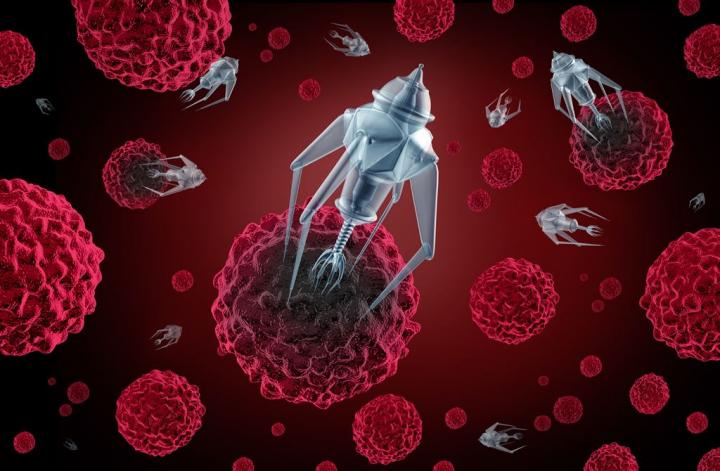
Scientists have developed a method, using a double layer of lipids, which facilitates the assembly of DNA origami units, bringing us one-step closer to DNA nanomachines. Scientists have been studying ways to use synthetic DNA as a building block for smaller and faster devices. DNA has the advantage of being inherently "coded". Each DNA strand is formed of one of four "codes" that can link to only one complementary code each, thus binding two DNA strands together. Scientists are using this inherent coding to manipulate and "fold" DNA to form "origami nanostructures": extremely small two- and three-dimensional shapes that can then be used as construction material to build nanodevices such as nanomotors for use in targeted drug delivery inside the body.

| Biotechnology | September 1, 2015 05:59 PM |
| Full story | 0 Comments | 7822 views |
| Biotechnology | September 1, 2015 05:59 PM |
The study, published today at Nature Methods (the most prestigious journal for the presentation of results in methods development), proposes the use of two plant protein epitopes, named inntags, as the most innocuous and stable tagging tools in the study of physical and functional interactions of proteins.
| Full story | 0 Comments | 5674 views |

| Biology | September 1, 2015 05:59 PM |

Elite hunter from bat world has previously unknown cues at its disposal. The ability of some bats to spot motionless prey in the dark has baffled experts until now. By creating the first visual images from echolocation, researchers reveal we have been missing how bats sense their world.
| Full story | 0 Comments | 6311 views |

- In some genetic cases of microcephaly, stem cells fail to launch
- Yale team discovers how Zika virus causes fetal brain damage
- Scientists uncover the way a common cell enzyme alerts the body to invading bacteria
- Arctic gives clues on worst mass extinction of life
- Calcium channel blockers caught in the act at atomic level
Search Bio News Net
Free Biology Newsletter
- Flexibility That A.C.A. Lent to Work Force Is Threatened by...International Herald Tribune
- Bacteria Behind Legionnaires’ Disease Found at New York Police StationInternational Herald Tribune
- Prescription Price Crisis? 28 Million Americans See Spike in Drug...MSNBC.com: Health
- Seizing on Opioid Crisis, a Drug Maker Lobbies Hard for...International Herald Tribune
- Republicans are taking a big political risk on health careAP Health News
- Why We're So Divided Over Saving WolvesNational Geographic News