


Mice lacking the protein retGC1, which is deficient in humans suffering Leber congenital amaurosis-1 (LCA1), a disorder that causes severe visual impairment beginning in infancy, received gene therapy to replace retGC1 and showed fully restored visual function that persisted for at least 6 months. The success of this approach strongly support clinical testing of a gene therapy targeted to the retinas of LCA1 patients, conclude the authors of the study published in Human Gene Therapy. The article is available free on the Human Gene Therapy website until September 30, 2015.

| Molecular & Cell Biology | August 31, 2015 02:34 PM |
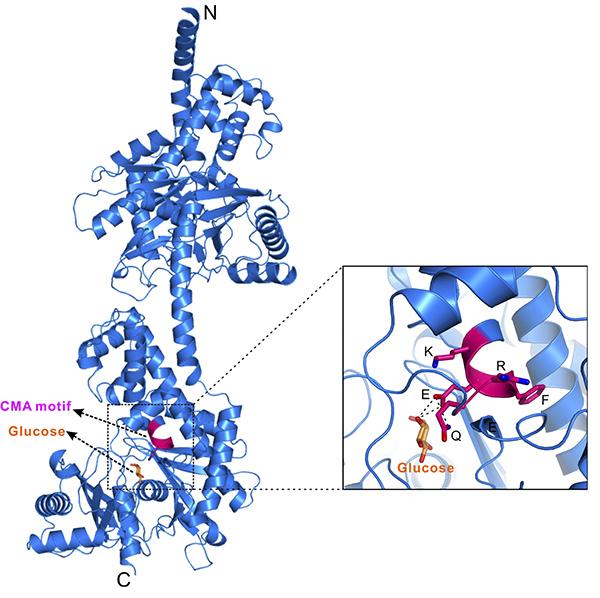
Eliminating HK2 (shown here), which is a key enzyme for glucose metabolism, may be a way to prevent cancer cells from surviving, A study published in The Journal of Cell Biology describes a way to force cancer cells to destroy a key metabolic enzyme they need to survive.
| Full story | 0 Comments | 5721 views |

| Biology | August 31, 2015 02:34 PM |
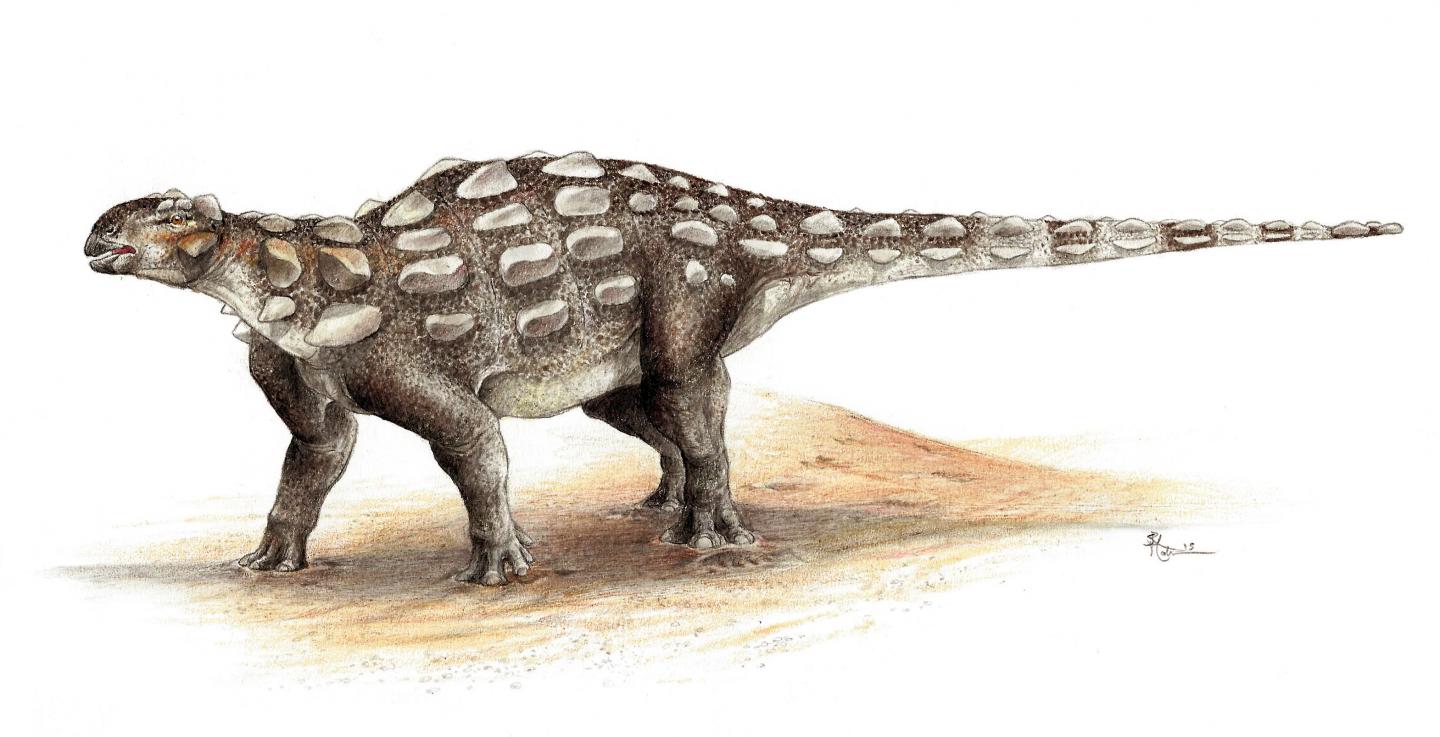
Life illustration of Gobisaurus, an ankylosaur with a stiff tail but no knob of bone at the end. How did the ankylosaur get its tail club? According to research from North Carolina State University and the North Carolina Museum of Natural Sciences that traces the evolution of the ankylosaur's distinctive tail, the handle arrived first on the scene, and the knot at the end of the tail followed.
| Full story | 0 Comments | 7133 views |
| Molecular & Cell Biology | August 31, 2015 02:34 PM |
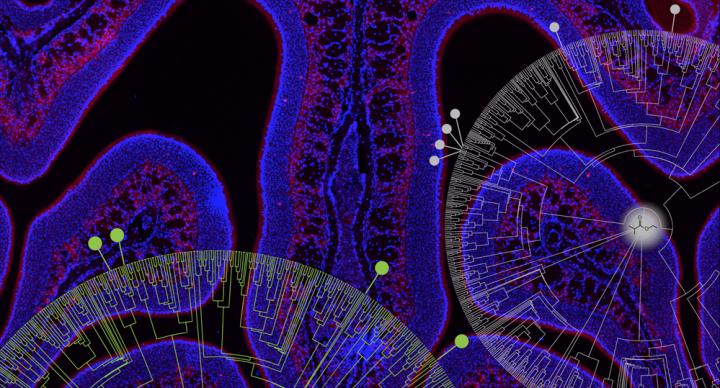
Olfactory signatures corresponding to specific odorants. In the background, an olfactory sensory neuroepithelium. In animals, numerous behaviors are governed by the olfactory perception of their surrounding world. Whether originating in the nose of a mammal or the antennas of an insect, perception results from the combined activation of multiple receptors located in these organs. Identifying the full repertoire of receptors stimulated by a given odorant would represent a key step in deciphering the code that mediates these behaviors. To this end, a tool that provides a complete olfactory receptor signature corresponding to any specific smell was developed in the Faculties of Science and Medicine of the University of Geneva (UNIGE), Switzerland. Published in the journal Nature Neuroscience, this approach allows to identify thousands of chemosensory receptors, among which, potentially, those able to trigger predetermined behaviors in mammals or in insects, such as pests, disease vectors or parasites.
| Full story | 0 Comments | 4300 views |
| Molecular & Cell Biology | August 31, 2015 02:34 PM |
It was long believed that acquired immunity--a type of immunity mediated by T- and B-cells--had memory, meaning that it could learn from new pathogens, making subsequent reactions more effective, whereas innate immunity--which is mediated by macrophages and other types of cells that react to certain molecules typically associated with pathogens--did not. However, it gradually became clear that things were not so simple. Plants and insects, which only have innate immunity, also seem to have immunological memory. Further, it has been reported that herpes virus infection increases the resistance against bacteria in vertebrates. These phenomena suggest that innate immunity also has memory, but researchers have been reluctant to accept the hypothesis given the lack of a mechanism Now, in research published in Nature Immunology, a research team led by Keisuke Yoshida and Shunsuke Ishii of the RIKEN Molecular Genetics Laboratory has revealed that epigenomic changes induced by pathogen infections, mediated by a transcription factor called ATF7, are the underlying mechanism of the memory of innate immunity.
| Full story | 0 Comments | 4280 views |

| Biotechnology | August 31, 2015 02:34 PM |
A UCSF-led team has developed a technique to build tiny models of human tissues, called organoids, more precisely than ever before using a process that turns human cells into a biological equivalent of LEGO bricks. These mini-tissues in a dish can be used to study how particular structural features of tissue affect normal growth or go awry in cancer. They could be used for therapeutic drug screening and to help teach researchers how to grow whole human organs.
| Full story | 0 Comments | 5416 views |

- In some genetic cases of microcephaly, stem cells fail to launch
- Yale team discovers how Zika virus causes fetal brain damage
- Scientists uncover the way a common cell enzyme alerts the body to invading bacteria
- Arctic gives clues on worst mass extinction of life
- Calcium channel blockers caught in the act at atomic level
Search Bio News Net
Free Biology Newsletter
- Flexibility That A.C.A. Lent to Work Force Is Threatened by...International Herald Tribune
- Bacteria Behind Legionnaires’ Disease Found at New York Police StationInternational Herald Tribune
- Prescription Price Crisis? 28 Million Americans See Spike in Drug...MSNBC.com: Health
- Seizing on Opioid Crisis, a Drug Maker Lobbies Hard for...International Herald Tribune
- Republicans are taking a big political risk on health careAP Health News
- Why We're So Divided Over Saving WolvesNational Geographic News