

Recent evidence demonstrating the feasibility of using novel CRISPR/Cas9 gene editing technology to make targeted changes in the DNA of human embryos is forcing researchers, clinicians, and ethicists to revisit the highly controversial issue of altering the inherited human genome. A provocative Editorial exploring the current technical limitations, safety concerns, and moral acceptability of therapeutic germline gene editing is published in Human Gene Therapy, a peer-reviewed journal from Mary Ann Liebert, Inc., publishers. The article is available free on the Human Gene Therapy website until May 29th.

| Biotechnology | May 1, 2015 06:35 PM |
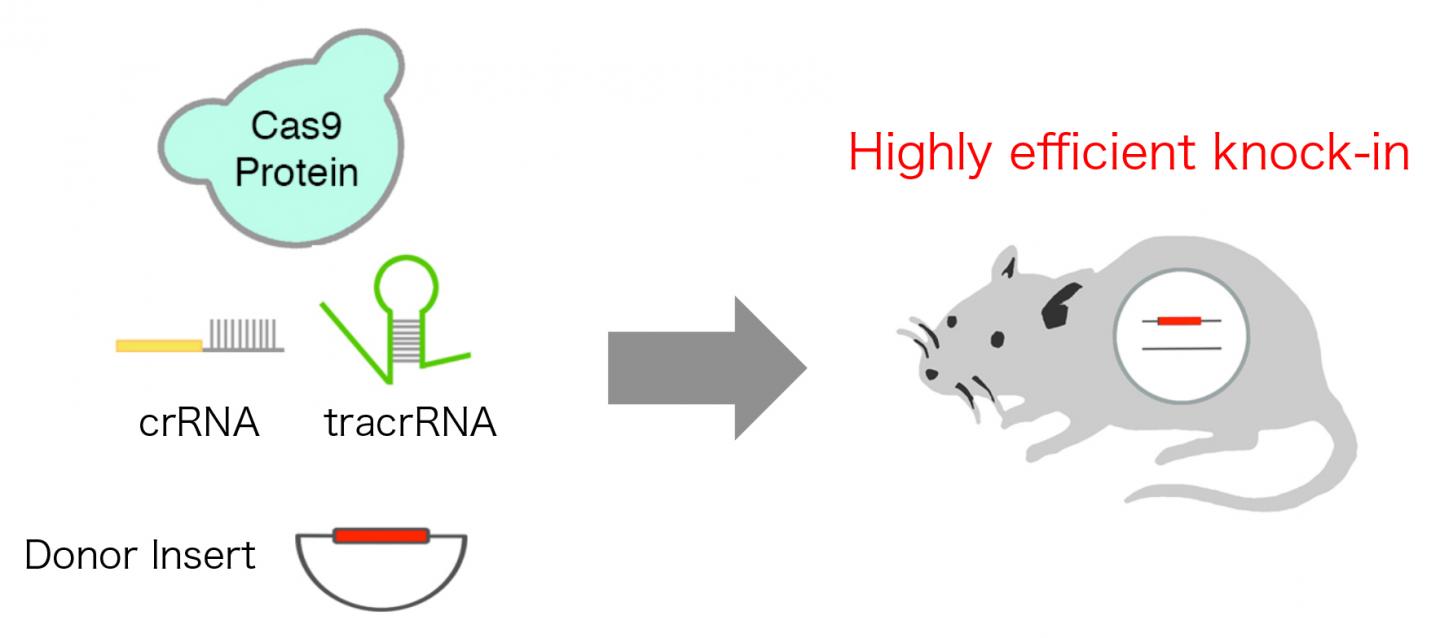
This image shows a schematic diagram of the highly efficient CRISPR/Cas system, which leads to super efficient targeted insertion (knock-in) of a long donor insert into mouse genome. Genome editing using CRISPR/Cas system has enabled direct modification of the mouse genome in fertilized mouse eggs, leading to rapid, convenient, and efficient one-step production of knockout mice without embryonic stem cells. In contrast to the ease of targeted gene deletion, the complementary application, called targeted gene cassette insertion or knock-in, in fertilized mouse eggs by CRISPR/Cas mediated genome editing still remains a tough challenge.
| Full story | 0 Comments | 6172 views |

- In some genetic cases of microcephaly, stem cells fail to launch
- Yale team discovers how Zika virus causes fetal brain damage
- Scientists uncover the way a common cell enzyme alerts the body to invading bacteria
- Arctic gives clues on worst mass extinction of life
- Calcium channel blockers caught in the act at atomic level
Search Bio News Net
Free Biology Newsletter
- Flexibility That A.C.A. Lent to Work Force Is Threatened by...International Herald Tribune
- Bacteria Behind Legionnaires’ Disease Found at New York Police StationInternational Herald Tribune
- Prescription Price Crisis? 28 Million Americans See Spike in Drug...MSNBC.com: Health
- Seizing on Opioid Crisis, a Drug Maker Lobbies Hard for...International Herald Tribune
- Republicans are taking a big political risk on health careAP Health News
- Why We're So Divided Over Saving WolvesNational Geographic News