

A team of Ludwig-Maximilians-Universitaet (LMU) in Munich has identified the first fossil specimens of a major group of killifishes that is widely distributed in freshwater habitats today. The 6-million-year-old material sheds new light on the evolution of the bony fishes.

| Microbiology | April 30, 2015 06:11 PM |
Researchers from Ludwig-Maximilians-Universitaet (LMU) in Munich demonstrate for the first time that bacteriophages (bacterial viruses) carry genetic instructions for proteins that mediate the transport of their DNA to specialized replication sites in the host cell.
| Full story | 0 Comments | 5969 views |

| Biology | April 30, 2015 06:11 PM |
Researchers of Ludwig-Maximilians-Universitaet (LMU) in Munich have carried out the first detailed study of the molecular mechanisms responsible for formation of the brachiopod shell. Comparison with shell synthesis in other groups reveals the deep evolutionary roots of the process.
| Full story | 0 Comments | 5869 views |
| Biology | April 30, 2015 06:11 PM |
If you thought that a beetle with a machine gun built into its rear end was something that only exists in sci-fi movies, you should talk to Wendy Moore at the University of Arizona.
| Full story | 0 Comments | 6328 views |

| Stem Cell Research | April 30, 2015 06:11 PM |
Stem cells, which have the potential to turn into any kind of cell, offer the tantalizing possibility of generating new tissues for organ replacements, stroke victims and patients of many other diseases. Now, scientists at the Salk Institute have uncovered details about stem cell growth that could help improve regenerative therapies.
| Full story | 0 Comments | 5823 views |
| Stem Cell Research | April 30, 2015 06:11 PM |
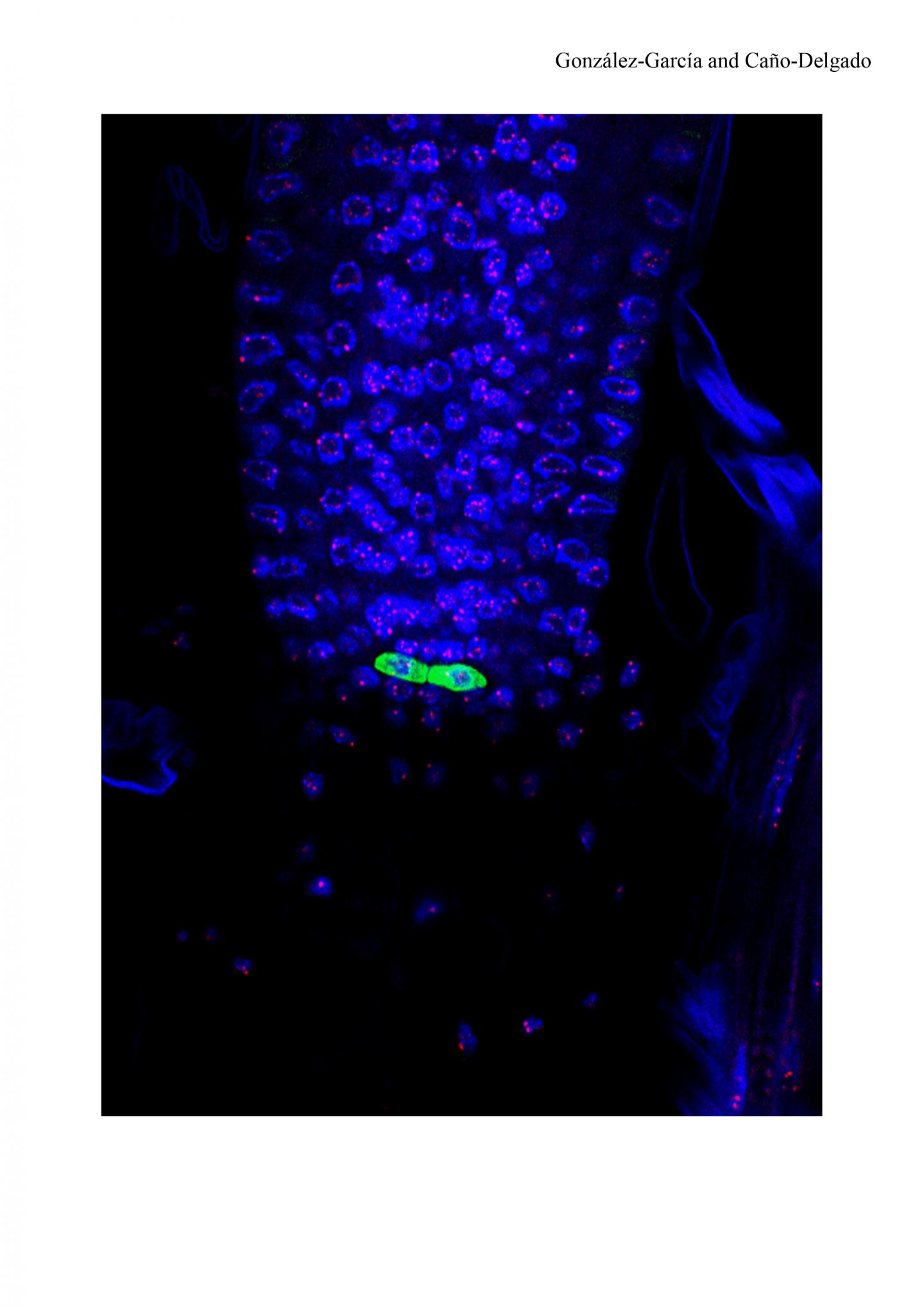
This is the root of the plant Arabidopsois thaliana with the telomeres highlighted in pink and the stem cell niche in green. The role played by telomeres in mammalian cells has been known for several years. It is also known that these non-coding DNA sequences, which are found at the ends of the chromosomes, protect them and are necessary to ensure correct cell division. What is more, the "youngest" cells have longer telomeres, and as these cells divide, the telomeres get shorter until they no longer permit new cell divisions. This telomere shortening process has also been associated with cancer, which emphasises the important implications of these structures, not only in the ageing process, but also in the oncology field or other age-associated illnesses.
| Full story | 0 Comments | 5283 views |

- In some genetic cases of microcephaly, stem cells fail to launch
- Yale team discovers how Zika virus causes fetal brain damage
- Scientists uncover the way a common cell enzyme alerts the body to invading bacteria
- Arctic gives clues on worst mass extinction of life
- Calcium channel blockers caught in the act at atomic level
Search Bio News Net
Free Biology Newsletter
- Flexibility That A.C.A. Lent to Work Force Is Threatened by...International Herald Tribune
- Bacteria Behind Legionnaires’ Disease Found at New York Police StationInternational Herald Tribune
- Prescription Price Crisis? 28 Million Americans See Spike in Drug...MSNBC.com: Health
- Seizing on Opioid Crisis, a Drug Maker Lobbies Hard for...International Herald Tribune
- Republicans are taking a big political risk on health careAP Health News
- Why We're So Divided Over Saving WolvesNational Geographic News