

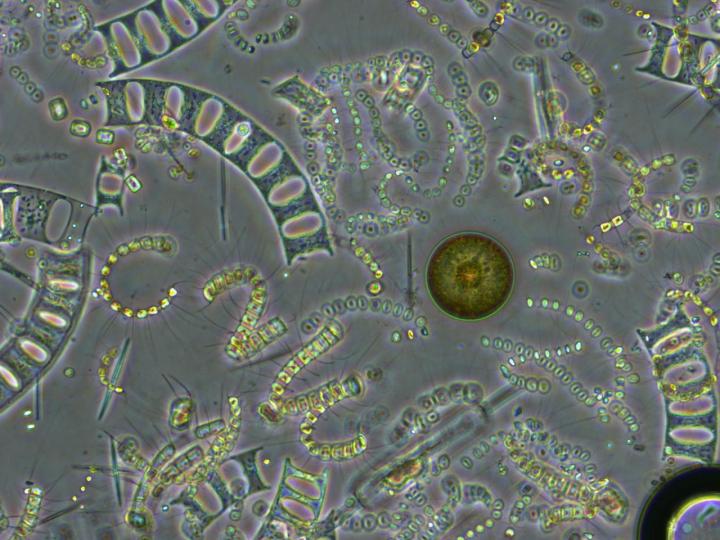
The high diversity of phytoplankton has puzzled biological oceanographers for a long time. Diversity of life abounds on Earth, and there's no need to look any farther than the ocean's surface for proof. There are over 200,000 species of phytoplankton alone, and all of those species of microscopic marine plants that form the base of the marine food web need the same basic resources to grow--light and nutrients.

| Biology | April 13, 2015 06:16 PM |
| Full story | 0 Comments | 5686 views |

| Bioinformatics | April 13, 2015 06:16 PM |
Placebos have helped to ease symptoms of illness for centuries and have been a fundamental component of clinical research to test new drug therapies for more than 70 years. But why some people respond to placebos and others do not remains under debate.
| Full story | 0 Comments | 5082 views |

| Microbiology | April 13, 2015 06:16 PM |
It may come as a bit of a surprise to learn that bacteria have an immune system - in their case to fight off invasive viruses called phages. And like any immune system - from single-celled to human - the first challenge of the bacterial immune system is to detect the difference between "foreign" and "self." This is far from simple, as viruses, bacteria and all other living things are made of DNA and proteins. A group of researchers at the Weizmann Institute of Science and Tel Aviv University has now revealed exactly how bacteria do this. Their results were published online today in Nature.
| Full story | 0 Comments | 5058 views |

| Environment | April 13, 2015 06:16 PM |
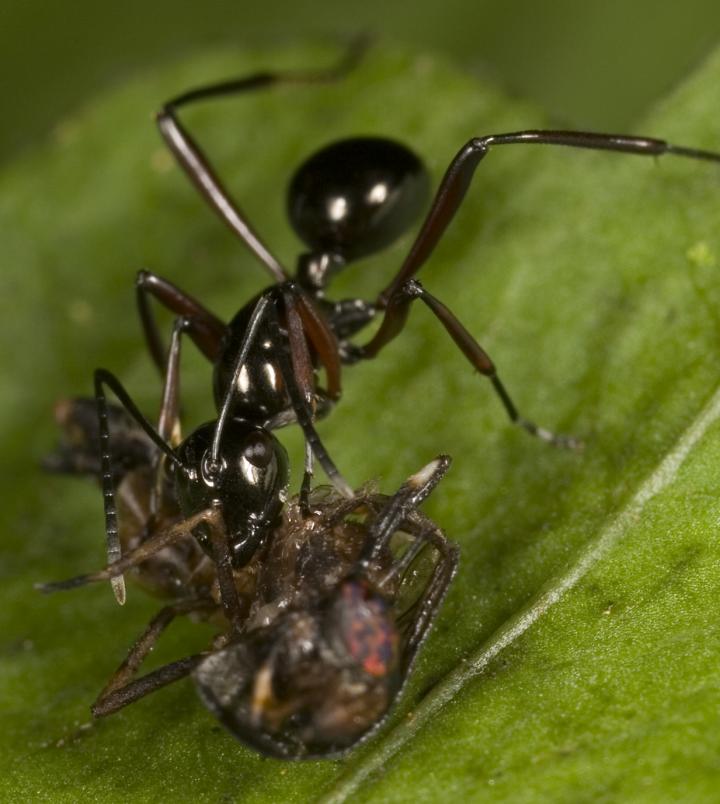
This is a Polyrhachis sp ant with prey. Ants like this keep invertebrate numbers down. Invertebrates perform essential functions for the smooth running of the ecosystems in tropical forests. For example, creatures such as termites and millipedes help dead leaves decompose and release their nutrients back into the soil, and carnivorous ants and spiders act as predators of herbivorous invertebrates that would otherwise munch through all the foliage.
| Full story | 0 Comments | 5204 views |

| Biotechnology | April 13, 2015 06:16 PM |
Researchers from Brown University and the University of Rhode Island have demonstrated a promising new way to increase the effectiveness of radiation in killing cancer cells.
| Full story | 0 Comments | 5771 views |

- In some genetic cases of microcephaly, stem cells fail to launch
- Yale team discovers how Zika virus causes fetal brain damage
- Scientists uncover the way a common cell enzyme alerts the body to invading bacteria
- Arctic gives clues on worst mass extinction of life
- Calcium channel blockers caught in the act at atomic level
Search Bio News Net
Free Biology Newsletter
- Flexibility That A.C.A. Lent to Work Force Is Threatened by...International Herald Tribune
- Bacteria Behind Legionnaires’ Disease Found at New York Police StationInternational Herald Tribune
- Prescription Price Crisis? 28 Million Americans See Spike in Drug...MSNBC.com: Health
- Seizing on Opioid Crisis, a Drug Maker Lobbies Hard for...International Herald Tribune
- Republicans are taking a big political risk on health careAP Health News
- Why We're So Divided Over Saving WolvesNational Geographic News