

A team of Whitehead Institute scientists has discovered the surprising manner in which an enigmatic protein known as SUUR acts to control gene copy number during DNA replication. It's a finding that could shed new light on the formation of fragile genomic regions associated with chromosomal abnormalities.

| Health & Medicine | October 28, 2014 07:59 PM |
A recent study at the University of Gothenburg sheds light on the mystery of the biological clock that governs fertility. Researchers at the University of Gothenburg have identified the biological clock that governs female fertility. The discovery represents a major contribution to research aimed at finding medical approaches to treating infertility in women.
| Full story | 0 Comments | 7624 views |

| Biology | October 28, 2014 07:59 PM |
A population of endangered giant tortoises, which once dwindled to just over a dozen, has recovered on the Galapagos island of Española, a finding described as "a true story of success and hope in conservation" by the lead author of a study published today (Oct. 28).
| Full story | 0 Comments | 9653 views |
| Health & Medicine | October 28, 2014 07:59 PM |
Glioma is a common name for serious brain tumours. Different types of glioma are usually diagnosed as separate diseases and have been considered to arise from different cell types in the brain. Now researchers at Uppsala University, together with American colleagues, have shown that one and the same cell of origin can give rise to different types of glioma. This is important for the basic understanding of how these tumours are formed and can contribute to the development of more efficient and specific glioma therapies. The results have been published in Journal of Neuroscience.
| Full story | 0 Comments | 6357 views |
| Biology | October 27, 2014 07:20 PM |
Making mistakes while learning can benefit memory and lead to the correct answer, but only if the guesses are close-but-no-cigar, according to new research findings from Baycrest Health Sciences.
| Full story | 0 Comments | 11132 views |

| Biotechnology | October 27, 2014 07:20 PM |
In the on-going effort to develop advanced biofuels as a clean, green and sustainable source of liquid transportation fuels, researchers at the U.S. Department of Energy (DOE)'s Joint BioEnergy Institute (JBEI) have identified microbial genes that can improve both the tolerance and the production of biogasoline in engineered strains of Escherichia coli.
| Full story | 0 Comments | 38328 views |
| Biotechnology | October 25, 2014 05:50 AM |
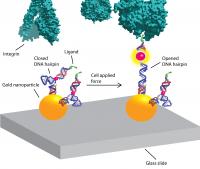
'Our premise is that mechanics play a role in almost all biological processes, and with these DNA-based tension probes we're going to uncover, measure and map those forces,' says biomolecular... Adherent cells, the kind that form the architecture of all multi-cellular organisms, are mechanically engineered with precise forces that allow them to move around and stick to things. Proteins called integrin receptors act like little hands and feet to pull these cells across a surface or to anchor them in place. When groups of these cells are put into a petri dish with a variety of substrates they can sense the differences in the surfaces and they will "crawl" toward the stiffest one they can find.
| Full story | 0 Comments | 7762 views |
| Biotechnology | October 25, 2014 05:50 AM |
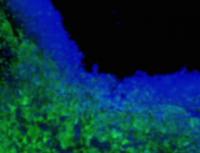
Encapsulated toxin-producing stem cells (in blue) help kill brain tumor cells in the tumor resection cavity (in green). Harvard Stem Cell Institute scientists at Massachusetts General Hospital have devised a new way to use stem cells in the fight against brain cancer. A team led by neuroscientist Khalid Shah, MS, PhD, who recently demonstrated the value of stem cells loaded with cancer-killing herpes viruses, now has a way to genetically engineer stem cells so that they can produce and secrete tumor-killing toxins.
| Full story | 0 Comments | 9373 views |

| AIDS & HIV | October 25, 2014 05:50 AM |
This image shows, from the left: Katherine Jones, Salk professor, and first authors Yupeng Chen and Lirong Zhang. Like a slumbering dragon, HIV can lay dormant in a person's cells for years, evading medical treatments only to wake up and strike at a later time, quickly replicating itself and destroying the immune system.
| Full story | 0 Comments | 8689 views |

| Molecular & Cell Biology | October 21, 2014 05:19 PM |
Researchers have created a cellular probe that combines a tarantula toxin with a fluorescent compound to help scientists observe electrical activity in neurons and other cells. The probe binds to a voltage-activated potassium ion channel subtype, lighting up when the channel is turned off and dimming when it is activated.
| Full story | 0 Comments | 11025 views |
| Biology | October 21, 2014 05:19 PM |
The way in which male moths locate females flying hundreds of meters away has long been a mystery to scientists.
| Full story | 0 Comments | 7377 views |
| Biology | October 16, 2014 05:21 PM |
Scientists tracing the real-time impact of viruses in the wild have found that entire amphibian communities are being killed off by closely related viruses introduced to mountainous areas of northern Spain.
| Full story | 0 Comments | 11240 views |
| Molecular & Cell Biology | October 16, 2014 05:21 PM |
A new discovery relating to one of the most common processes in human cells is being described as a 'paradigm shift' in understanding.
| Full story | 0 Comments | 6309 views |
| Health & Medicine | October 16, 2014 05:21 PM |
Scientists in Cambridge have found hidden signatures in the brains of people in a vegetative state, which point to networks that could support consciousness even when a patient appears to be unconscious and unresponsive. The study could help doctors identify patients who are aware despite being unable to communicate.
| Full story | 0 Comments | 8960 views |
| Health & Medicine | October 15, 2014 05:38 PM |
As medical personnel and public health officials are responding to the first reported cases of Ebola Virus in the United States, many of the safety and treatment procedures for treating the virus and preventing its spread are being reexamined. One of the tenets for minimizing the risk of spreading the disease has been a 21-day quarantine period for individuals who might have been exposed to the virus. But a new study by Charles Haas, PhD, a professor in Drexel's College of Engineering, suggests that 21 days might not be enough to completely prevent spread of the virus.
| Full story | 0 Comments | 7942 views |
| Molecular & Cell Biology | October 15, 2014 05:38 PM |
A new study published in Cancer Research shows SIRT6—a protein known to inhibit the growth of liver and colon cancers—can promote the development of skin cancers by turning on an enzyme that increases inflammation, proliferation and survival of sun-damaged skin cells.
| Full story | 0 Comments | 6606 views |

| Microbiology | October 13, 2014 07:10 PM |
A robust, broad spectrum antibiotic, and a gene that confers immunity to that antibiotic are both found in the bacterium Staphylococcus epidermidis Strain 115. The antibiotic, a member of the thiopeptide family of antibiotics, is not in widespread use, partly due to its complex structure, but the investigators, from Brigham Young University, Provo, Utah, now report that the mechanism of synthesis is surprisingly simple. "We hope to come up with innovative processes for large-scale production and derivitization so that new, and possibly more potent versions of the antibiotic can become available, says co-corresponding author Joel S. Griffitts. The research is published ahead of print in Journal of Bacteriology.
| Full story | 0 Comments | 6985 views |
| Health & Medicine | October 13, 2014 07:10 PM |
The discovery of a "maternal age effect" by a team of Penn State scientists that could be used to predict the accumulation of mitochondrial DNA mutations in maternal egg cells -- and the transmission of these mutations to children -- could provide valuable insights for genetic counseling. These mutations cause more than 200 diseases and contribute to others such as diabetes, cancer, Parkinson's disease, and Alzheimer's disease. The study found greater rates of the mitochondrial DNA variants in children born to older mothers, as well as in the mothers themselves. The research will be published in the early online edition of the Proceedings of the National Academy of Sciences on October 13, 2014,
| Full story | 0 Comments | 7879 views |
| Health & Medicine | October 13, 2014 03:06 AM |
A noninvasive method of delivering a promising therapy for persistent Clostridium difficile (C. difficile) infection appears to be as effective as treatment via colonoscopy or through a nasogastric tube. In their JAMA report, receiving early online release to coincide with a presentation at the Infectious Diseases Society of America's ID Week conference, investigators from Massachusetts General Hospital (MGH) report that oral administration of the therapy called fecal microbiota transplant (FMT) in acid-resistant capsules was as successful as more invasive methods in eliminating recurrent diarrhea caused by C. difficile.
| Full story | 0 Comments | 6129 views |
| Health & Medicine | October 8, 2014 05:33 PM |
Physician scientists at 22 consortia will collaborate with representatives of 98 patient advocacy groups to advance clinical research and investigate new treatments for patients with rare diseases. The collaborations are made possible through awards by the National Institutes of Health — totaling about $29 million in fiscal year 2014 funding — to expand the Rare Diseases Clinical Research Network (RDCRN), which is led by NIH's National Center for Advancing Translational Sciences (NCATS).
| Full story | 0 Comments | 7241 views |
| Biology | October 6, 2014 07:35 PM |

This is a 3-D image of the hippocampus of a rat. The way neurons are interconnected in the brain is very complicated. This holds especially true for the cells of the hippocampus. It is one of the oldest brain regions and its form resembles a see horse (hippocampus in Latin). The hippocampus enables us to navigate space securely and to form personal memories. So far, the anatomic knowledge of the networks inside the hippocampus and its connection to the rest of the brain has left scientists guessing which information arrived where and when.
| Full story | 0 Comments | 11488 views |
| Molecular & Cell Biology | October 6, 2014 07:35 PM |
During cancer metastasis, immune response or the development of organisms, cells are moving in a controlled manner through the body. Researchers from the Department of Biomedicine at the University of Basel discovered novel mechanisms of cell migration by observing cells moving on lines of connective tissue. Their results, published in the journal Developmental Cell, could lead to new approaches in combatting cancer metastasis and inflammation.
| Full story | 0 Comments | 7063 views |
| Biotechnology | October 2, 2014 02:47 PM |
Molecular studies of plants often depend on high-quantity and high-quality DNA extractions. This can be quite difficult in plants, however, due to a diversity of compounds and physical properties found in plants. "Tannins, tough fibrous material, and/or secondary compounds can interfere with DNA isolation," explains Dr. Thomas Givnish, principal investigator of a new study published by Jackson Moeller et al. in the October issue of Applications in Plant Sciences (available for free viewing at http://www.bioone.org/doi/pdf/10.3732/apps.1400048).
| Full story | 0 Comments | 9470 views |
| Biology | October 2, 2014 02:47 PM |

An iceplant, from a region of high diversity in South Africa, is overtopping and killing a native shrub on the New Zealand coast, a region with far less diversity. Dov Sax of Brown University and Jason Fridley of Syracuse University aren't proposing a novel idea to explain species invasiveness. In fact, Charles Darwin articulated it first. What's new about Sax and Fridley's "Evolutionary Imbalance Hypothesis" (EIH) is that they've tested it using quantifiable evidence and report in Global Ecology and Biogeography that the EIH works well.
| Full story | 0 Comments | 9138 views |
| Molecular & Cell Biology | October 2, 2014 02:47 PM |
Scientists at The Scripps Research Institute (TSRI) have found that an enzyme best known for its fundamental role in building proteins has a second major function: to protect DNA during times of cellular stress.
| Full story | 0 Comments | 8024 views |
| Microbiology | October 1, 2014 02:52 PM |
As the threat of antibiotic resistance grows, scientists are turning to the human body and the trillion or so bacteria that have colonized us — collectively called our microbiota — for new clues to fighting microbial infections. They've logged an early success with the discovery of a new antibiotic candidate from vaginal bacteria, reports Chemical & Engineering News (C&EN), the weekly newsmagazine of the American Chemical Society.
| Full story | 0 Comments | 9208 views |
| Molecular & Cell Biology | October 1, 2014 02:52 PM |
The process of adipogenesis made clear by identifying the precise proteins that play the leading roles in fat absorption
And the winner is ... ZEB1! There are many actors involved in the process of adipogenesis, used by the body to store the fat that it absorbs from food. Up to now there had been some uncertainty as to how it was regulated. Yet, understanding this mechanism is of crucial importance to prevent the diseases related to fat accumulation in adipose tissue.
| Full story | 0 Comments | 5790 views |

- In some genetic cases of microcephaly, stem cells fail to launch
- Yale team discovers how Zika virus causes fetal brain damage
- Scientists uncover the way a common cell enzyme alerts the body to invading bacteria
- Arctic gives clues on worst mass extinction of life
- Calcium channel blockers caught in the act at atomic level
Search Bio News Net
Free Biology Newsletter
- Flexibility That A.C.A. Lent to Work Force Is Threatened by...International Herald Tribune
- Bacteria Behind Legionnaires’ Disease Found at New York Police StationInternational Herald Tribune
- Prescription Price Crisis? 28 Million Americans See Spike in Drug...MSNBC.com: Health
- Seizing on Opioid Crisis, a Drug Maker Lobbies Hard for...International Herald Tribune
- Republicans are taking a big political risk on health careAP Health News
- Why We're So Divided Over Saving WolvesNational Geographic News