

Anesthesia providers are missing opportunities to clean their hands during surgical procedures, according to a study published in the July issue of the American Journal of Infection Control, the official publication of the Association for Professionals in Infection Control and Epidemiology (APIC).

| Microbiology | June 30, 2014 05:52 PM |
Like human societies--think New York City--bacterial colonies have immense diversity among their inhabitants, often generated in the absence of specific selection pressures, according to a paper published ahead of print in the Journal of Bacteriology.
| Full story | 0 Comments | 6155 views |

| Stem Cell Research | June 30, 2014 05:52 PM |
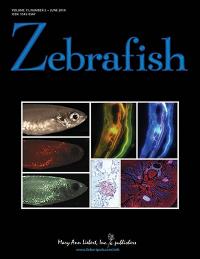
Zebrafish is published bimonthly in print and online. Zebrafish, a model organism that plays an important role in biological research and the discovery and development of new drugs and cell-based therapies, can form embryonic stem cells (ESCs). For the first time, researchers report the ability to maintain zebrafish-derived ESCs for more than 2 years without the need to grow them on a feeder cell layer, in a study published in Zebrafish, a peer-reviewed journal from Mary Ann Liebert, Inc., publishers. The article is available free on the Zebrafish website.
| Full story | 0 Comments | 7073 views |

| Bioinformatics | June 27, 2014 03:35 AM |
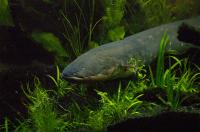
For the first time, the genome of the electric eel has been sequenced. For the first time, the genome of the electric eel has been sequenced. This discovery has revealed the secret of how fishes with electric organs have evolved six times in the history of life to produce electricity outside of their bodies.
| Full story | 0 Comments | 9421 views |
| Microbiology | June 24, 2014 06:42 PM |
Trillions of bacteria live in and on the human body; a few species can make us sick, but many others keep us healthy by boosting digestion and preventing inflammation. Although there's plenty of evidence that these microbes play a collective role in human health, we still know very little about most of the individual bacterial species that make up these communities. Employing the use of a specially designed glass chip with tiny compartments, Caltech researchers now provide a way to target and grow specific microbes from the human gut—a key step in understanding which bacteria are helpful to human health and which are harmful.
| Full story | 0 Comments | 7084 views |

| Biology | June 24, 2014 06:42 PM |
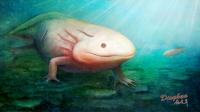
This reconstruction shows how scientists think the fly larvae adhered to the skin of the amphibian. Around 165 million years ago, a spectacular parasite was at home in the freshwater lakes of present-day Inner Mongolia (China): A fly larva with a thorax formed entirely like a sucking plate. With it, the animal could adhere to salamanders and suck their blood with its mouthparts formed like a sting. To date no insect is known that is equipped with a similar specialised design. The international scientific team is now presenting its findings in the journal "eLIFE".
| Full story | 0 Comments | 6386 views |

| Molecular & Cell Biology | June 23, 2014 06:02 PM |
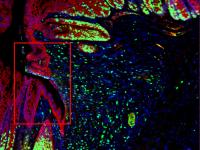
This is a cross section of an injury in the large intestine with the intestinal epithelium shown in red. Over 3.5 million people in Europe and the US suffer from Crohn's disease or ulcerative colitis – the two most common forms of IBD. Chronic bowel inflammation is caused by an overreaction of the immune system to the bacteria which naturally occur in the gut. "This overreaction can come about if, for example, the anti-stress mechanism in the cells of the intestinal mucosa does not function correctly," explains Prof. Dirk Haller of the TUM Chair of Nutrition and Immunology.
| Full story | 0 Comments | 6549 views |
| Molecular & Cell Biology | June 23, 2014 06:02 PM |
The molecular building blocks that make up DNA absorb ultraviolet light so strongly that sunlight should deactivate them – yet it does not. Now scientists have made detailed observations of a "relaxation response" that protects these molecules, and the genetic information they encode, from UV damage. The experiment at the Department of Energy's SLAC National Accelerator Laboratory focused on thymine, one of four DNA building blocks. Researchers hit thymine with a short pulse of ultraviolet light and used a powerful X-ray laser to watch the molecule's response: A single chemical bond stretched and snapped back into place within 200 quadrillionths of a second, setting off a wave of vibrations that harmlessly dissipated the destructive UV energy.
| Full story | 0 Comments | 8042 views |
| Molecular & Cell Biology | June 23, 2014 06:02 PM |
Case Western Reserve School of Medicine scientists have made an extraordinary double discovery. First, they have identified thousands of novel long non-coding ribonucleic acid (lncRNA) transcripts. Second, they have learned that some of them defy conventional wisdom regarding lncRNA transcripts, because they actually do direct the synthesis of proteins in cells.
| Full story | 0 Comments | 5819 views |
| Biology | June 19, 2014 05:25 PM |
Chance events may profoundly shape history. What if Franz Ferdinand's driver had not taken a wrong turn, bringing the Duke face to face with his assassin? Would World War I still have been fought? Would Hitler have risen to power decades later?
| Full story | 0 Comments | 6953 views |
| Stem Cell Research | June 19, 2014 05:25 PM |
UCLA researchers led by Dr. Brigitte Gomperts have discovered the inner workings of the process thought to be the first stage in the development of lung cancer. Their study explains how factors that regulate the growth of adult stem cells that repair tissue in the lungs can lead to the formation of precancerous lesions.
| Full story | 0 Comments | 7570 views |

| AIDS & HIV | June 19, 2014 05:25 PM |
HIV-1, the virus responsible for most cases of AIDS, is a very selective virus. It does not readily infect species other than its usual hosts – humans and chimpanzees. While this would qualify as good news for most mammals, for humans this fact has made the search for effective treatments and vaccines for AIDS that much more difficult; without an accurate animal model of the disease, researchers have had few options for clinical studies of the virus.
| Full story | 0 Comments | 6728 views |
| Biology | June 18, 2014 06:29 PM |
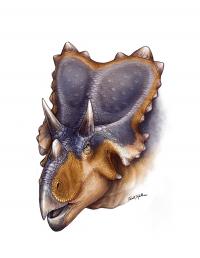
Artist reconstruction of Mercuriceratops gemini, a new species of horned dinosaur that had wing-shaped ornamentation on the sides of its skull. Scientists have named a new species of horned dinosaur (ceratopsian) based on fossils collected from Montana in the United States and Alberta, Canada. Mercuriceratops (mer-cure-E-sare-ah-tops) gemini was approximately 6 meters (20 feet) long and weighed more than 2 tons. It lived about 77 million years ago during the Late Cretaceous Period. Research describing the new species is published online in the journal Naturwissenschaften.
| Full story | 0 Comments | 7058 views |
| Biology | June 18, 2014 06:29 PM |
For some birds, recognising their own eggs can be a matter of life or death.
| Full story | 0 Comments | 5947 views |
| Biology | June 18, 2014 06:29 PM |
During evolutionary diversification of vertebrate limbs, the number of toes in even-toed ungulates such as cattle and pigs was reduced and transformed into paired hooves. Scientists at the University of Basel have identified a gene regulatory switch that was key to evolutionary adaption of limbs in ungulates. The study provides fascinating insights into the molecular history of evolution and is published by Nature today.
| Full story | 0 Comments | 6136 views |
| Molecular & Cell Biology | June 16, 2014 05:54 PM |
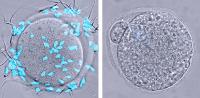
Sperm (blue) latch onto a control egg (left) but can't bind to an egg lacking the glycoprotein ZP2 (right). Before it can fertilize an egg, a sperm has to bind to and bore through an outer egg layer known as the zona pellucida. Despite decades of research, some of the biological mechanisms behind this process remain unclear. A study in The Journal of Cell Biology now identifies the protein in the zona pellucida that sperm latch onto.
| Full story | 0 Comments | 6274 views |

| Biotechnology | June 16, 2014 05:54 PM |
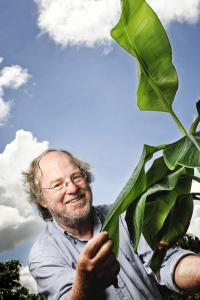
QUT Distinguished Professor James Dale's research has resulted in provitamin A-enriched bananas that are about to undergo a world-first human trial in the US. The world's first human trial of pro-vitamin A-enriched banana, expected to lift the health and well-being of millions of Ugandans and other East Africans will start very soon.
| Full story | 0 Comments | 8161 views |
| Stem Cell Research | June 16, 2014 05:54 PM |
Scientists in the University of Connecticut's Technology Incubation Program have identified a novel approach to treating multiple sclerosis (MS) using human embryonic stem cells, offering a promising new therapy for more than 2.3 million people suffering from the debilitating disease.
| Full story | 0 Comments | 12568 views |

| Health & Medicine | June 12, 2014 06:12 PM |
Systemic lupus erythematosus (SLE) is a complicated multifactorial autoimmune disease influenced by many genetic and environmental factors. The hallmark of systemic lupus erythematosus (SLE) is the presence of high levels of anti-double-stranded DNA autoantibody (anti-dsDNA) in sera. In addition, greater infection rates are found in SLE patients and higher morbidity and mortality usually come from bacterial infections. Deciphering interactions between the susceptibility genes and the environmental factors for lupus complex traits is challenging and has resulted in only limited success.
| Full story | 0 Comments | 5883 views |
| Molecular & Cell Biology | June 12, 2014 06:12 PM |
DNA methylation has been identified as a potential biomarker of response to etanercept and adalimumab in patients with rheumatoid arthritis (RA) according to preliminary results from one of the largest methylome-wide investigations of treatment response to anti-TNF therapies.1 These data, presented today at the European League Against Rheumatism Annual Congress (EULAR 2014), bring clinicians a step closer to being able to personalise a patient's treatment pathway.
| Full story | 0 Comments | 5337 views |
| Stem Cell Research | June 10, 2014 04:46 PM |
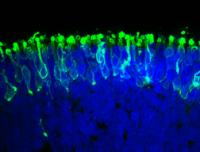
These are rod photoreceptors (in green) within a "mini retina " derived from human iPS cells in the lab. Using a type of human stem cell, Johns Hopkins researchers say they have created a three-dimensional complement of human retinal tissue in the laboratory, which notably includes functioning photoreceptor cells capable of responding to light, the first step in the process of converting it into visual images.
| Full story | 0 Comments | 8435 views |
| Bioinformatics | June 10, 2014 04:46 PM |
Today the International Cooperation to Sequence the Atlantic Salmon Genome (ICSASG) announced completion of a fully mapped and openly accessible salmon genome. This reference genome will provide crucial information to fish managers to improve the production and sustainability of aquaculture operations, and address challenges around conservation of wild stocks, preservation of at-risk fish populations and environmental sustainability. This breakthrough was announced at the International Conference on Integrative Salmonid Biology (ICISB) being held in Vancouver this week.
| Full story | 0 Comments | 5256 views |
| Bioinformatics | June 9, 2014 04:39 AM |
The mitochondrial DNA of the first Near Eastern farmers has been sequenced for the first time. In the research, published in the journal PLOS Genetics, experts analysed samples from three sites located in the birthplace of Neolithic agricultural practices: the Middle Euphrates basin and the oasis of Damascus, located in today's Syria and date at about 8,000 BC.
The paper is signed by Daniel Turbón and Alejandro Pérez Pérez, from the Department of Animal Biology of the University of Barcelona (UB); Eva Fernández, from Liverpool John Moores University; Cristina Gamba, Eduardo Arroyo Pardo and Pedro Cuesta, from Complutense University of Madrid; Eva Prats, from the Spanish National Research Council, and Josep Anfruns and Miquel Molist, from the Universitat Autònoma de Barcelona (UAB). The study is focused on the analysis of mitochondrial DNA --a type of non-Mendelian maternally inherited DNA-- from the first Neolithic farmers, by means of samples obtained by the UAB research group which were first processed by the UB research group.
| Full story | 0 Comments | 6755 views |
| Health & Medicine | June 9, 2014 04:38 AM |
New genomic research led by UC San Francisco (UCSF) scientists reveals that two common gene variants that lead to longer telomeres, the caps on chromosome ends thought by many scientists to confer health by protecting cells from aging, also significantly increase the risk of developing the deadly brain cancers known as gliomas.
| Full story | 0 Comments | 7224 views |
| AIDS & HIV | June 4, 2014 03:11 AM |
By analyzing the blood of almost 100 treated and untreated HIV-infected volunteers, a team of scientists has identified previously unknown characteristics of B cells in the context of HIV infection. B cells are the immune system cells that make antibodies to HIV and other pathogens. The findings augment the current understanding of how HIV disease develops and have implications for the timing of treatment. Researchers at the National Institute of Allergy and Infectious Diseases, part of the National Institutes of Health, led the study
| Full story | 0 Comments | 8210 views |
| Biology | June 4, 2014 03:11 AM |
In a new study published in the Geological Society of America Bulletin, geoscientists Wolfgang Stinnesbeck of the University of Heidelberg and colleagues document the discovery of forty-six ophthalmosaurid ichthyosaurs (marine reptiles). These specimens were discovered in the vicinity of the Tyndall Glacier in the Torres del Paine National Park of southern Chile. Among them are numerous articulated and virtually complete skeletons of adults, pregnant females, and juveniles.
| Full story | 0 Comments | 6817 views |

- In some genetic cases of microcephaly, stem cells fail to launch
- Yale team discovers how Zika virus causes fetal brain damage
- Scientists uncover the way a common cell enzyme alerts the body to invading bacteria
- Arctic gives clues on worst mass extinction of life
- Calcium channel blockers caught in the act at atomic level
Search Bio News Net
Free Biology Newsletter
- Flexibility That A.C.A. Lent to Work Force Is Threatened by...International Herald Tribune
- Bacteria Behind Legionnaires’ Disease Found at New York Police StationInternational Herald Tribune
- Prescription Price Crisis? 28 Million Americans See Spike in Drug...MSNBC.com: Health
- Seizing on Opioid Crisis, a Drug Maker Lobbies Hard for...International Herald Tribune
- Republicans are taking a big political risk on health careAP Health News
- Why We're So Divided Over Saving WolvesNational Geographic News