


A recently discovered HIV strain leads to significantly faster development of AIDS than currently prevalent forms, according to new research from Lund University in Sweden.

| Biology | November 27, 2013 04:35 PM |
Researchers reporting in the Cell Press journal Current Biology on November 27 have identified a cryptic new species of wild cat living in Brazil. The discovery is a reminder of just how little scientists still know about the natural world, even when it comes to such charismatic creatures. The findings also have important conservation implications for the cats, the researchers say.
| Full story | 0 Comments | 7485 views |

| Health & Medicine | November 26, 2013 06:12 PM |

This is from the McGill University and The Douglas Mental Health Centre study Research has suggested that a particular gene in the brain's reward system contributes to overeating and obesity in adults. This same variant has now been linked to childhood obesity and tasty food choices, particularly for girls, according to a new study by Dr. Patricia Silveira and Prof. Michael Meaney of McGill University and Dr. Robert Levitan of the University of Toronto.
| Full story | 0 Comments | 7845 views |

| Environment | November 26, 2013 06:12 PM |
Large fish traps in the Persian Gulf could be catching up to six times more fish than what's being officially reported, according to the first investigation of fish catches from space conducted by University of British Columbia scientists.
| Full story | 0 Comments | 6890 views |

| Molecular & Cell Biology | November 25, 2013 06:24 PM |
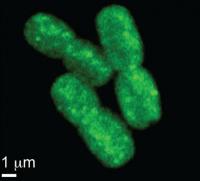
Green fluorescence shows redox reactions in living Synechococcus cells. Scientists have charted a significant signaling network in a tiny organism that's big in the world of biofuels research. The findings about how a remarkably fast-growing organism conducts its metabolic business bolster scientists' ability to create biofuels using the hardy microbe Synechococcus, which turns sunlight into useful energy.
| Full story | 0 Comments | 6510 views |
| Health & Medicine | November 25, 2013 06:24 PM |
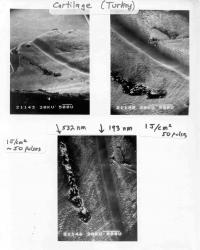
Here are three scanning electron micrographs of laser-irradiated turkey cartilage, recorded from different perspectives and with different magnification. It was the day after Thanksgiving in 1981, and like most others across the nation, Rangaswamy "Sri" Srinivasan, a researcher at IBM's Thomas J. Watson Research Center in New York, had brought some turkey with him to work. The difference between Srinivasan and everyone else was that the scientist had no plans to eat the leftovers.
| Full story | 0 Comments | 6004 views |
| Molecular & Cell Biology | November 21, 2013 06:22 PM |
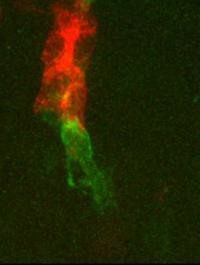
This image shows trachea development in the Drosophila fly; the leading cell (Green) is dragging the group of six cells (red). Jordi Casanova, head of the "Morphogenesis in Drosophila" lab at IRB Barcelona and CSIC research professor, and Gaëlle Lebreton, postdoctoral fellow in the same group, have published a study performed using Drosophila melanogaster in the Journal of Cell Science. This work reveals that in a multiple movement, a single cell can act as the leader and can drag the rest with it. The scientists have studied the tracheal development of Drosophila in vivo and describe the morphological characteristics of the leading cell and provide molecular details about how it drives the movement.
| Full story | 0 Comments | 7474 views |
| Molecular & Cell Biology | November 21, 2013 06:22 PM |
Researchers at the University of Copenhagen have unveiled a profound biological process that explains how DNA can be damaged during genome replication. In addition, the scientists developed a new analytical tool to measure the cell's response to chemotherapy, which could have an important impact on future cancer therapy. The results are now published in the scientific journal Cell.
| Full story | 0 Comments | 6726 views |
| Biology | November 20, 2013 06:39 PM |
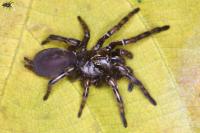
This image shows the female Fufius lucasae described for the first time in this study. Scientists discover three new gorgeous species of the wafer trapdoor genus Fufius – F. minusculus, F. jalapensis, and F. candango. The discovery of the three new species, published in the open access journal ZooKeys, paves the road to understanding the morphological variability of the species in this little known mygalomorph genus.
| Full story | 0 Comments | 8222 views |

| Biotechnology | November 20, 2013 06:39 PM |
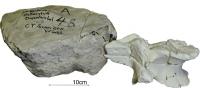
This 3D print is next to the original unprepared and erroneously labeled plaster jacket. Data from computed tomography (CT) scans can be used with three-dimensional (3-D) printers to make accurate copies of fossilized bones, according to new research published online in the journal Radiology.
| Full story | 0 Comments | 6003 views |

| Bioinformatics | November 20, 2013 06:39 PM |
Predicting adult body height from genetic data is helpful in several areas such as pediatric endocrinology and forensic investigations. However, despite large international efforts to catalogue the genes that influence the stature of humans, knowledge on genetic determinants of adult body height is still incomplete. Now DNA-based prediction of taller-than-average body height is feasible, as reported by researchers from the Netherlands and Sweden in an article published in Springer's journal Human Genetics.
| Full story | 0 Comments | 9746 views |
| Bioinformatics | November 19, 2013 08:11 PM |
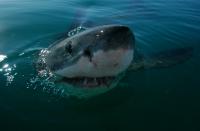
This image shows a great white shark. The great white shark, a major apex predator made famous by the movie "Jaws," is one of the world's most iconic species capturing an extraordinary amount of public fascination. An intriguing question is what makes a white shark so distinctive? One way to address this is to explore the genetic makeup of this remarkable animal.
| Full story | 0 Comments | 7710 views |

| Microbiology | November 19, 2013 08:11 PM |
Around 20 percent of all humans are persistently colonized with Staphylococcus aureus bacteria, a leading cause of skin infections and one of the major sources of hospital-acquired infections, including the antibiotic-resistant strain MRSA.
| Full story | 0 Comments | 8096 views |
| Molecular & Cell Biology | November 18, 2013 07:19 PM |
Bacteria recycle broken DNA that bacteria can take up small as well as large pieces of old DNA from this scrapheap and include it in their own genome. This discovery may have major consequences – both in connection with resistance to antibiotics in hospitals and in our perception of the evolution of life itself.
| Full story | 0 Comments | 7699 views |
| Bioinformatics | November 18, 2013 07:19 PM |
A new method to take the DNA fingerprint of individual cancer cells is uncovering the true extent of cancer's genetic diversity, new research reveals.
| Full story | 0 Comments | 7888 views |
| Biology | November 18, 2013 07:19 PM |
University of Illinois anthropology professor Ripan Malhi looks to DNA to tell the story of how ancient humans first came to the Americas and what happened to them once they were here.
| Full story | 0 Comments | 7149 views |
| Molecular & Cell Biology | November 14, 2013 07:15 PM |
Massachusetts General Hospital (MGH) investigators have used a new sequencing method to identify a group of genes used by the brain's immune cells – called microglia – to sense pathogenic organisms, toxins or damaged cells that require their response. Identifying these genes should lead to better understanding of the role of microglia both in normal brains and in neurodegenerative disorders and may lead to new ways to protect against the damage caused by conditions like Alzheimer's and Parkinson's diseases. The study, which has been published online in Nature Neuroscience, also finds that the activity of microglia appears to become more protective with aging, as opposed to increasingly toxic, which some previous studies had suggested.
| Full story | 0 Comments | 6198 views |
| Environment | November 14, 2013 07:15 PM |
A University of Maryland-led, multi-organizational team has created the first high-resolution global map of forest extent, loss and gain. This resource greatly improves the ability to understand human and naturally-induced forest changes and the local to global implications of these changes on environmental, economic and other natural and societal systems, members of the team say.
http://earthenginepartners.appspot.com/science-2013-global-forest
| Full story | 0 Comments | 6119 views |
| Health & Medicine | November 14, 2013 07:15 PM |
American and European studies prove that students use prescription medication or drugs to enhance their cognitive performance. Researchers from the universities of Zurich and Basel examined whether Swiss students have also experimented with neuroenhancement and which substances they take by conducting a survey of 6,725 students with an average age of 23 at the two universities and ETH Zurich.
| Full story | 0 Comments | 6956 views |
| Biology | November 13, 2013 05:55 PM |
Many of us have mixed feelings when remembering painful lessons in German or Latin grammar in school. Languages feature a large number of complex rules and patterns: using them correctly makes the difference between something which "sounds good", and something which does not. However, cognitive biologists at the University of Vienna have shown that sensitivity to very simple structural and melodic patterns does not require much learning, or even being human: South American squirrel monkeys can do it, too.
| Full story | 0 Comments | 7910 views |
| Biology | November 13, 2013 05:55 PM |
Johns Hopkins researchers report that the deletion of any single gene in yeast cells puts pressure on the organism's genome to compensate, leading to a mutation in another gene. Their discovery, which is likely applicable to human genetics because of the way DNA is conserved across species, could have significant consequences for the way genetic analysis is done in cancer and other areas of research, they say.
| Full story | 0 Comments | 6593 views |
| Health & Medicine | November 12, 2013 06:58 PM |
A study published this week in PLOS Medicine reveals profound systemic dysregulation of the immune response induced by RSV infection in young children and suggest that molecular markers might be able to predict disease severity.
| Full story | 0 Comments | 5583 views |
| Biology | November 11, 2013 06:00 PM |
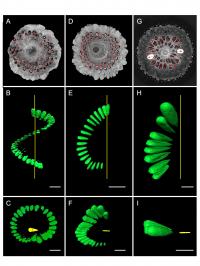
This shows fossil and recent araucarian cones sectioned in 2-D by microCT (A, D, G), and showing one segmented spiral or row of seeds By integrating high-resolution X-ray imaging (termed microCT), 3D image segmentation, and computer animation, a new study conducted by Carole Gee at the University of Bonn, Germany, demonstrates the visualization of fossils without destroying the material. Traditional techniques, such as thin-sectioning, require investigators to physically cut up the fossil in order to observe internal structures. Dr. Gee, however, has now successfully applied microCT to visualize silicified conifer seed cones as old as 150 million years without cutting, sawing, or damaging the specimens in any way.
| Full story | 0 Comments | 6399 views |
| Bioinformatics | November 11, 2013 06:00 PM |
What does it mean to be human? According to scientists the key lies, ultimately, in the billions of lines of genetic code that comprise the human genome. The problem, however, has been deciphering that code. But now, researchers at the Gladstone Institutes have discovered how the activation of specific stretches of DNA control the development of uniquely human characteristics—and tell an intriguing story about the evolution of our species.
| Full story | 0 Comments | 6250 views |
| Biotechnology | November 10, 2013 07:12 PM |
Researchers led by bioengineers at the University of California, San Diego have generated the most complete genome sequences from single E. coli cells and individual neurons from the human brain. The breakthrough comes from a new single-cell genome sequencing technique that confines genome amplification to fluid-filled wells with a volume of just 12 nanoliters.
| Full story | 0 Comments | 6773 views |
| Health & Medicine | November 6, 2013 06:53 PM |
Researchers from the Biological clues of the invasive and metastatic phenotype group of the Bellvitge Biomedical Research Institute (IDIBELL) led by Isabel Fabregat have discovered the relationship between the TGFb signalling pathways and CXCR4 in hepatocellular carcinoma (HCC) . The cytokine TGFb is dependent of CXCR4 to induce tumor cell migratory ability.
| Full story | 0 Comments | 6073 views |
| Health & Medicine | November 5, 2013 06:19 PM |
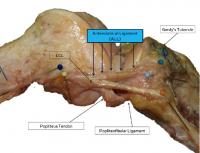
This is an image of a right knee after a full dissection of the anterolateral ligament. Two knee surgeons at University Hospitals Leuven have discovered a previously unknown ligament in the human knee. This ligament appears to play an important role in patients with anterior cruciate ligament (ACL) tears.
| Full story | 0 Comments | 9951 views |
| Bioinformatics | November 5, 2013 06:19 PM |
Software that can recognize patterns in data is commonly used by scientists and economics. Now, researchers in the US have applied similar algorithms to help them more accurately diagnose breast cancer. The researchers outline details in the International Journal of Medical Engineering and Informatics.
| Full story | 0 Comments | 6521 views |
| Health & Medicine | November 4, 2013 04:40 PM |
For the first time in a large study sample, the decline in brain function in normal aging is conclusively shown to be influenced by genes, say researchers from the Texas Biomedical Research Institute in San Antonio and Yale University.
| Full story | 0 Comments | 7212 views |
| Biotechnology | November 4, 2013 04:40 PM |
Scientists looking to create a potent blend of enzymes to transform materials like corn stalks and wood chips into fuels have developed a test that should turbocharge their efforts.
| Full story | 0 Comments | 6814 views |
| Molecular & Cell Biology | November 4, 2013 04:40 PM |
A paper published in a special edition of the journal Science proposes a novel understanding of brain architecture using a network representation of connections within the primate cortex. Zoltán Toroczkai, professor of physics at the University of Notre Dame and co-director of the Interdisciplinary Center for Network Science and Applications, is a co-author of the paper "Cortical High-Density Counterstream Architectures."
| Full story | 0 Comments | 5316 views |
| Biology | November 3, 2013 03:43 AM |
Mammal body size decreased significantly during at least two ancient global warming events, a new finding that suggests a similar outcome is possible in response to human-caused climate change, according to a University of Michigan paleontologist and his colleagues.
| Full story | 0 Comments | 8927 views |

| Stem Cell Research | November 3, 2013 03:43 AM |
Harvard Stem Cell Institute (HSCI) researchers have a new model for how the kidney repairs itself, a model that adds to a growing body of evidence that mature cells are far more plastic than had previously been imagined.
| Full story | 0 Comments | 8359 views |

- In some genetic cases of microcephaly, stem cells fail to launch
- Yale team discovers how Zika virus causes fetal brain damage
- Scientists uncover the way a common cell enzyme alerts the body to invading bacteria
- Arctic gives clues on worst mass extinction of life
- Calcium channel blockers caught in the act at atomic level
Search Bio News Net
Free Biology Newsletter
- Flexibility That A.C.A. Lent to Work Force Is Threatened by...International Herald Tribune
- Bacteria Behind Legionnaires’ Disease Found at New York Police StationInternational Herald Tribune
- Prescription Price Crisis? 28 Million Americans See Spike in Drug...MSNBC.com: Health
- Seizing on Opioid Crisis, a Drug Maker Lobbies Hard for...International Herald Tribune
- Republicans are taking a big political risk on health careAP Health News
- Why We're So Divided Over Saving WolvesNational Geographic News