

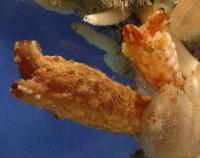
Styela clava, one of the non-native species which has been found in UK waters. Queen's University Belfast is appealing for help from the public in looking at ways to detect and stop the spread of marine aliens.

| Biology | June 16, 2008 06:34 PM |
| Full story | 0 Comments | 8475 views |

| Environment | June 16, 2008 06:34 PM |
Single person submersibles have been called in to help scientists retrieve samples from a lake in northern British Columbia that may hold vital clues to the history of life on Earth and on other planets.
| Full story | 0 Comments | 5978 views |

| Health & Medicine | June 16, 2008 06:34 PM |
In a development that may lessen the epidemic of diarrhea-related deaths among children in developing countries, scientists in the laboratory of Nobel Laureate Ferid Murad, M.D., Ph.D., at The University of Texas Health Science Center at Houston have discovered a novel compound that might lead to an inexpensive, easy-to-take treatment. The results of pre-clinical tests appear in the June 16 online edition of the journal Proceedings of the National Academy of Sciences of the United States of America.
| Full story | 0 Comments | 5022 views |

| Molecular & Cell Biology | June 16, 2008 06:34 PM |
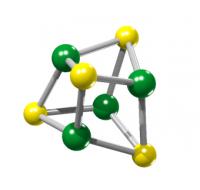
Depicted is a molecular representation of a four iron- four sulfur cluster in which the sulfur is shown in yellow and iron in green. A Virginia Tech research group lead by two biochemistry graduate students has isolated proteins responsible for the iron-sulfur cluster assembly process and witnessed the necessary protein interactions in vivo – within a cell. They have captured pathway intermediates and observed protein interactions between the two major players in iron-sulfur cluster assembly.
| Full story | 0 Comments | 5669 views |
| Health & Medicine | June 16, 2008 06:34 PM |
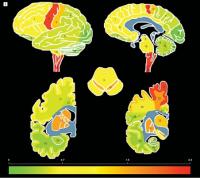
Whole-brain density map of TDP-43 distribution throughout central nervous system of ALS patients. Red, orange, and yellow depict areas of highest density of TDP-43 pathology. Two years ago researchers at the University of Pennsylvania School of Medicine discovered that misfolded proteins called TDP-43 accumulated in the motor areas of the brains of patients with amyotropic lateral sclerosis (ALS), or Lou Gehrig's disease. Now, the same group has shown that TDP-43 accumulates throughout the brain, suggesting ALS has broader neurological effects than previously appreciated and treatments need to take into account more than motor neuron areas. Their article appeared in last month's issue of the Archives of Neurology.
| Full story | 0 Comments | 6687 views |
| Molecular & Cell Biology | June 16, 2008 06:34 PM |
When a mouse's immune system is deciding whether to reject a skin graft, one powerful member of a molecular family designed to provoke such a response can effectively reduce the visibility of the mouse's own cells and help the graft survive, researchers say.
| Full story | 0 Comments | 5497 views |
| Health & Medicine | June 16, 2008 06:34 PM |
Researchers have discovered a new family of agents that inhibit the growth of estrogen-dependent breast cancer cells. The finding, described today at a meeting of the Endocrine Society, has opened an avenue of research into new drugs to combat estrogen-dependent breast cancers.
| Full story | 0 Comments | 7711 views |
LIAI researchers discover new cellular mechanism that will significantly advance vaccine development |
| Molecular & Cell Biology | June 16, 2008 06:34 PM |
La Jolla Institute for Allergy & Immunology (LIAI) scientists have discovered one for the textbooks. Their finding, reported Friday in the scientific journal Immunity, illuminates a new, previously unknown mechanism in how the body fights a virus. The finding runs counter to traditional scientific understanding of this process and will provide scientists a more effective method for developing vaccines.
| Full story | 0 Comments | 5743 views |

| Stem Cell Research | June 16, 2008 06:34 PM |
Adult stem cells improve healing of broken bones and could eventually serve as a new treatment for the 10 to 20 percent of fractures that fail to heal, according to a new study. The results will be presented Monday, June 16, at The Endocrine Society's 90th Annual Meeting in San Francisco, by Froilan Granero-Molto, PhD, research associate of the University of North Carolina.
| Full story | 0 Comments | 8636 views |

| Biotechnology | June 16, 2008 06:34 PM |
Using noninvasive molecular imaging technology, a method has been developed to track the location and activity of mesenchymal stem cells (MSCs) in the tumors of living organisms, according to researchers at SNM's 55th Annual Meeting. This ability could lead to major advances in the use of stem cell therapies to treat cancer.
| Full story | 0 Comments | 7852 views |

- In some genetic cases of microcephaly, stem cells fail to launch
- Yale team discovers how Zika virus causes fetal brain damage
- Scientists uncover the way a common cell enzyme alerts the body to invading bacteria
- Arctic gives clues on worst mass extinction of life
- Calcium channel blockers caught in the act at atomic level
Search Bio News Net
Free Biology Newsletter
- Flexibility That A.C.A. Lent to Work Force Is Threatened by...International Herald Tribune
- Bacteria Behind Legionnaires’ Disease Found at New York Police StationInternational Herald Tribune
- Prescription Price Crisis? 28 Million Americans See Spike in Drug...MSNBC.com: Health
- Seizing on Opioid Crisis, a Drug Maker Lobbies Hard for...International Herald Tribune
- Republicans are taking a big political risk on health careAP Health News
- Why We're So Divided Over Saving WolvesNational Geographic News