

For the first time, scientists are able to predict where the next pandemic might occur. Scientists from four well-known institutions say the next major disease like HIV/AIDS or SARS could occur in any of a number of developing countries concentrated along the equator. They encourage increased surveillance to prevent the spread of a potential outbreak.

| Microbiology | March 14, 2008 08:41 PM |
| Full story | 0 Comments | 6575 views |

| Biology | March 14, 2008 07:41 PM |
Without a ripple in the water, alligators dive, surface or roll sideways, even though they lack flippers or fins. University of Utah biologists discovered gators maneuver silently by using their diaphragm, pelvic, abdominal and rib muscles to shift their lungs like internal floatation devices: toward the tail when they dive, toward the head when they surface and sideways when they roll.
| Full story | 0 Comments | 7835 views |

| Molecular & Cell Biology | March 14, 2008 06:41 PM |
A new study examining social behaviour suggests certain individuals are genetically programmed to cheat and often will do… providing they can get away with it.
| Full story | 0 Comments | 8705 views |
| Microbiology | March 14, 2008 05:41 PM |
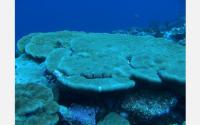
Microbial profiles serve as the ecological version of the human genome project. Nowhere is the principle of "strength in numbers" more apparent than in the collective power of microbes: despite their simplicity, these one-cell organisms -- which number about 5 million trillion trillion strong (no, that is not a typo) on Earth -- affect virtually every ecological process, from the decay of organic material to the production of oxygen.
| Full story | 0 Comments | 7438 views |

| Bioinformatics | March 14, 2008 04:41 PM |

In 2005, NSF, DOE, and USDA funded the sequencing of the corn genome. A consortium of researchers led by the Genome Sequencing Center (GSC) at Washington University in St. Louis, Mo., announced today the completion of a draft sequence of the corn genome.
| Full story | 0 Comments | 7830 views |
| Biology | March 14, 2008 03:41 PM |
The organic soup that spawned life on Earth may have gotten generous helpings from outer space, according to a new study. Scientists at the Carnegie Institution have discovered concentrations of amino acids in two meteorites that are more than ten times higher than levels previously measured in other similar meteorites. This result suggests that the early solar system was far richer in the organic building blocks of life than scientists had thought, and that fallout from space may have spiked Earth’s primordial broth.
| Full story | 0 Comments | 5887 views |
| Microbiology | March 14, 2008 02:50 PM |
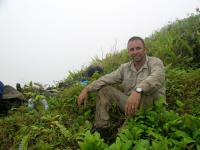
Mark Hoddle, a biological control specialist at UCR, during a field survey in French Polynesia. A research team led by Mark Hoddle, a biological control specialist at UC Riverside, has nearly eradicated the glassy-winged sharpshooter, a major agricultural pest, from the island of Tahiti and several other French Polynesian islands in the South Pacific Ocean. To achieve total pest suppression, the researchers used biological control, an inexpensive method that provides permanent control and can be applied to areas where the sharpshooter has become a nuisance.
| Full story | 0 Comments | 6616 views |
| Microbiology | March 14, 2008 02:50 PM |
Success in the laboratory suggests that a new compound can point the way to preventing active tuberculosis in people infected with the latent form of the bacterium, says a team led by researchers at Weill Cornell Medical College in New York City. A drug with such properties could also be useful in treating people who already have tuberculosis by shortening the lengthy treatment period. The discovery also points to new ways of thinking about fighting bacterial infection, which is becoming increasingly resistant to traditional antibiotics.
| Full story | 0 Comments | 7290 views |
| Bioinformatics | March 14, 2008 02:50 PM |
Scientists may gain a new insight into the relationship between viruses and their environments thanks to a new computational technology developed by researchers at the U.S. Department of Energy’s (DOE) Argonne National Laboratory. This technology has already been used to identify subtle differences in the metabolic processes of microbial communities.
| Full story | 0 Comments | 6206 views |

| Health & Medicine | March 14, 2008 02:50 PM |
Men and women who worked in a plant that processed vermiculite tainted with asbestos-like fibers that originated from a mine in Libby, Montana, show high prevalence of scarring and thickening of the membrane that lines the chest wall some 25 years after the plant stopped using the material—even those who were exposed at or below current legal levels.
| Full story | 0 Comments | 5910 views |
| Biology | March 14, 2008 02:50 PM |
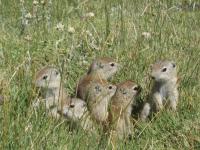
Research at the University of Chicago shows that young squirrels learning to survive in their environment need a moderate level of stress hormones. The study points toward the role of stress hormones on early learning in humans. Credit: University of Chicago Tests on the influence that a stress-related hormone has on learning in ground squirrels could have an impact on understanding how it influences human learning, according to a University of Chicago researcher.
| Full story | 0 Comments | 5790 views |
| Microbiology | March 14, 2008 02:41 PM |
Scientists at the University of Leicester have uncovered a dramatic new twist in the battle against TB.
| Full story | 0 Comments | 5900 views |
| Molecular & Cell Biology | March 14, 2008 12:41 PM |
Crop scientists have cloned a gene that controls the shape of tomatoes, a discovery that could help unravel the mystery behind the huge morphological differences among edible fruits and vegetables, as well as provide new insight into mechanisms of plant development.
| Full story | 0 Comments | 5567 views |
| Biology | March 14, 2008 10:41 AM |
Nature is full of examples of creatures that try to look as big as possible in an effort to scare away potential predators. But to avoid being eaten alive the larvae of sand dollars appear to have a different strategy, in a way exchanging a dollar for a couple of dimes.
| Full story | 0 Comments | 6839 views |

- In some genetic cases of microcephaly, stem cells fail to launch
- Yale team discovers how Zika virus causes fetal brain damage
- Scientists uncover the way a common cell enzyme alerts the body to invading bacteria
- Arctic gives clues on worst mass extinction of life
- Calcium channel blockers caught in the act at atomic level
Search Bio News Net
Free Biology Newsletter
- Flexibility That A.C.A. Lent to Work Force Is Threatened by...International Herald Tribune
- Bacteria Behind Legionnaires’ Disease Found at New York Police StationInternational Herald Tribune
- Prescription Price Crisis? 28 Million Americans See Spike in Drug...MSNBC.com: Health
- Seizing on Opioid Crisis, a Drug Maker Lobbies Hard for...International Herald Tribune
- Republicans are taking a big political risk on health careAP Health News
- Why We're So Divided Over Saving WolvesNational Geographic News