

Organic compounds contain carbon and hydrogen and form the building blocks of all life on Earth. By analyzing organic material and minerals in the Martian meteorite Allan Hills 84001, scientists at the Carnegie Institution's Geophysical Laboratory have shown for the first time that building blocks of life formed on Mars early in its history. Previously, scientists have thought that organic material in ALH 84001 was brought to Mars by meteorite impacts or more speculatively originated from ancient Martian microbes.

| Health & Medicine | December 11, 2007 10:11 PM |
A new combination of bortezomib (Velcade) and two other drugs is showing a very high response rate in patients newly diagnosed with multiple myeloma, a team headed by Dana-Farber Cancer Institute investigators reported at the annual meeting of the American Society of Hematology.
| Full story | 0 Comments | 5226 views |

| Biology | December 11, 2007 09:11 PM |
Two hundred years ago Lewis and Clark's Corps of Discovery laid the groundwork for a good deal of scientific research with its descriptions of territory acquired through the Louisiana Purchase. While Thomas Jefferson was said to be disappointed by the absence of living megafauna, the area ultimately yielded a wealth of Late Cretaceous fossils. A new volume published by the Geological Society of America makes clear that the process of discovery continues.
| Full story | 0 Comments | 5586 views |

| Stem Cell Research | December 11, 2007 08:11 PM |
Measures to protect astronauts from health risks caused by space radiation will be important during extended missions to the moon or Mars, say researchers in a paper currently online in Experimental Neurology.
| Full story | 0 Comments | 6875 views |

| Molecular & Cell Biology | December 11, 2007 07:11 PM |
In a new study in Nature, Brandeis University Howard Hughes Medical Investigator Dr. Dorothee Kern and collaborators pull back the curtain on the secret lives of enzymes, the ubiquitous proteins that catalyze chemical reactions in the cell. Harnessing a slew of sophisticated technologies to capture a key enzyme changing shape in near real time, Kern was able to show that these proteins are not the wallflowers of the biological world scientists had once thought, essentially passive until catalysis occurs. Rather, Kern and her team demonstrated that the enzyme adenylate kinase, and presumably many more, engages in a dynamic dance even before its catalytic date—the substrate to which it binds—shows up.
| Full story | 0 Comments | 4968 views |
| Molecular & Cell Biology | December 11, 2007 06:11 PM |
Surrounding the small islands of genes within the human genome is a vast sea of mysterious DNA. While most of this non-coding DNA is junk, some of it is used to help genes turn on and off. As reported online this week in Genome Research, Hopkins researchers have now found that this latter portion, which is known as regulatory DNA and contributes to inherited diseases like Parkinson’s or mental disorders, may be more abundant than we realize.
| Full story | 0 Comments | 5969 views |

| Bioinformatics | December 11, 2007 05:11 PM |
Early identification of adverse effects of drugs before they are tested in humans is crucial in developing new therapeutics, as unexpected effects account for a third of all drug failures during the development process. Now researchers at the University of California, San Diego (UCSD) have developed a novel technique using computer modeling to identify potential side effects of pharmaceuticals, and have used the technique to study a class of drugs that includes tamoxifen, the most prescribed drug in the treatment of breast cancer. Their study is currently available on line at PLoS Computational Biology.
| Full story | 0 Comments | 4989 views |
| Biology | December 11, 2007 02:25 PM |
IMP Director Barry Dickson and his group are interested in the genetic basis of innate behaviour. They focus on the reproductive behaviour of the fruit fly Drosophila melanogaster. Two years ago, the team was able to identify the fruitless gene as a key regulator of mating behaviour.
| Full story | 0 Comments | 5489 views |
| Biology | December 11, 2007 01:25 PM |
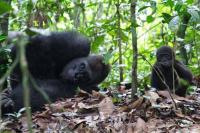
Gorillas in the Lope National Park, Gabon pictured by Dr. Kathryn Jeffery, director of the Gorilla and Chimpanzee Research Station in the Lope National Park. Geography and historical climate change may have both played a major role in gorilla evolutionary diversification, according to a new genetic study by Cardiff University and the University of New Orleans.
| Full story | 0 Comments | 6178 views |

| Microarray | December 11, 2007 12:25 PM |
When a female is attracted to a male, entire suites of genes in her brain turn on and off, show biologists from The University of Texas at Austin studying swordtail fish.
| Full story | 0 Comments | 10742 views |
| Biology | December 11, 2007 11:25 AM |
Geographic range maps that allow conservationists to estimate the distribution of birds may vastly underestimate the actual population size of threatened species and those with specific habitats, according to a study published online this week in the journal Conservation Biology.
| Full story | 0 Comments | 6063 views |
| Biology | December 11, 2007 10:25 AM |
A new genus and species of dinosaur from the Early Jurassic has been discovered in Antarctica. The massive plant-eating primitive sauropodomorph is called Glacialisaurus hammeri and lived about 190 million years ago.
| Full story | 0 Comments | 7985 views |

- In some genetic cases of microcephaly, stem cells fail to launch
- Yale team discovers how Zika virus causes fetal brain damage
- Scientists uncover the way a common cell enzyme alerts the body to invading bacteria
- Arctic gives clues on worst mass extinction of life
- Calcium channel blockers caught in the act at atomic level
Search Bio News Net
Free Biology Newsletter
- Flexibility That A.C.A. Lent to Work Force Is Threatened by...International Herald Tribune
- Bacteria Behind Legionnaires’ Disease Found at New York Police StationInternational Herald Tribune
- Prescription Price Crisis? 28 Million Americans See Spike in Drug...MSNBC.com: Health
- Seizing on Opioid Crisis, a Drug Maker Lobbies Hard for...International Herald Tribune
- Republicans are taking a big political risk on health careAP Health News
- Why We're So Divided Over Saving WolvesNational Geographic News