


Current cancer therapies often succeed at initially eliminating the bulk of the disease, including all rapidly proliferating cells, but are eventually thwarted because they cannot eliminate a small reservoir of multiple-drug-resistant tumor cells, called cancer stem cells, which ultimately become the source of disease recurrence and eventual metastasis. Now, research by scientists at the University of Pittsburgh School of Medicine suggests that for chemotherapy to be truly effective in treating lung cancers, for example, it must be able to target a small subset of cancer stem cells, which they have shown share the same protective mechanisms as normal lung stem cells. They are presenting this ground-breaking research at the Tissue Engineering and Regenerative Medicine International Society (TERMIS) North American Chapter meeting being held June 13 to 16 at the Westin Harbor Castle conference center in Toronto.

| Molecular & Cell Biology | June 15, 2007 09:51 PM |
Here’s a pollution-control tip from nature: Deep inside a flooded mine in Wisconsin, scientists from several institutions including the U.S. Department of Energy’s Lawrence Berkeley National Laboratory (Berkeley Lab) have discovered a world in which bacteria emit proteins that sweep up metal nanoparticles into immobile clumps. Their finding may lead to innovative ways to remediate subsurface metal toxins.
| Full story | 0 Comments | 4367 views |

| Bioinformatics | June 15, 2007 07:51 PM |
Not so long ago, the difficult-to-sequence, highly repetitive, gene-poor DNA found in regions of chromosomes known as heterochromatin was called "junk." Like dark matter in the universe, the true nature of heterochromatin was unknown.
| Full story | 0 Comments | 5484 views |

| Biotechnology | June 15, 2007 05:51 PM |
University of Pittsburgh School of Medicine investigators have engineered artificial blood vessels from muscle-derived stem cells (MDSCs) and a biodegradable polymer that exhibit extensive remodeling and remain free of blockages when grafted into rats. The results of their study, which is being presented at the Tissue Engineering and Regenerative Medicine International Society (TERMIS) North America Chapter meeting being held June 13 to 16 at the Westin Harbor Castle conference center in Toronto, has potentially significant implications for the treatment of heart and kidney diseases, where there is a critical need for new sources of blood vessels for vascular grafts.
| Full story | 0 Comments | 4131 views |

| AIDS & HIV | June 15, 2007 03:51 PM |
454 Life Sciences, a member of the Roche group, and a Yale School of Medicine researcher today announced that they have used the company’s Genome Sequencer™ system to identify previously undetectable rare drug resistant HIV variants in samples from an earlier performed clinical trial. The work, presented today by Michael Kozal, M.D. of the Yale University School of Medicine and the VA CT Health Care System, was a blinded-retrospective analysis of 258 blood samples taken before drug treatment from HIV infected individuals. The results were presented today at the XVI International HIV Drug Resistance Workshop in Barbados and showed that the fraction of patients that harbored resistance mutations is at least twice as high as previously thought. Most low level mutations are undetectable by current resistance testing methods that are used in the clinic. The additional low abundant resistant variants detected by Ultra Deep sequencing were found to be extremely important as it enabled the prediction of early antiretroviral treatment failure with strong statistical significance.
| Full story | 0 Comments | 4467 views |
| Biotechnology | June 15, 2007 02:09 PM |
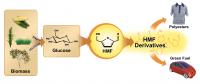
Scientists have discovered the most effective method yet to convert glucose, found in plants worldwide and nature’s most abundant sugar, to HFM, a chemical that can be broken into components for products now made from petroleum. It has been an elusive goal for the legion of chemists trying to pull it off: Replace crude oil as the root source for plastic, fuels and scores of other industrial and household chemicals with inexpensive, nonpolluting renewable plant matter.
| Full story | 0 Comments | 4866 views |

| Health & Medicine | June 15, 2007 12:09 PM |
Individuals diagnosed with Type 2 diabetes are at double the risk of having a stroke compared to those without diabetes, according to new research from the University of Alberta. It was found that the risk of a stroke is considered high within the first five years of treatment for Type 2 diabetes and more than doubles the rate of occurrence.
| Full story | 0 Comments | 6421 views |

| Microbiology | June 15, 2007 10:09 AM |
June 13, 2007 -- Scientists probing the details of viral infection have discovered an intriguing surprise: in mice, herpes viruses hijack their host cells' tools for fixing DNA damage and use those tools to enhance their own reproduction.
| Full story | 0 Comments | 8082 views |

- In some genetic cases of microcephaly, stem cells fail to launch
- Yale team discovers how Zika virus causes fetal brain damage
- Scientists uncover the way a common cell enzyme alerts the body to invading bacteria
- Arctic gives clues on worst mass extinction of life
- Calcium channel blockers caught in the act at atomic level
Search Bio News Net
Free Biology Newsletter
- Flexibility That A.C.A. Lent to Work Force Is Threatened by...International Herald Tribune
- Bacteria Behind Legionnaires’ Disease Found at New York Police StationInternational Herald Tribune
- Prescription Price Crisis? 28 Million Americans See Spike in Drug...MSNBC.com: Health
- Seizing on Opioid Crisis, a Drug Maker Lobbies Hard for...International Herald Tribune
- Republicans are taking a big political risk on health careAP Health News
- Why We're So Divided Over Saving WolvesNational Geographic News