


Researchers at Johns Hopkins took advantage of a new technique that reads the makeup of proteins to identify nearly all chemical changes nature makes by adding phosphate to proteins manufactured in human cells.

| Environment | April 23, 2007 09:11 PM |
Forest Service researchers have developed an adaptive strategy to help natural resource managers in the southeastern United States both prepare for and respond to disturbance from major hurricanes. In an article published in the journal Forest Ecology and Management, John Stanturf, Scott Goodrick, and Ken Outcalt from the Forest Service Southern Research Station (SRS) unit in Athens, GA, report the results of a case study based on the effects of Hurricanes Katrina and Rita.
| Full story | 0 Comments | 4529 views |

| Microbiology | April 23, 2007 08:11 PM |
Scientists in the Greene Infectious Disease Laboratory of the Columbia University Mailman School of Public Health and colleagues in the Victorian Infectious Diseases Reference Laboratory in Melbourne, Australia and 454 Life Sciences have discovered a new virus that was responsible for the deaths of three transplant recipients who received organs from a single donor in Victoria, Australia.
| Full story | 0 Comments | 4939 views |

| Biology | April 23, 2007 07:11 PM |
Following the April 18 announcement that only 25 to 34 of the Amur or Far Eastern leopard (Panthera pardus orientalis) remain in the wild, World Wildlife Fund says the number must now be revised because a female Amur leopard was killed.
| Full story | 0 Comments | 5814 views |
| Environment | April 23, 2007 06:11 PM |
University of Oregon researchers studying mosquitoes have produced the first chromosomal map that shows regions of chromosomes that activate – and are apparently evolving – in animals in response to climate change.
| Full story | 0 Comments | 5046 views |
| Environment | April 23, 2007 05:11 PM |
EU legislation to promote the uptake of biodiesel will not make any difference to global warming, and could potentially result in greater emissions of greenhouse gases than from conventional petroleum derived diesel. This is the conclusion of a new study reported today in Chemistry & Industry, the magazine of the SCI.
| Full story | 0 Comments | 5902 views |
| Environment | April 23, 2007 04:11 PM |
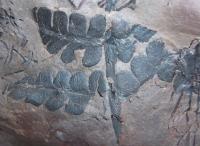
Detail of a pteridosperm, an extinct seed-producing fern-like plant. Width across image about six centimeters. A spectacular fossilised forest has transformed our understanding of the ecology of the Earth’s first rainforests. It is 300 million years old.
| Full story | 0 Comments | 7887 views |

- In some genetic cases of microcephaly, stem cells fail to launch
- Yale team discovers how Zika virus causes fetal brain damage
- Scientists uncover the way a common cell enzyme alerts the body to invading bacteria
- Arctic gives clues on worst mass extinction of life
- Calcium channel blockers caught in the act at atomic level
Search Bio News Net
Free Biology Newsletter
- Flexibility That A.C.A. Lent to Work Force Is Threatened by...International Herald Tribune
- Bacteria Behind Legionnaires’ Disease Found at New York Police StationInternational Herald Tribune
- Prescription Price Crisis? 28 Million Americans See Spike in Drug...MSNBC.com: Health
- Seizing on Opioid Crisis, a Drug Maker Lobbies Hard for...International Herald Tribune
- Republicans are taking a big political risk on health careAP Health News
- Why We're So Divided Over Saving WolvesNational Geographic News