


A male roe deer in hard antler. Why are male ungulate antlers and horns so large? Darwin, when proposing his theory of evolution and sexual selection, suggested that the size of male ungulate antlers and horns may reflect male individual quality, and thereby be used by conspecifics as an honest signal of male sexual vigor, health, strength, hierarchical status, or ability to fight.

| Biology | March 19, 2007 11:51 PM |
| Full story | 0 Comments | 7379 views |
| Biology | March 19, 2007 10:51 PM |
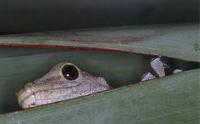
Phelsuma gecko in Pandanus thicket. Neighbors gone, sex gone, fruits gone, species gone. This is the ultra-short conclusion of the findings in a study by Dennis Hansen, Heine Kiesbüy, and Christine Müller from Zurich University, and Carl Jones from the Mauritian Wildlife Foundation, who found that an endangered plant in Mauritius depends on a neighboring plant to provide a safe home for its pollinator, a day-active gecko.
| Full story | 0 Comments | 6617 views |

| Health & Medicine | March 19, 2007 09:51 PM |
The tobacco company's description of its new cigarette brand seems to promise a lot. "May present less risk of cancer associated with smoking," the company boasts on its Web site, making it a natural choice "for smokers who have decided not to quit, but who are interested in a cigarette that responds to concerns about certain smoking-related illnesses, including cancer." Another tobacco firm, in a print ad for the brand, has crowed "All of the taste … Less of the toxins."
| Full story | 0 Comments | 6091 views |
| Health & Medicine | March 19, 2007 08:51 PM |
Scientists at The University of Manchester believe injections of tiny sponge-like particles could provide an alternative to major surgery in the treatment of chronic lower back pain.
| Full story | 0 Comments | 4767 views |

| Molecular & Cell Biology | March 19, 2007 07:51 PM |
A research team headed by Academy Research Fellow Michael Courtney has identified a new molecular pathway in neurons. The pathway is a factor in the degeneration of brain cells, which in turn plays an important role in neurological conditions and diseases, such as Alzheimer's disease, epilepsy and stroke. Courtney and his team, based at the A. I. Virtanen Institute of the University of Kuopio, joined forces with Docent Eleanor Coffey's team at the Turku Centre for Biotechnology to carry out the study as part of a series of successful collaborations between the two teams. The results of their study are published in the latest issue of Nature Neuroscience.
| Full story | 0 Comments | 4769 views |
| Biology | March 19, 2007 06:51 PM |
For many years, ecologists from the Centre of Environment and Hydrology (CEH) have investigated the ecology of Maculinea rebeli, a Lycaenid butterfly whose caterpillars live as parasites inside colonies of Myrmica ants, where they feed on regurgitations from the nurse ants. One of the peculiar features of this species' ecology is that only about 25% of the caterpillars complete development within one year. The rest are inactive in the first season and mature only after two years. "The question puzzling us for some time," says Prof. Jeremy Thomas, director of the CEH in Dorset, "was to understand why so many caterpillars waste one year's time by delaying their development. From all what we know, which developmental pathway a caterpillar takes is determined early during the caterpillar's life, presumably by its mother."
| Full story | 0 Comments | 5223 views |

| Biotechnology | March 19, 2007 05:51 PM |
We take "self-assembly" for granted when it is carried out by the biopolymers which are our hair, teeth, or skin. But when scientists devise new ways for molecules to self assemble into new materials, it is an important achievement.
| Full story | 0 Comments | 6425 views |

| Bioinformatics | March 19, 2007 04:51 PM |
Genomatix Software GmbH, an in silico systems biology company with headquarter in Munich (Germany), released today that researcher in Dublin, Ireland and Boston, U.S.A. identified novel cancer associated genes, based on strategies and products developed and promoted by Genomatix. Experimental verification by siRNA knock-down and RT-PCR confirmed the in silico results.
| Full story | 0 Comments | 4477 views |
| Health & Medicine | March 19, 2007 03:51 PM |
The number of spinal cord injuries among senior citizens (age 70 and above) has increased five times in the past 30 years, as compared with younger spinal cord injury patients, researchers at Thomas Jefferson University Hospital and Jefferson's Regional Spinal Cord Injury Center of the Delaware Valley recently reported.
| Full story | 0 Comments | 4235 views |
| Molecular & Cell Biology | March 19, 2007 02:51 PM |
A new study suggests how a notorious cancer gene may contribute to tumor growth.
| Full story | 0 Comments | 4812 views |

- In some genetic cases of microcephaly, stem cells fail to launch
- Yale team discovers how Zika virus causes fetal brain damage
- Scientists uncover the way a common cell enzyme alerts the body to invading bacteria
- Arctic gives clues on worst mass extinction of life
- Calcium channel blockers caught in the act at atomic level
Search Bio News Net
Free Biology Newsletter
- Flexibility That A.C.A. Lent to Work Force Is Threatened by...International Herald Tribune
- Bacteria Behind Legionnaires’ Disease Found at New York Police StationInternational Herald Tribune
- Prescription Price Crisis? 28 Million Americans See Spike in Drug...MSNBC.com: Health
- Seizing on Opioid Crisis, a Drug Maker Lobbies Hard for...International Herald Tribune
- Republicans are taking a big political risk on health careAP Health News
- Why We're So Divided Over Saving WolvesNational Geographic News