

Studies in mice have indicated that the effects of prion disease could be reversed if caught early enough. The researchers said that their findings support developing early treatments that aim to reduce levels of prion protein in the brains of people with prion disease. Also, they said that their findings suggest testing the efficacy of treatments in a new way: by analyzing their cognitive effects in prion-infected mice.

| Biology | January 31, 2007 10:48 PM |
"Time" is the most popular noun in the English language, yet how would we tell time if we didn’t have access to the plethora of watches, clocks and cell phones at our disposal?
| Full story | 0 Comments | 10272 views |

| Health & Medicine | January 31, 2007 09:48 PM |
Tricking a key enzyme can soothe over-excited receptors in the brain, say neuroscientists, calling this a possible strategy against stroke, Alzheimer's and other neurodegenerative diseases.
| Full story | 0 Comments | 7872 views |
| Biology | January 31, 2007 08:48 PM |
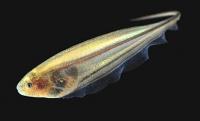
Native to South America, the glass knifefish's ability to emits weak electrical signals makes it a superb subject for the study of how the brain uses sensory information to control locomotion. Scientists have long struggled to figure out how the brain guides the complex movement of our limbs, from the graceful leaps of ballerinas to the simple everyday act of picking up a cup of coffee. Using tools from robotics and neuroscience, two Johns Hopkins University researchers have found some tantalizing clues in an unlikely mode of motion: the undulations of tropical fish.
| Full story | 0 Comments | 6194 views |

| Biotechnology | January 31, 2007 07:48 PM |

Schematic of nanowire sensors operating in solution. A novel approach to synthesizing nanowires (NWs) allows their direct integration with microelectronic systems for the first time, as well as their ability to act as highly sensitive biomolecule detectors that could revolutionize biological diagnostic applications, according to a report in Nature.
| Full story | 0 Comments | 6569 views |
| Biology | January 31, 2007 06:48 PM |
For the first time in U.S., and probably global, history a fish identified as endangered has been shown to have recovered -- and in the Hudson River, which flows through one of the world's largest population centers, New York City.
| Full story | 0 Comments | 9678 views |
| Health & Medicine | January 31, 2007 05:48 PM |
According to a review of the latest clinical trials, coronary artery bypass surgery performed on a beating heart, without the aid of a heart-lung machine, is a safe option that leads to fewer negative side effects for bypass patients. This review is featured in Journal of Cardiac Surgery.
| Full story | 0 Comments | 6869 views |
| Biology | January 31, 2007 04:48 PM |
March of the Penguins, the Oscar® winning documentary, showed how the emperor penguins endure their incubation and fast for four dark and bitterly cold months each year. The tight huddling among these South Pole penguins is a key energy-saving mechanism that allows them to endure their extremely harsh conditions.
| Full story | 0 Comments | 7719 views |

| Microbiology | January 31, 2007 04:24 PM |
Since 1995 there has been a considerable increase in the number of infections with a specific type of Salmonella bacteria transmitted via food. This type, Salmonella serovar Typhimurium DT104, is resistant to at least five different antibiotics. Dutch researcher Armand Hermans found new genetic information in DNA of DT104 that might be involved in its survival and infection mechanism. This genetic information might also be involved in the increase in the number of infections caused by this pathogen.
| Full story | 0 Comments | 6863 views |
| Health & Medicine | January 31, 2007 02:24 PM |
Temple University Hospital's Center For Women's Health is participating in a national study to determine the safety and effectiveness of an investigational treatment for cervical dysplasia. According to the American Cancer Society, approximately 500,000 women are diagnosed with high-grade cervical dysplasia each year, with roughly 10,000 cases progressing to cervical cancer.
| Full story | 0 Comments | 6730 views |

| Environment | January 31, 2007 12:24 PM |
That plants grow better if grown in a greenhouse in the correct climate is nothing new. Dutch researcher Rachel van Ooteghem has designed a control system for an improved solar greenhouse that yields more. In the new greenhouse, good climate control with sustainable energy resulted not only in an increased crop yield but also a lower gas bill.
| Full story | 0 Comments | 6161 views |
| Biology | January 31, 2007 10:24 AM |
Walking while holding a conversation and writing a letter whilst thinking about its content: we perform many actions without even thinking about them. This is possible due to the cerebellum. It regulates the automation of our movements and as a result the cerebrum can perform other tasks. However, how the cerebellum performs this task is not clear. Dutch researcher Angelique Pijpers reconstructed a part of cerebellar functioning in rats and investigated how it mediates in the control of hind limb muscles. Such research might in future provide a better understanding of how the elderly move.
| Full story | 0 Comments | 6623 views |

- In some genetic cases of microcephaly, stem cells fail to launch
- Yale team discovers how Zika virus causes fetal brain damage
- Scientists uncover the way a common cell enzyme alerts the body to invading bacteria
- Arctic gives clues on worst mass extinction of life
- Calcium channel blockers caught in the act at atomic level
Search Bio News Net
Free Biology Newsletter
- Flexibility That A.C.A. Lent to Work Force Is Threatened by...International Herald Tribune
- Bacteria Behind Legionnaires’ Disease Found at New York Police StationInternational Herald Tribune
- Prescription Price Crisis? 28 Million Americans See Spike in Drug...MSNBC.com: Health
- Seizing on Opioid Crisis, a Drug Maker Lobbies Hard for...International Herald Tribune
- Republicans are taking a big political risk on health careAP Health News
- Why We're So Divided Over Saving WolvesNational Geographic News