

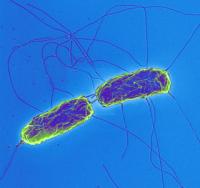
Salmonella typhi. In a study published in the latest issue of Science (24 November, 2006), an international consortium from the Max-Planck Society, Wellcome Trust Institutes in Britain and Vietnam, and the Institut Pasteur in France have elucidated the evolutionary history of Salmonella Typhi. Typhi is the cause of typhoid fever, a disease that sickens 21 million people and kills 200,000 worldwide every year. The results indicate that asymptomatic carriers played an essential role in the evolution and global transmission of Typhi. The rediscovered importance of the carrier state predicts that treatment of acute disease, including vaccination, will not suffice to eradicate this malady. The results also illuminate patterns leading to antibiotic resistance after the indiscriminate use of antibiotics. Fluoroquinolone treatment in southern Asia over two decades has resulted in the emergence of multiple, independent nalidixic acid-resistant mutants, of which one group, H58, has multiplied dramatically and spread globally. The prevalence of these bacteria hampers medical cure of clinical disease via antibiotics.

| Microbiology | November 28, 2006 11:22 PM |
| Full story | 0 Comments | 7462 views |

| Environment | November 28, 2006 10:22 PM |
An international research team has discovered that forest fragmentation poses an even greater threat to Amazonian biodiversity than previously thought.
| Full story | 0 Comments | 6802 views |

| Molecular & Cell Biology | November 28, 2006 09:22 PM |
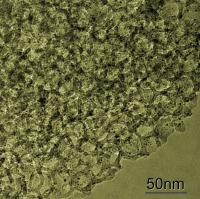
An electron microscopic image shows gold nanoparticles staining enzymes (tiny dark spots) trapped inside functionalized mesoporous silica chambers (larger blobs). (Color added.) Credit: Pacific Northwest National Laboratory. Inactive enzymes entombed in tiny honeycomb-shaped holes in silica can spring to life, scientists at the Department of Energy’s Pacific Northwest National Laboratory have found.
| Full story | 0 Comments | 5360 views |

| Biology | November 28, 2006 08:22 PM |
The shady pursuit of endangered bird eggs made international headlines in May 2006 when Colin Watson, widely considered Britain's most notorious illegal egg collector, died after falling from a 12-meter tree, allegedly while hunting a rare egg. The Royal Society for the Protection of Birds estimates that up to 30 of Britain's most vulnerable species are targeted by collectors. Classical economics theory predicts that such exploitation is unlikely to extinguish a species because the cost of finding the last individuals would outweigh the benefits. But a new theoretical study in PLoS Biology shows that adding human behavior to the equation--specifically, the human penchant for rarity--reveals an unexpected mechanism of exploitation, with alarming implications for species survival.
| Full story | 0 Comments | 5116 views |
| Biology | November 28, 2006 07:22 PM |
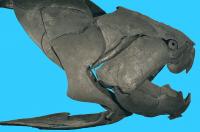
A photograph of the Dunkleosteus terrelli fossil skull upon which this study was based. Scientists created a biomechanical model to simulate the jaw's function. Credit: Photograph by Michael LaBarbera, courtesy of The Field Museum It could bite a shark in two. It might have been the first “king of the beasts.” And it could teach scientists a lot about humans, because it is in the sister group of all jawed vertebrates.
| Full story | 0 Comments | 8184 views |
| Biology | November 28, 2006 06:22 PM |
Scientists at Los Alamos National Laboratory have developed a method for training the common honey bee to detect the explosives used in bombs. Based on knowledge of bee biology, the new techniques could become a leading tool in the fight against the use of improvised explosive devices, or IEDs, which present a critical vulnerability for American military troops abroad and is an emerging danger for civilians worldwide.
| Full story | 0 Comments | 7460 views |

| Biotechnology | November 28, 2006 04:30 PM |
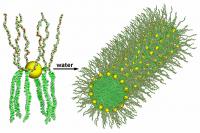
V-shaped amphiphilic molecules containing gold nanoparticles form cylindrical micelles when exposed to water. Credit: Eugene Zubarev/Rice University Chemists at Rice University have discovered how to assemble gold and silver nanoparticle building blocks into larger structures based on a novel method that harkens back to one of nature's oldest known chemical innovations – the self-assembly of lipid membranes that surround every living cell.
| Full story | 0 Comments | 5833 views |

| Health & Medicine | November 28, 2006 02:30 PM |
A new ultrasound technique allows radiologists to accurately distinguish benign from malignant breast lesions. Using elasticity imaging, researchers correctly identified both cancerous and harmless lesions in nearly all of the cases studied. The findings were presented today at the annual meeting of the Radiological Society of North America (RSNA).
| Full story | 0 Comments | 6370 views |
| Health & Medicine | November 28, 2006 12:30 PM |
Egyptian radiologists who performed the first-ever computed tomography (CT) evaluation of King Tutankhamun’s mummy believe they have solved the mystery of how the ancient pharaoh died. The CT images and results of their study were presented today at the annual meeting of the Radiological Society of North America (RSNA).
| Full story | 0 Comments | 7031 views |
| Biology | November 28, 2006 10:30 AM |
Two fish that share much in common genetically appear to have markedly different abilities to grow, a finding that could provide a new way to research such disparate areas as muscle wasting disease and fish farming, a new study shows.
| Full story | 0 Comments | 6423 views |

- In some genetic cases of microcephaly, stem cells fail to launch
- Yale team discovers how Zika virus causes fetal brain damage
- Scientists uncover the way a common cell enzyme alerts the body to invading bacteria
- Arctic gives clues on worst mass extinction of life
- Calcium channel blockers caught in the act at atomic level
Search Bio News Net
Free Biology Newsletter
- Flexibility That A.C.A. Lent to Work Force Is Threatened by...International Herald Tribune
- Bacteria Behind Legionnaires’ Disease Found at New York Police StationInternational Herald Tribune
- Prescription Price Crisis? 28 Million Americans See Spike in Drug...MSNBC.com: Health
- Seizing on Opioid Crisis, a Drug Maker Lobbies Hard for...International Herald Tribune
- Republicans are taking a big political risk on health careAP Health News
- Why We're So Divided Over Saving WolvesNational Geographic News