

Researchers have discovered that even a small amount of MDMA, better known as ecstasy, can be harmful to the brain, according to the first study to look at the neurotoxic effects of low doses of the recreational drug in new ecstasy users. The findings were presented today at the annual meeting of the Radiological Society of North America (RSNA).

| Biotechnology | November 27, 2006 10:30 PM |
The successful synthesis of an antibiotic in a non-native host has provided a team of researchers at the University of Illinois at Urbana-Champaign with the potential for developing new treatments for bacterial infections.
| Full story | 0 Comments | 6808 views |

| Molecular & Cell Biology | November 27, 2006 09:30 PM |
Scientists now understand how an important protein converts chemical energy to mechanical force, thus powering the process of cell division, thanks to a new structural model by University of North Carolina at Chapel Hill researchers.
| Full story | 0 Comments | 5885 views |
| Molecular & Cell Biology | November 27, 2006 08:30 PM |
Cancer scientists at the Kimmel Cancer Center at Thomas Jefferson University in Philadelphia have shown that a gene that is involved in regulating aging also blocks prostate cancer cell growth. The researchers, led by Kimmel Cancer Center director Richard Pestell, M.D., Ph.D., hope the newly found connection will aid in better understanding the development of prostate cancer and lead to new drugs against the disease.
| Full story | 0 Comments | 7280 views |
| Biotechnology | November 27, 2006 07:25 PM |
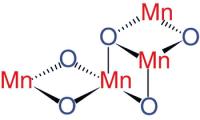
Arrangement of atoms in the heart of photosystem II: four manganese, five oxygen and one calcium atom are linked in the cluster on which water is split. Johannes Messinger and his fellow researchers have not yet been able to pinpoint the position of the latter unambiguously, which is why it is not shown in the illustration. Credit: Johannes Messinger - MPI for Bioinorganic Chemistry Coal, oil or natural gas: all fossil fuels contain the energy of sunlight, stored with the aid of photosynthesis in energy-rich chemical compounds. A researcher at the Max Planck Institute for Bioinorganic Chemistry in Mülheim on the Ruhr working with colleagues from the Technical University in Berlin, the Free University in Berlin and the Lawrence Berkeley National Laboratory has shed light on an important detail in this process. The scientists have determined the structure of the complex in photosystem II, in which water is split with the energy of sunlight. This creates, in addition to molecular oxygen, protons and electrons which in principle can be combined to create hydrogen. If it were possible to copy this process, an inexhaustible source of carbon dioxide-free energy would become available (Science, November 3, 2006).
| Full story | 0 Comments | 9726 views |

| Health & Medicine | November 27, 2006 06:25 PM |
The real cost of Herceptin is borne by other patients whose treatment has to be dropped to balance the books, say doctors in this week’s BMJ.
| Full story | 0 Comments | 6439 views |
| Health & Medicine | November 27, 2006 05:25 PM |
Researchers have linked chemotherapy with short-term structural changes in cognitive areas of the brain, according to a new study. Published in the January 1, 2007 issue of CANCER (http://www.interscience.wiley.com/cancer-newsroom), a peer-reviewed journal of the American Cancer Society, the study reveals that within 12 months of receiving adjuvant chemotherapy, significant regions of the brain associated with memory, analysis and other cognitive functions were significantly smaller in breast cancer patients who received chemotherapy than those who did not. Within four years after treatment, however, there were no differences in these same regions of the brain.
| Full story | 0 Comments | 6239 views |
| Health & Medicine | November 27, 2006 03:25 PM |
It is time to protect patients from “vile and cynical exploitation” by the alternative medicines industry, argues a cancer expert in this week’s BMJ.
| Full story | 0 Comments | 5837 views |

| AIDS & HIV | November 27, 2006 01:25 PM |
Researchers have demonstrated HIV replication within resident immune cells of the testis, providing an explanation for the persistence of virus in semen even after effective highly active antiretroviral therapy. The related report by Roulet et al., “Susceptibility of human testis to human immunodeficiency virus-1 infection in situ and in vitro,” appears in the December issue of The American Journal of Pathology.
| Full story | 0 Comments | 7477 views |

| Stem Cell Research | November 27, 2006 12:25 PM |
Hematopoietic stem cell transplant (HSCT) recipients face a significant long-term risk for developing a second cancer, particularly if they were older at the time of transplant or received stem cells from a female donor, according to a new study. Published in the January 1, 2007 issue of CANCER (http://www.interscience.wiley.com/cancer-newsroom), a peer-reviewed journal of the American Cancer Society, the study reveals that within 10 years of an allogeneic HSCT, the relative risk of a second, solid cancer is almost twice that of the general population. In addition, cancer risk almost quadruples for patients who were over 40 years old at the time of transplant or for patients who received stem cells from a female donor.
| Full story | 0 Comments | 7710 views |
| Molecular & Cell Biology | November 27, 2006 11:25 AM |
Cetaceans, the group of marine mammals that includes whales and dolphins, have demonstrated remarkable auditory and communicative abilities, as well as complex social behaviors. A new study published online November 27, 2006 in The Anatomical Record, the official journal of the American Association of Anatomists,compared a humpback whale brain with brains from several other cetacean species and found the presence of a certain type of neuron cell that is also found in humans. This suggests that certain cetaceans and hominids may have evolved side by side. The study is available online via Wiley InterScience at http://www.interscience.wiley.com/journal/ar.
| Full story | 0 Comments | 8953 views |

- In some genetic cases of microcephaly, stem cells fail to launch
- Yale team discovers how Zika virus causes fetal brain damage
- Scientists uncover the way a common cell enzyme alerts the body to invading bacteria
- Arctic gives clues on worst mass extinction of life
- Calcium channel blockers caught in the act at atomic level
Search Bio News Net
Free Biology Newsletter
- Flexibility That A.C.A. Lent to Work Force Is Threatened by...International Herald Tribune
- Bacteria Behind Legionnaires’ Disease Found at New York Police StationInternational Herald Tribune
- Prescription Price Crisis? 28 Million Americans See Spike in Drug...MSNBC.com: Health
- Seizing on Opioid Crisis, a Drug Maker Lobbies Hard for...International Herald Tribune
- Republicans are taking a big political risk on health careAP Health News
- Why We're So Divided Over Saving WolvesNational Geographic News