

You're on vacation, having fun sailing the seven seas, when your stomach starts rolling worse than the waves. Before you know it, nausea and vomiting have replaced shuffle board and sun-bathing.

| Environment | July 18, 2006 10:14 PM |
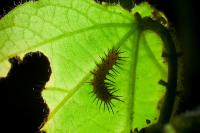
Insect HerbivoryHigher tree species diversity leads directly to higher diversity of leaf-eating insects, researchers report in the July 13, 2006 early-online version of the journal Science.
| Full story | 0 Comments | 6291 views |
| Environment | July 18, 2006 09:14 PM |
Coral tissue damage that normally heals on its own will not mend when the colonies are near pollution sources on land that release industrial chemicals, fuel oils and other contaminants, a University of Central Florida biologist and several colleagues have found.
| Full story | 0 Comments | 4960 views |

| Microbiology | July 18, 2006 08:14 PM |
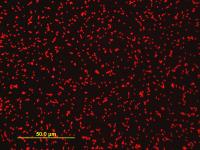
The blue is the nucleous stained with a DNA dye. The red is the natural autofluorescence of its photosynthetic pigments -- the chloroplast. Each blue/red dot represents one cell. While phytoplankton scientists focus their research on some of the smallest organisms in the world, the impacts can be global. This week, in Proceedings of the National Academy of Sciences, a genomic analysis of the smallest, free-living eukaryote offers insight into its ability to thrive in the world's oceans and evolutionary biology. Known as Ostreococcus tauri, the analyzed phytoplankton has been thought to be not only the smallest eukaryote, but also ancient, dating back 1,500 million years and capable of photosynthesis that helps with carbon cycling. This genomic analysis offers important clues regarding the minimum genome size necessary for an organism to be able to live as a free living cell, perform photosynthesis, impact carbon cycling, and influence the climate.
| Full story | 0 Comments | 5919 views |
| Microbiology | July 18, 2006 07:14 PM |
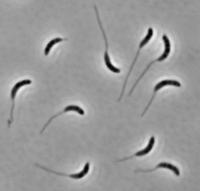
Stalks increase the rate of nutrient uptake by efficiently increasing cell surface area. The finding has potential implications for both ecology and drug productionThe constellation of shapes and sizes among bacteria is as remarkable as it is mysterious. Why should Spirochaeta halophila resemble a bedspring coil, Stella a star and Clostridium cocleatum a partly eaten donut? No one really knows.
| Full story | 0 Comments | 5944 views |

| Molecular & Cell Biology | July 18, 2006 04:31 PM |
Scientists at the Harvard Department of Ophthalmology's Schepens Eye Research Institute and Massachusetts Eye and Ear Infirmary (MEEI) are the first to learn why the cornea, the clear window of the eye, is free of blood vessels--a unique phenomenon that makes vision possible. The key, say the researchers, is the unexpected presence of large amounts of the protein VEGFR-3 (vascular endothelial growth factor receptor-3) on the top epithelial layer of normal healthy corneas. According to their findings, VEGFR-3 halts angiogenesis (blood vessel growth) by acting as a "sink" to bind or neutralize the growth factors sent by the body to stimulate the growth of blood vessels. The cornea has long been known to have the remarkable and unusual property of not having blood vessels, but the exact reasons for this had remained unknown.
| Full story | 0 Comments | 6591 views |

| Biotechnology | July 18, 2006 02:31 PM |
Titanium dental implants coated with proteins that induce bone formation may be a key advancement in treating tooth loss due to gum disease, researchers say.
| Full story | 0 Comments | 7484 views |
| Molecular & Cell Biology | July 18, 2006 12:31 PM |
A recently discovered facet of the breast cancer susceptibility gene BRCA1 reveals a mechanism linking mutation of BRCA1 to formation of large blood vessels needed to support cancer progression. The findings demonstrate that, in addition to an impaired DNA damage response associated with cancer initiation, mutation of BRCA1 is also linked to manipulation of the tumor microenvironment. The research appears in the July issue of Cancer Cell, published by Cell Press.
| Full story | 0 Comments | 6974 views |
| Molecular & Cell Biology | July 18, 2006 10:31 AM |
The molecular machinery that starts the process by which a biological cell divides into two identical daughter cells apparently worked so well early on that evolution has conserved it across the eons in all forms of life on Earth. Researchers with the U.S. Department of Energy's Lawrence Berkeley National Laboratory and the University of California at Berkeley have shown that the core machinery for initiating DNA replication is the same for all three domains of life - Archaea, Bacteria and Eukarya.
| Full story | 0 Comments | 6220 views |

- In some genetic cases of microcephaly, stem cells fail to launch
- Yale team discovers how Zika virus causes fetal brain damage
- Scientists uncover the way a common cell enzyme alerts the body to invading bacteria
- Arctic gives clues on worst mass extinction of life
- Calcium channel blockers caught in the act at atomic level
Search Bio News Net
Free Biology Newsletter
- Flexibility That A.C.A. Lent to Work Force Is Threatened by...International Herald Tribune
- Bacteria Behind Legionnaires’ Disease Found at New York Police StationInternational Herald Tribune
- Prescription Price Crisis? 28 Million Americans See Spike in Drug...MSNBC.com: Health
- Seizing on Opioid Crisis, a Drug Maker Lobbies Hard for...International Herald Tribune
- Republicans are taking a big political risk on health careAP Health News
- Why We're So Divided Over Saving WolvesNational Geographic News