Biology News Net
RSS 2.0 Feed
Biology

hbo0901_1.jpg
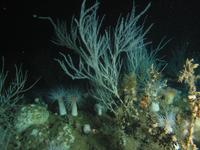
A scene from Viosca Knoll
Editor : We have 4 pictures in the article, but they have tons more (and videos!) on their website, be sure to check it out! Creatures from the Depths are always strange and interesting!

Expedition team dodges storm and returns to gulf seafloor

Despite having to evade hurricane Katrina, a team of scientists from Harbor Branch and other institutions is returning to port this Sunday with new tales from the deep after completing their second annual Deep Scope expedition. The group has discovered a mysterious visual capability in a deep-sea crab; captured new video of a large, recently discovered squid species; and took clear video of the world's first known fluorescent shark. The Commerce Department's National Oceanic and Atmospheric Administration funded the mission to sites around the Gulf of Mexico.

Molecular & Cell Biology

Scientists at New York University School of Medicine report in a new study that they have identified the molecular switch that turns on the production of myelin, the fatty insulation around nerve cells that ensures swift and efficient communication in the nervous system. The study, published in the September 1, 2005, issue of the journal Neuron, may provide a new avenue for treating nervous system diseases such as multiple sclerosis, which are associated with damage to myelin.

Biology

Penn State food scientists have shown that the amount of health-linked polyphenols present during roasting or baking influences the toasty aroma developed by oats and might be used to limit the generation of off-flavors in oat products.

Health & Medicine

A non-toxic chemical compound that prevents cancer cells from producing a critical membrane component has been shown to suppress tumor growth and tumor size in mice without unwanted side effects, according to researchers at the Children�s National Medical Center in Washington, D.C. The finding could lead to the development of safe and effective human cancer treatments that do not have the harsh side effects associated with chemotherapy and other traditional cancer-fighting strategies.

Molecular & Cell Biology

First step toward developing enzymes to treat diseases such as cystic fibrosis, reduce bacterial biowarfare threatsA team of biomedical researchers from Brandeis University and the University of Texas at Austin has determined the first 3-dimensional structure of an enzyme that may be pivotal in preventing certain bacterial infections in plants, animals and humans, according to a study published in the Proceedings of the National Academy of Sciences.

Health & Medicine

In a surprising development, a research team led by the National Human Genome Research Institute (NHGRI), part of the National Institutes of Health (NIH), has found that a class of experimental anti-cancer drugs also shows promise in laboratory studies for treating a fatal genetic disorder that causes premature aging.

Biology
BiologySeptember 1, 2005 11:11 PM

tua0831_2sm.jpg
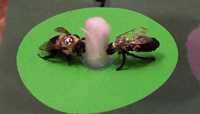
A live Bombus impatiens bumblebee (left) feeds at a cotton wick soaked with sugar water that protrudes from an artificial flower. The bumblebee model on the right is positioned to simulate a feeding bee. Photo credit: Brad Worden.
Just as travelers figure out which restaurant is good by the numbers of cars in the parking lot, bumblebees decide which flowers to visit by seeing which ones already have bee visitors.

Microarray

Could improve prediction of patient outcomes, lead to tailored treatmentsWhen it comes to inflammation, too much of a good thing can be deadly. In some severely injured patients, this normal healing process can develop into a lethal, whole-body response, including bloodstream infection (sepsis) and multiple organ failure. How and why inflammation turns from healing to harming is still mysterious, so doctors can't accurately predict how each injured patient will fare.

Biology

Male fruit flies lacking the ability to sense female pheromones are left in the dark when it comes to love, according to a new Dartmouth Medial School (DMS) study that could help control harmful insect populations. Published in the Proceedings of the National Academy of Sciences (PNAS), the research shows that mutations in the gene ppk25 disable males flies’ ability to detect female pheromones that regulate key mating behaviors in fruit flies.

Microbiology

Macrophages are effective weapons used by our immune system to absorb and digest pathogenic intruders. Some bacteria, however, can subvert this defence mechanism and even multiply within the macrophages. Cell biologists at the University of Bonn have revealed such a strategy in a recently publication in the journal 'Traffic' (Vol. 6, No. 8, August 2005, pp.635-653). Their findings reveal that the pathogens escape the 'stomach' of the macrophages which might otherwise digest them.