
Biology News Net
RSS 2.0 Feed
Biology

fieldmuseum080205.1sm.jpg
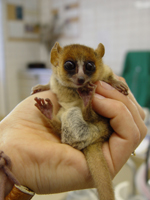
The newly discovered Microcebus lehilahytsara is a distant relative of man's ancestors and therefore important to understanding human origins and evolution. Photo by Robert Zingg
German and Malagasy primatologists have discovered two new species of lemurs, naming one of them after Steve Goodman, a Field Museum scientist who has devoted nearly two decades to studying the animals of Madagascar.

Lemurs in the wild are found only in Madagascar, one of the most important conservation hotspots on Earth. Lemurs are the last living link to ancient primates that have a common link to the primate lineage that evolved into humans. Therefore, they are extremely important to understanding the origin, evolution and ecology of human beings.

Microbiology

An experiment in a dry Antarctic stream channel has shown that a carpet of freeze-dried microbes that lay dormant for two decades sprang to life one day after water was diverted into it, said a University of Colorado at Boulder researcher.

Biology

New discoveries about the timing and speed of gigantic, 6500-foot (2-km) thick lava flows that poured out of the ground 65 million years ago could shift the blame for killing the dinos.

Microbiology

Malaria remains a devastating problem in Africa and understanding the factors affecting its transmission remains a crucial part of the effort to combat the disease. A new study published in the premier open access journal PLoS Biology conducted in Western Kenya by Jacob Koella and colleagues now reveals that mosquitoes are more attracted to children with the infectious stages of malaria than to those infected with non-transmissible forms of the disease or to uninfected people.

Microbiology

UCLA biochemists reveal the first structural details of a family of mysterious objects called microcompartments that seem to be present in a variety of bacteria. The discovery was published Aug. 5 in the journal Science.

Health & Medicine

Aim to grow old and die peacefully in your sleep? Be careful what you wish for. A new UCLA study suggests that some people die in their sleep because they stop breathing due to a cumulative loss of cells in the brain's breathing command-post. The online edition of Nature Neuroscience reports the findings on Aug. 7.

Environment

Because grasslands and forests operate in complex feedback loops with both the atmosphere and soil, understanding how ecosystems respond to global changes in climate and element cycling is critical to predicting the range of global environmental changes--and attendant ecosystem responses--likely to occur.

Molecular & Cell Biology

Scientists at the MUHC have made an important discovery that will advance our understanding of how the female hormone estrogen causes growth of breast cancer cells. The research, in collaboration with scientists at the Institut de Recherches Cliniques de Montreal (IRCM) identifies 153 genes that respond to estrogen and one in particular that can be used to halt the growth of breast cancer cells. The study, published in today's Proceedings of the National Academy of Sciences (PNAS), will focus future research for a breast cancer cure.

Biology

Two peas in a pod may not be so friendly when planted in the ground and even two parts of the same plant, once separated may treat the former conjoined twin as an alien "enemy," according to a Penn State researcher.

Biology

Anxiety can be a good thing. It alerts you that something may be wrong, that danger may be close. It helps initiate signals that get you ready to act. But, while an occasional bit of anxiety can save your life, constant anxiety causes great harm. The hormones that yank your body to high alert also damage your brain, your immune system and more if they flood through your body all the time.