
Biology News Net
RSS 2.0 Feed
Biotechnology

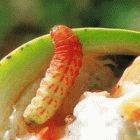
redbollworm.jpg
Red bollworm on cotton. Photo Credit: Cotton South Africa
A study has found that Indian varieties of cotton that have been genetically modified to resist an important insect pest are "inadequate".

The findings back farmers' claims that the pest, known as the bollworm, is able to survive on Bt cotton varieties, modified to resist it.

Biotechnology

Contrary to what many scientists thought, genetically modified (GM) corn has not yet spread to native maize crops in southern Mexico.

After analyzing tens of thousands of seeds from maize crops grown in 2003 and 2004, researchers from Mexico and the United States found no evidence of transgenes in these indigenous varieties.

Health & Medicine

Millions of people in southwest China suffer from potentially-crippling fluoride poisoning because they burn a mixture of clay and coal, say researchers.

The findings, from a study carried out in Guizhou province, contradict the previous belief that the disease was caused by people burning fluoride-rich coal in indoor stoves without chimneys.

Biology

In the early 1960s more than 100,000 turkeys died in Britain of cancer of the liver. Eventually, researchers identified mouldy peanut flour from Brazil containing large amounts of aflatoxin as the cause of this mysterious 'turkey X' disease. Even today the toxin is regarded as one of the most virulent natural carcinogenic substances.

AIDS & HIV

A survey of U.S. adults has found that a majority believe that HIV vaccines are the best hope for controlling the global AIDS epidemic and are confident such vaccines can be made. But while most of those surveyed felt it personally important to help support HIV vaccine research, a majority expressed reluctance to support a friend or family member’s participation in an HIV vaccine clinical trial.

Biology

By performing sequence analysis of ancient DNA, a team of researchers has obtained data that help clarify our view of the evolutionary relationships shared by the large predatory cats that once roamed the prehistoric New World.

Molecular & Cell Biology

Employing a simple new technique to manipulate the sugars that power many front-line drugs, a team of Wisconsin scientists has enhanced the antic-cancer properties of a digitalis, a drug commonly used to treat heart disease.

Molecular & Cell Biology

Scientists have used a glowing protein from fireflies to observe the activity of a molecule that is an important target for new drugs to treat cancer, autoimmune diseases and several other disorders.

Biotechnology

Currently being developed by the IST project OPTONANOGEN, a prototype of the system will initially be used to detect mutations of the BRCA1 gene that are responsible for between 2.5 and 5 per cent of the incidence of breast cancer in women. The final system, however, could be used to detect virtually any genetic anomaly as well as proteins linked to viruses, chemical contamination in food or water pollution.

Microbiology

Researchers at the Vaccine and Gene Therapy Institute (VGTI) at Oregon Health & Science University have developed new diagnostic methods to better detect future monkeypox or smallpox outbreaks. The research also sheds new light on the 2003 monkeypox outbreak in the Midwest -- monkeypox is closely related to smallpox. This new information suggests that the 2003 outbreak was larger than the 72 cases reported by the Centers for Disease Control and Prevention (CDC). The research was released online this week by the medical journal Nature Medicine. The study will also appear in the September 2005 print edition of the journal.

Molecular & Cell Biology

Researchers at Northwestern University and Carnegie Mellon University have found that a recently described class of molecules called microRNAs (miRNAs) play an important role in regulating oogenesis, the process by which females make eggs. MiRNAs silence genes by binding to genetic elements called messenger RNA and preventing them from making new proteins -- the molecules primarily responsible for cell activities.