
Biology News Net
RSS 2.0 Feed
Microbiology

Tpseudonana 1_9792.jpg
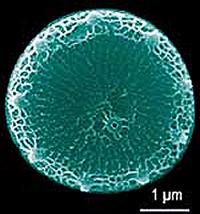
Marine diatoms, such as Thalassiosira pseudonana pictured here, are found throughout the world's oceans.
Cadmium, commonly considered a toxic metal and often used in combination with nickel in batteries, has been found to have a biological use as a nutrient in the ocean, the first known biological use of cadmium in any life form.

Scientists have discovered cadmium within an enzyme from a marine diatom, an algae or plankton common in the ocean and a major source of food for many organisms. The finding, reported in the May 5 issue of Nature, suggests that certain trace metals, found in very low concentrations in the ocean, are utilized by enzymes that have not been found in organisms from terrestrial environments.

Biology

Editor : Sadly, no picture available yet, but there's a recent wiki article with more details. New family of mammals? Wow!

Is it a squirrel? A rat? A Guinea pig? Try none of the above.

A team of scientists working in Southeast Asia have discovered a long-whiskered rodent with stubby legs and a tail covered in dense hair. But don't call it a squirrel. Or a rat. Because it's actually more like a guinea pig or chinchilla. But not quite. In fact the new species, found in Laos by scientists from the Wildlife Conservation Society (WCS) and other groups, is so unique it represents an entire new family of wildlife.

The new species is described in the recent issue of the journal Systematics and Biodiversity by authors from WCS, The Natural History Museum in London, University of Vermont and WWF Thailand.

Molecular & Cell Biology

Using a common chemotherapy agent, researchers at UCLA's Jonsson Cancer Center and the Department of Pathology and Laboratory Medicine found a way to move an important biomarker expressed in prostate cancer, shaking it loose from one location in a cell – where it could not be accessed by blood – to another, easier to target area.

The discovery, outlined in the cover article of May 11 edition of the peer-reviewed journal Molecular Cancer Therapeutics, could have important implications for using immunotherapy to treat prostate cancer, said Ayyappan K. Rajasekaran, a Jonsson Cancer Center researcher and senior author of the article.

Biology

In this week's journal Nature, scientists at the Salk Institute for Biological Studies report that they have solved one of the "holy grail" puzzles of developmental biology: the existence of a mechanism that insures that the exterior of our bodies is symmetrical while inner organs are arranged asymmetrically.

Molecular & Cell Biology

A structural biologist from the Virginia Commonwealth University Massey Cancer Center, in collaboration with researchers at Memorial Sloan-Kettering Cancer Center, has identified the crystal structure of a protein that plays a role in supplying nutrients to solid tumors.

Biology

A geologist from Washington University in St. Louis is developing new techniques to render a more coherent story of how primitive life arose and diverged on Earth – with implications for Mars. Carrine Blank Ph.D., Washington University assistant professor of earth and planetary sciences in Arts & Sciences, has some insight concerning terrestrial microbes that could lead to provocative conclusions about the nature of life on Mars and other planets.

Biology

An understanding of exactly how the brain controls breathing is fundamental to the treatment of respiratory disorders. We know that breathing is an automatic rhythmic process that persists without conscious effort whether we are awake or asleep, but the question that has intrigued many scientists for well over 100 years is what maintains this almost fail safe vital rhythm throughout life?

Stem Cell Research

A treatment derived from human embryonic stem cells improves mobility in rats with spinal cord injuries, providing the first physical evidence that the therapeutic use of these cells can help restore motor skills lost from acute spinal cord tissue damage.