
Biology News Net
RSS 2.0 Feed
Molecular & Cell Biology

still.zoom_med.jpg
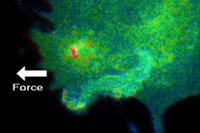
Cells tugged in one direction sent a biochemical signal in the opposite direction in the form of a signature pattern of fluorescent light.
Don't miss out the extremely cool movie (with narration!) where you can see the molecular message as a fluorescent wave propagating throught the cell, in real time. The movie also explain that the signalization depends on the cytoskeleton. Sadly, it's encoded in Real Media, so download the codec if you need to.

Researchers at UCSD and UC Irvine have captured on video for the first time chemical signals that traverse human cells in response to tiny mechanical jabs, like waves spreading from pebbles tossed into a pond. The scientists released the videos and technical details that explain how the visualization effect was created as part of a paper published in the April 21 issue of Nature.

Microbiology

colorado042005_3sm.jpg
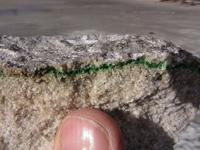
pH value in rock pores where organisms live acidic enough to dissolve nails, say researchers
University of Colorado at Boulder researchers say a bizarre group of microbes found living inside rocks in an inhospitable geothermal environment at Wyoming's Yellowstone National Park could provide tantalizing new clues about ancient life on Earth and help steer the hunt for evidence of life on Mars.

The CU-Boulder research team reported the microbes were discovered in the pores of rocks in a highly acidic environment with high concentrations of metals and silicates at roughly 95 degrees F in Yellowstone's Norris Geyser Basin. The new study shows the microbe communities are subject to fossilization and have the potential to become preserved in the geologic record.

Scientists believe similar kinds of geothermal environments may once have existed on Mars, where astrobiologists have intensified the search for past and present life forms in recent years.

Biology

An infectious fungus has been found to defy the most basic tenet of sexual reproduction – that successful mating requires individuals of the opposite sex, according to Howard Hughes Medical Institute researchers at Duke University Medical Center.

Biotechnology

Biomedical engineers at Purdue University have shown that "vascular stents" used to repair arteries might perform better if their surfaces contained "nano-bumps" that mimic tiny features found in living tissues.

Health & Medicine

Health Canada has approved Sativex® (Cannabis sativa L. extract) a new drug developed as adjunctive treatment for the symptomatic relief of neuropathic pain in adults with multiple sclerosis (MS). Canada becomes the first country in the world to approve Sativex, a novel prescription pharmaceutical product derived from components of the cannabis plant shown to have therapeutic properties. Sativex is administered via a spray into the mouth.

Environment

Groundbreaking research led by the U.S. Department of Energy Joint Genome Institute (DOE JGI) demonstrates for the first time that the signatures of the genes alone in terrestrial and aquatic samples can accurately diagnose the health of the sampled environments. This study, published in the April 22nd edition of the journal Science positions large-scale genome sequencing to accelerate advances in environmental sciences akin to the contributions DNA sequencing has made to biomedical sciences.

Molecular & Cell Biology

In laboratory mouse experiments, researchers at The University of Texas M. D. Anderson Cancer Center have developed a way to use RNA interference (RNAi) so that it permanently hampers breast cancer development. The technique permanently silences activated STAT3, a crucial gene found in some human breast tumors, thus reducing the cancer's ability to become invasive.

Molecular & Cell Biology

Clues about how a suspect version of a gene may slightly increase risk for schizophrenia* are emerging from a brain imaging study by the National Institutes of Health's (NIH) National Institute of Mental Health (NIMH). The gene variant produced a telltale pattern of activity linked to production of a key brain messenger chemical.

Molecular & Cell Biology

Nervous system development requires billions of neurons to migrate to the appropriate locations in the brain and grow nerve fibers (axons) that connect to other nerve cells in an intricate network. Growth cones, structures in the tips of growing axons, are responsible for steering axons in the right direction, guided by a complex set of signals from cells they encounter along the way. Some signals lure the axons to extend and grow in a particular direction; others are inhibitory, making the axon turn away or stop growing.

Molecular & Cell Biology

The complexity of the brain and, more specifically, how nerve cells form billions of contacts when there are fewer than 30,000 human genes is still a scientific mystery.

Molecular & Cell Biology

The ability of the brain to recover from such injury as stroke or trauma depends on a particular circuitry of neurons that "talk" to one another using the brain chemical acetylcholine, researchers led by James Conner and Mark Tuszynski in the Neural repair Group at UCSD have discovered. Their finding in rats could help enhance rehabilitation to recover from such injuries by leading to the development of drugs or other treatments to enhance the "cholinergic system."