
Biology News Net
RSS 2.0 Feed
Biology

whales-Dscn0233_exsm.jpg
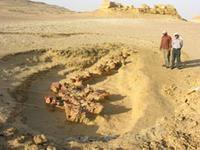
Completed excavation of the skeleton of 18-meter long whale Basilosaurus isis in the Western Desert of Egypt as exhibited last week by University of Michigan and Egyptian Environmental Affairs Agency paleontologists. Photo: Philip Gingerich
University of Michigan paleontologist Philip D. Gingerich and colleagues at the Egyptian Environmental Affairs Agency (EEAA) announced April 10 the successful excavation of an unusually complete and well-preserved skeleton of the 40 million-year-old fossil whale Basilosaurus isis.

The new skeleton is 18 meters (50 feet) long and was found in Wadi Hitan in the Western Sahara of Egypt. The first Basilosaurus fossil was found in 1905 but no full skeleton has been discovered until now.

Full story 0 Comments 262034 views
Molecular & Cell Biology

UTMB scientists offer strongest evidence yet that infectious misformed proteins cause mad cow disease and other mysterious brain disorders

Researchers at the University of Texas Medical Branch at Galveston (UTMB) have produced the strongest proof yet that the mysterious and devastating brain diseases known as "transmissible spongiform encephalopathies" (TSEs) are transmitted by an infectious agent composed only of a malformed protein, and not a virus. TSEs, which can afflict both human beings and animals, include mad cow disease, new-variant Creutzfeldt-Jakob Syndrome, scrapie, kuru and chronic wasting disease.

In a genomics milestone, an international consortium of researchers has for the first time lifted the veil from a fungal plant pathogen by sequencing the genome – or set of all genes – of the most destructive enemy of rice: Magnaporthe grisea, the fungus that causes rice blast disease.

Microbiology

Howard Hughes Medical Institute researchers chiseling away at the problem of antibiotic resistance now have a detailed explanation of how the drugs' main cellular target in bacteria evolves to become resistant to some of these medications. The findings are already leading to new experimental antibiotics that are being engineered to circumvent resistance, which is a major worldwide health problem.

Biology

As the world prepared to observe Earth Day, World Wildlife Fund and its partners in the International Smart Gear Competition announced three new winning solutions to prevent the accidental maiming and killing of marine mammals, juvenile fish, and sea turtles that become ensnared by fishing nets and longlines--a problem known as bycatch--while also improving the efficiency of commercial fishing.

Molecular & Cell Biology

The power of a new technique to map connections among nerve cells in the brain has a UT Southwestern Medical Center scientist dreaming of solving the mysteries of sleep.

By tracking which nerve cells in the mouse brain stimulate others, researchers in Japan and at UT Southwestern found that a type of neuron responsible for keeping animals awake receives inhibitory signals from neurons active only during sleep, as well as reinforcing, positive signals from nerve cells that are very active during wakefulness.

Health & Medicine

The Food and Drug Administration (FDA) today announced a series of important changes pertaining to the marketing of the non-steroidal anti-inflammatory class of drugs, including COX-2 selective and prescription and non-prescription (over-the-counter (OTC)) non-selective NSAID medications. A list of these products is available on the Internet at http://www.fda.gov/cder/drug/infopage/cox2/default.htm.

Health & Medicine

Cancer patients may one day benefit from treatment with mixtures of customized antibodies. In a study published recently in the Proceedings of the National Academy of Sciences (USA), a team of Weizmann Institute scientists have demonstrated how the right combination might form a web that destroys the cancer cell's communication network, ultimately demobilizing the cell.

Health & Medicine

Canadian youth rank fourth-highest on the obesity scale in a new international study of adolescents from 34 countries, says co-author Dr. Ian Janssen, a professor in Queen's University's School of Physical & Health Education and Department of Community Health & Epidemiology.

Biology

A NASA funded study has found a decline in winter and spring snow cover over Southwest Asia and the Himalayan mountain range is creating conditions for more widespread blooms of ocean plants in the Arabian Sea.

Biology

Relief from soaring prices at the gas pump could come in the form of corncobs, cornstalks, switchgrass and other types of biomass, according to a joint feasibility study for the departments of Agriculture and Energy.