


Grains of rice reveal just a tiny proportion of the variation of traits in the over 40,000 different varieties of rice in the world. The open-access, open-data journal GigaScience (published by BGI and Biomed Central), announces today the publication of an article on the genome sequencing of 3000 rice strains along with the release of this entire dataset in a citable format in journal's affiliated open-access database, GigaDB. The publication and release of this enormous data set (which quadruples the current amount of publicly available rice sequence data) coincides with World Hunger Day to highlight one of the primary goals of this project— to develop resources that will aid in improving global food security, especially in the poorest areas of the world. This work is the completion of stage one of the 3000 Rice Genomes Project, a collaborative effort made up of the Chinese Academy of Agricultural Sciences (CAAS), the International Rice Research Institute (IRRI), and BGI, and is funded by the Bill and Melinda Gates Foundation and the Chinese Ministry of Science and Technology.

| Bioinformatics | May 29, 2014 04:26 AM |
| Full story | 0 Comments | 7008 views |

| Biotechnology | May 29, 2014 04:26 AM |
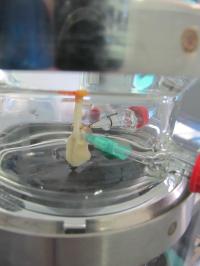
The 3-D lung tumor model helps researchers to test medications. Lung cancer is a serious condition. Once patients are diagnosed with it, chemotherapy is often their only hope. But nobody can accurately predict whether or not this treatment will help. To start with, not all patients respond to a course of chemotherapy in exactly the same way. And then there's the fact that the systems drug companies use to test new medications leave a lot to be desired. "Animal models may be the best we have at the moment, but all the same, 75 percent of the drugs deemed beneficial when tested on animals fail when used to treat humans," explains Prof. Dr. Heike Walles, head of the Würzburg-based "Regenerative Technologies for Oncology" project group belonging to the Fraunhofer Institute for Interfacial Engineering and Biotechnology IGB.
| Full story | 0 Comments | 10061 views |

| Molecular & Cell Biology | May 29, 2014 04:26 AM |
By cataloging over 18,000 proteins, researchers from TUM have produced an almost complete inventory of the human proteome. This information is now freely available in the ProteomicsDB database, which is a joint development of TUM and software company SAP. The database includes information for example on the types, distribution, and abundance of proteins in various cells and tissues as well as in body fluids.
| Full story | 0 Comments | 5834 views |

| Health & Medicine | May 29, 2014 04:26 AM |
A multi-institutional team of researchers has pinpointed exactly what goes wrong when chronic lymphocytic leukemia (CLL) patients develop resistance to ibrutinib, a highly effective, precisely targeted anti-cancer drug. In a correspondence published online May 28 in the New England Journal of Medicine, they show how the mutation triggers resistance. Their finding could guide development of new agents to treat drug-resistant disease.
| Full story | 0 Comments | 6706 views |
| Molecular & Cell Biology | May 27, 2014 06:16 PM |
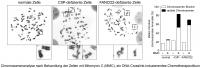
This shows crosslink-inducing agents used in chemotherapy. Environmental influences such as ionizing radiation, intense heat or various chemical substances damage the DNA constantly. Only thanks to efficient repair systems can mutations – changes in the DNA – largely be prevented. DNA crosslinks that covalently link both strands of the DNA double helix are among the most dangerous DNA lesions. Crosslinks block DNA replication and can thus cause cell death. Moreover, their faulty repair can trigger the development of tumors. Crosslink repair is highly complex and only vaguely understood today. A team of cancer researchers headed by Alessandro Sartori from the University of Zurich now reveals interesting details as to how cells recognize crosslink damage. In their study recently published in Cell Reports, the scientists demonstrate that the interplay between two specific proteins is crucial for the flawless repair of crosslink damage.
| Full story | 0 Comments | 6523 views |
| Health & Medicine | May 27, 2014 06:16 PM |
Caveat emptor – or "buyer beware" holds true when it comes to the unknown health effects of e-cigarettes. An article in the June issue of Annals of Allergy, Asthma & Immunology, the scientific journal of the American College of Allergy, Asthma and Immunology (ACAAI), examines risks, including the ongoing dependence on nicotine and the dual use of e-cigarettes and regular cigarettes.
| Full story | 0 Comments | 8433 views |

| Environment | May 27, 2014 06:16 PM |
Climate changeButterflies and dragonflies with a lighter shade of colour do better in warmer areas of Europe. This gives them a competitive advantage over the darker insects in the face of climate change. Changes in Europe's insect assemblages due to warming can already be seen for dragonflies, shows a study recently published in Nature Communications.
| Full story | 0 Comments | 7221 views |
| Molecular & Cell Biology | May 26, 2014 06:22 PM |
An international team of scientists has made a major step forward in our understanding of how enzymes 'edit' genes, paving the way for correcting genetic diseases in patients.
| Full story | 0 Comments | 8231 views |

| Biology | May 26, 2014 06:22 PM |
Ants are capable of complex problem-solving strategies that could be widely applied as optimization techniques. An individual ant searching for food walks in random ways, biologists found. Yet the collective foraging behaviour of ants goes well beyond that, as a mathematical study to be published in the Proceedings of the National Academy of Sciences reveals: The animal movements at a certain point change from chaos to order. This happens in a surprisingly efficient self-organized way. Understanding the ants could help analyze similar phenomena - for instance how humans roam in the internet.
| Full story | 0 Comments | 7898 views |

| Microbiology | May 26, 2014 06:22 PM |
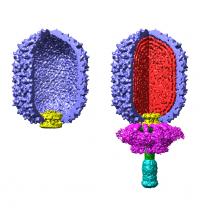
This image shows cross-sections of the empty prohead of the bacteriophage phi29 (left) and the fully assembled virus (right). A molecular motor transports the DNA (red) into the prohead through... Researchers at the University of California, San Diego have found that DNA packs more easily into the tight confines of a virus when given a chance to relax, they report in a pair of papers to be published in in the early edition of the Proceedings of the National Academy of Sciences the week of May 26 and the May 30 issue of Physical Review Letters.
| Full story | 0 Comments | 6750 views |
| Biology | May 21, 2014 03:56 AM |
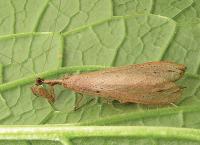
This is the winged male Dystacta tigrifrutex, or bush tiger mantis from Nyungwe National Park, southwestern Rwanda. Scientists describe a new species of praying mantis, Dystacta tigrifrutex, or the bush tiger mantis from Rwanda's mountainous Nyungwe National Park. Like all praying mantises the new species is a vicious hunter. The wingless females are adapted for catching prey close to the ground and in the undergrowth, which inspired the name of the species due to the similarities in hunting practices with one of the world's favorite big cats. The study was published in the open access journal ZooKeys.
| Full story | 0 Comments | 13223 views |
| Bioinformatics | May 21, 2014 03:56 AM |
A team of international researchers has sequenced the genome of the Nevada dampwood termite, providing an inside look into the biology of the social insect and uncovering new genetic targets for pest control.
| Full story | 0 Comments | 6691 views |
| Environment | May 21, 2014 03:56 AM |
A study led by scientists from the Polytechnic University of Marche (Ancona, Italy) involving researchers from the Institute of Marine Sciences (ICM, CSIC) and the Autonomous University of Barcelona (UAB), has determined that fishing trawling causes intensive, long-term biological desertification of the sedimentary seabed ecosystems, diminishing their content in organic carbon and threatening their biodiversity.
| Full story | 0 Comments | 6476 views |
| Health & Medicine | May 21, 2014 03:56 AM |
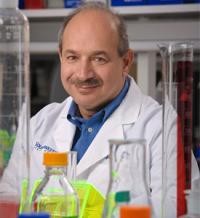
Dr. Bruce Beutler is a Professor of Immunology at the University of Texas Southwestern Center for the Genetics of Host Defense. A lean "Supermodel" mouse type has revealed the potentially critical role played by a largely unknown gene that regulates metabolism, findings that could provide new insight into diseases ranging from diabetes to obesity, a new study by UT Southwestern Medical Center researchers suggests.
| Full story | 0 Comments | 6293 views |
| Biology | May 19, 2014 06:26 PM |
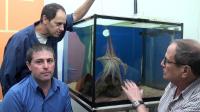
Octopus investigators: From left to right, Dr. Nir Nesher (standing), Dr. Guy Levy and Prof. Benny Hochner at the Hebrew University of Jerusalem have discovered how octopuses don't tie themselves in knots. An octopus's arms are covered in hundreds of suckers that will stick to just about anything, with one important exception: those suckers generally won't grab onto the octopus itself, otherwise the impressively flexible animals would quickly find themselves all tangled up.
| Full story | 0 Comments | 7837 views |
| Health & Medicine | May 19, 2014 06:26 PM |
An international team of scientists, including researchers from the University of California, San Diego, report that the likely causative agent of Kawasaki disease (KD) in Japan is a windborne agent originating from a source in northeast China. KD is a mysterious childhood ailment that can permanently damage coronary arteries.
| Full story | 0 Comments | 5796 views |
| Biology | May 15, 2014 07:55 PM |
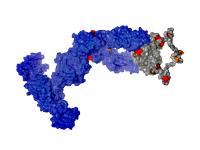
This is a model of the nurse shark's immunoglobulin new antigen receptor molecule containing two stabilization principles, which could be transferred to human anitbodies to receive enhansed stability. Custom-tailored antibodies are regarded as promising weapons against a multitude of serious illnesses. Since they can accurately recognize specific structures on the surface of viruses, bacteria or cancer cells, they are already being deployed successfully in cancer diagnostics and therapy, as well as against numerous other diseases. The stability of the sensitive antibodies is a decisive factor in every step, from production and storage to therapeutic application.
| Full story | 0 Comments | 7921 views |

| Stem Cell Research | May 15, 2014 07:55 PM |
The gene mutations driving cancer have been tracked for the first time in patients back to a distinct set of cells at the root of cancer – cancer stem cells.
| Full story | 0 Comments | 8877 views |
| Health & Medicine | May 15, 2014 07:55 PM |
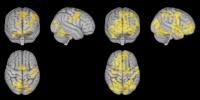
The left images show the brain during concentrative meditation, while images to the right show the brain during nondirective meditation. Mindfulness. Zen. Acem. Meditation drumming. Chakra. Buddhist and transcendental meditation. There are countless ways of meditating, but the purpose behind them all remains basically the same: more peace, less stress, better concentration, greater self-awareness and better processing of thoughts and feelings.
| Full story | 0 Comments | 7020 views |
| Molecular & Cell Biology | May 13, 2014 07:45 PM |
Stimulation of a certain population of neurons within the brain can alter the learning process, according to a team of neuroscientists and neurosurgeons at the University of Pennsylvania. A report in the Journal of Neuroscience describes for the first time that human learning can be modified by stimulation of dopamine-containing neurons in a deep brain structure known as the substantia nigra. Researchers suggest that the stimulation may have altered learning by biasing individuals to repeat physical actions that resulted in reward.
| Full story | 0 Comments | 6695 views |
| Environment | May 13, 2014 07:45 PM |
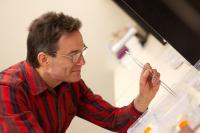
Where will we find the causes of declining ecosystems? University of Vermont ecologist Nick Gotelli and his colleagues examined 6.1 million records covering 35,613 species The diversity of the world's life forms — from corals to carnivores — is under assault. Decades of scientific studies document the fraying of ecosystems and a grim tally of species extinctions due to destroyed habitat, pollution, climate change, invasives and overharvesting.
| Full story | 0 Comments | 6808 views |
| Biotechnology | May 12, 2014 05:52 PM |
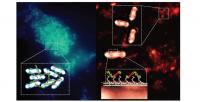
The image shows a) on the left hand side, aggregates of E coli labelled blue by in situ activated polymers, and b) on the right hand side E. coli clusters in suspension with bacterial-instructed polymers Schematics of the binding process are shown in the enlargement boxes of the image.
Credit: Professor Cameron Alexander The University of Nottingham UK The breakthrough, published in the journal Nature Materials, could offer an easier way of detecting pathogenic bacteria outside of a clinical setting and could be particularly important for the developing world, where access to more sophisticated laboratory techniques is often limited.
| Full story | 0 Comments | 6820 views |
| Health & Medicine | May 12, 2014 05:52 PM |
A new study carried out by researchers at Sanford-Burnham Medical Research Institute (Sanford-Burnham), the Max Planck Institute for Colloids and Interfaces (Germany), the Free University of Berlin (Germany), UC San Diego, and Shinshu University (Japan) has identified a novel molecule that prevents T-cells from orchestrating asthma brought on by allergens. The findings, published on May 12 in Proceedings of the National Academy of Sciences (PNAS), show promise for a new potent therapeutic agent to treat asthma, a chronic disease affecting more than 25 million Americans.
| Full story | 0 Comments | 7593 views |
| Biology | May 10, 2014 06:10 PM |
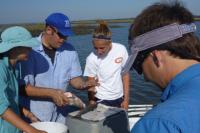
Marine scientists at the Northeastern University Marine Science Center have shown that the behavior of middle predators in marine food webs plays an important role in the welfare of the... Northeastern University researchers at the Marine Science Center have shown that the behavior of the "middle child" in the predator-prey food chain plays a strong role in determining how the reef as a whole will fare. The new research from the team was published online on Tuesday in the journal Ecology Letters.
| Full story | 0 Comments | 7223 views |
| Molecular & Cell Biology | May 10, 2014 06:10 PM |
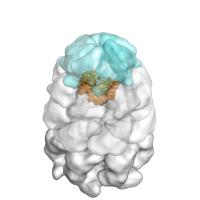
This image shows a GroEL/ES nano-cage (light blue and white) with encapsulated substrate protein (orange). Proteins are the workhorses of the cell and thus responsible for almost all biological functions including metabolism, signal transmission or the determination of the cell's shape. However, before they can fulfill their various tasks, the chain-like molecules must first adopt an intricate three-dimensional conformation. This process is called protein folding and is one of the most important processes in biology. In fact, in the event of improper folding, proteins are often no more able to carry out their duties, or even tend to clump together in aggregates. This in turn can lead to severe diseases like Alzheimer's or Parkinson's. In order to avoid this, specialized proteins, the so-called chaperones, help other proteins to adopt their proper shape.
| Full story | 0 Comments | 6488 views |
| Biology | May 10, 2014 06:10 PM |
This image shows a reconstruction of Plexus ricei. Scientists at the University of California, Riverside have discovered a fossil of a newly discovered organism from the "Ediacara Biota" — a group of organisms that occurred in the Ediacaran period of geologic time.
| Full story | 0 Comments | 6511 views |

| AIDS & HIV | May 5, 2014 04:47 PM |
An interdisciplinary team of scientists from KU Leuven in Belgium has developed a new technique to examine how proteins interact with each other at the level of a single HIV viral particle. The technique allows scientists to study the life-threatening virus in detail and makes screening potential anti-HIV drugs quicker and more efficient. The technique can also be used to study other diseases.
| Full story | 0 Comments | 8903 views |
| Molecular & Cell Biology | May 5, 2014 04:47 PM |
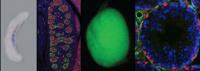
From left to right are: genital ridge at the time of sex determination; fetal testis and seminiferous cords; fluorescent adult testis; cross-section of adult seminiferous tubule. A team of researchers from the University of Geneva (UNIGE) has been involved in a thorough genetic investigation based on the case of a child suffering from the Nivelon-Nivelon-Mabille Syndrome, a complex condition characterised mainly by a sexual development disorder. Following a genome analysis of the patient and parents, the scientists, led by Serge Nef, Professor of the Department of Genetic Medicine and Development in the Faculty of Medicine, have identified not only the gene, but also the protein-producing mechanism, whose malfunctioning causes the syndrome in question. Published in PLOS Genetics, these results make way for genetic tests, thus improving treatment for patients and their families.
| Full story | 0 Comments | 7644 views |

- In some genetic cases of microcephaly, stem cells fail to launch
- Yale team discovers how Zika virus causes fetal brain damage
- Scientists uncover the way a common cell enzyme alerts the body to invading bacteria
- Arctic gives clues on worst mass extinction of life
- Calcium channel blockers caught in the act at atomic level
Search Bio News Net
Free Biology Newsletter
- Flexibility That A.C.A. Lent to Work Force Is Threatened by...International Herald Tribune
- Bacteria Behind Legionnaires’ Disease Found at New York Police StationInternational Herald Tribune
- Prescription Price Crisis? 28 Million Americans See Spike in Drug...MSNBC.com: Health
- Seizing on Opioid Crisis, a Drug Maker Lobbies Hard for...International Herald Tribune
- Republicans are taking a big political risk on health careAP Health News
- Why We're So Divided Over Saving WolvesNational Geographic News