

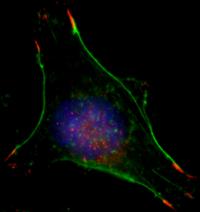
This is a breast cancer cell in normal oxygen conditions. Biologists at The Johns Hopkins University have discovered that low oxygen conditions, which often persist inside tumors, are sufficient to initiate a molecular chain of events that transforms breast cancer cells from being rigid and stationery to mobile and invasive. Their evidence, published online in Proceedings of the National Academy of Sciences on Dec. 9, underlines the importance of hypoxia-inducible factors in promoting breast cancer metastasis.

| Molecular & Cell Biology | December 26, 2013 11:31 PM |
| Full story | 0 Comments | 6987 views |
| Molecular & Cell Biology | December 21, 2013 12:09 PM |
We are fundamentally dependent on the presence of copper in the cells of the body. Copper is actually part of the body's energy conversion and protective mechanisms against oxygen radicals, as well as part of the immune system, and it also has great importance for the formation of e.g. hormones and neurotransmitters.
| Full story | 0 Comments | 7068 views |

| Biology | December 21, 2013 12:09 PM |
Common hippopotami (Hippopotamus amphibius) are vulnerable to extinction in the wild, but reproduce extremely well under captive breeding conditions. Females can give birth to up to 25 young over their 40 year lifespan – evidently too many for zoos to accommodate. Captive populations of hippopotamus must therefore be controlled. Male castration is useful in this respect because it can simultaneously limit population growth and reduce inter-male aggression. However, documented cases of successful hippo castrations are scant. The procedure is notoriously difficult due to problems with anaesthesia and difficulties in locating the testes.
| Full story | 0 Comments | 6651 views |
| Molecular & Cell Biology | December 21, 2013 12:09 PM |

This shows Brown University researchers studying the biology of aging have found that over time, mouse cells loosened control over parasitic "retrotransposable elements " in the genome. The genomes of organisms from humans to corn are replete with "parasitic" strands of DNA that, when not suppressed, copy themselves and spread throughout the genome, potentially affecting health. Earlier this year Brown University researchers found that these "retrotransposable elements" were increasingly able to break free of the genome's control in cultures of human cells. Now in a new paper in the journal Aging, they show that RTEs are increasingly able to break free and copy themselves in the tissues of mice as the animals aged. In further experiments the biologists showed that this activity was readily apparent in cancerous tumors, but that it also could be reduced by restricting calories.
| Full story | 0 Comments | 6201 views |

| Stem Cell Research | December 21, 2013 12:09 PM |
Researchers at UCLA's Eli and Edythe Broad Center of Regenerative Medicine and Stem Cell Research have discovered a mechanism by which certain adult stem cells suppress their ability to initiate skin cancer during their dormant phase — an understanding that could be exploited for better cancer-prevention strategies.
| Full story | 0 Comments | 8238 views |
| Molecular & Cell Biology | December 18, 2013 08:13 AM |
Curtin University researchers have shown natural radioactivity within DNA can alter chemical compounds, providing a new pathway for genetic mutation.
| Full story | 0 Comments | 6634 views |
| Molecular & Cell Biology | December 18, 2013 08:13 AM |
Researchers at Emory and Georgia Tech have developed a potential treatment for atherosclerosis that targets a master controller of the process.
| Full story | 0 Comments | 5275 views |
| Biology | December 12, 2013 07:32 PM |
Two teams of researchers, including a scientist from Case Western Reserve University, have announced the discovery of a new species of fossil horse from 4.4 million-year-old fossil-rich deposits in Ethiopia.
| Full story | 0 Comments | 8983 views |

| Biotechnology | December 12, 2013 07:32 PM |
Since the completion of the Human Genome Project, which identified nearly 20,000 protein-coding genes, scientists have been trying to decipher the roles of those genes. A new approach developed at MIT, the Broad Institute, and the Whitehead Institute should speed up the process by allowing researchers to study the entire genome at once.
| Full story | 0 Comments | 7686 views |

| Microbiology | December 12, 2013 07:32 PM |
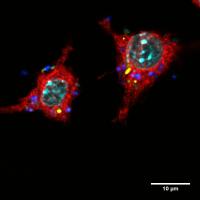
Macrophage (in red) infected with fluorescent labelled E. coli (in yellow or blue).
Bacteria can evolve rapidly to adapt to environmental change. Bacteria can evolve rapidly to adapt to environmental change. When the "environment" is the immune response of an infected host, this evolution can turn harmless bacteria into life-threatening pathogens. A study published on December 12 in PLOS Pathogens provides insight into how this happens.
| Full story | 0 Comments | 6834 views |
| Microbiology | December 11, 2013 08:03 PM |
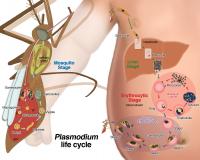
Life cycle of the human malaria parasite. Say "malaria" and most people think "mosquito," but the buzzing, biting insect is merely the messenger, delivering the Plasmodium parasites that sickened more than 200 million people globally in 2010 and killed about 660,000. Worse, the parasite is showing resistance to artemisinin, the most effective drug for treating infected people.
| Full story | 0 Comments | 8402 views |

| Bioinformatics | December 10, 2013 05:21 PM |
Eurofins Scientific (EUFI.PA), a European leader in Genomics Services, Forensics and Paternity Testing, announces a milestone in genetic and forensic research. A multidisciplinary Eurofins team in the Eurofins flagship Genomics laboratory in Ebersberg, Germany, has successfully completed a research project to genetically discriminate "identical" monozygotic twins.
| Full story | 0 Comments | 8395 views |
| Biology | December 10, 2013 05:21 PM |

This is a view eastward along the spine of the Azorean island of São Jorge, showing the area where the new orchid has been discovered. Image: Rob Poot. Researchers studying speciation of butterfly orchids on the Azores have been startled to discover that the answer to a long-debated question "Do the islands support one species or two species?" is actually "three species". Hochstetter's Butterfly-orchid, newly recognized following application of a battery of scientific techniques and reveling in a complex taxonomic history worthy of Sherlock Holmes, is arguably Europe's rarest orchid species. Under threat in its mountain-top retreat, the orchid urgently requires conservation recognition.
| Full story | 0 Comments | 6505 views |
| Stem Cell Research | December 9, 2013 06:56 PM |
Donated umbilical cord blood contains stem cells that can save the lives of patients with leukemia, lymphoma and other blood cancers.
| Full story | 0 Comments | 9370 views |
| Biology | December 5, 2013 06:14 PM |
Viruses alter plant biochemistry in order to manipulate visiting aphids into spreading infection.
| Full story | 0 Comments | 7256 views |
| Biology | December 5, 2013 06:14 PM |
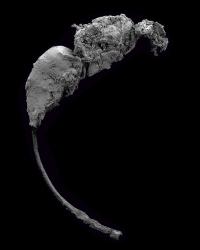
Although it lived roughly 65 million years before the earliest known occurrence of figs, the fossil wasp's ovipositor closely resembles those of today's fig wasps. A 115-million-year-old fossilized wasp from northeast Brazil presents a baffling puzzle to researchers. The wasp's ovipositor, the organ through which it lays its eggs, looks a lot like those of present-day wasps that lay their eggs in figs. The problem, researchers say, is that figs arose about 65 million years after this wasp was alive.
| Full story | 0 Comments | 8056 views |
| Biology | December 4, 2013 06:06 PM |
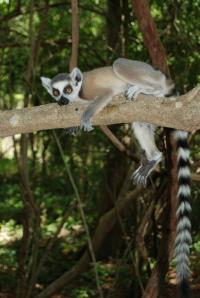
A new study led by CU-Boulder has shown Madagascar's ring-tailed lemurs are the only wild primates in the world that sleep in the same caves on a nightly basis. Scientists have discovered that some ring-tailed lemurs in Madagascar regularly retire to limestone chambers for their nightly snoozes, the first evidence of the consistent, daily use of the same caves and crevices for sleeping among the world's wild primates.
| Full story | 0 Comments | 6662 views |
| Molecular & Cell Biology | December 4, 2013 06:06 PM |
A protein called Tet1 is partly responsible for giving primordial germ cells a clean epigenetic slate before developing into sperm and egg cells, according to a new study by researchers at Boston Children's Hospital. This discovery could help provide clues to the cause of some kinds of neonatal growth defects and may also help advance the development of stem cell models of disease.
| Full story | 0 Comments | 6097 views |
| Biology | December 3, 2013 06:25 PM |
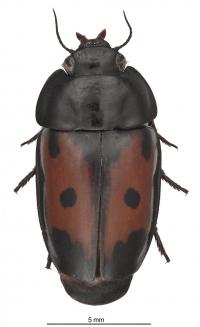
This image shows the beautiful body pattern of the new species G. spectabilis Erwin. Scientists from the Smithsonian Institution describe the Spectacular Guyane False-form beetle, or Guyanemorpha spectabilis, from Guyane (French Guiana). As its name suggests, the newly discovered species stands out among its dull relatives in the Western Hemisphere, with its great size and beautiful coloration. The study was published in the open access journal ZooKeys.
| Full story | 0 Comments | 9903 views |

| Environment | December 3, 2013 06:25 PM |

This shows some of the world's 200 remaining wild addax in Termit and Tin Toumma National Nature Reserve in Niger. A new study led by the Wildlife Conservation Society and Zoological Society or London warns that the world's largest tropical desert, the Sahara, has suffered a catastrophic collapse of its wildlife populations.
| Full story | 0 Comments | 7359 views |
| Biotechnology | December 2, 2013 06:19 PM |
Get ready: The "new genetics" promises to change faulty genes of future generations by introducing new, functioning genes using "designer sperm." A new research report appearing online in The FASEB Journal, shows that introducing new genetic material via a viral vector into the sperm of mice leads to the presence and activity of those genes in the resulting embryos. This new genetic material is actually inherited, present and functioning through three generations of the mice tested. This discovery—if successful in humans—could lead to a new frontier in genetic medicine in which diseases and disorders are effectively cured, and new human attributes, such as organ regeneration, may be possible.
| Full story | 0 Comments | 7564 views |
| Biology | December 2, 2013 06:19 PM |
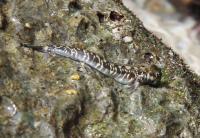
A male Pacific leaping blenny, Alticus arnoldorum, in Guam. These terrestrial fishes spend all their adult lives on land, on the rocks in the splash zone. One of the world's strangest animals – a legless, leaping fish that lives on land - uses camouflage to avoid attacks by predators such as birds, lizards and crabs, new research shows.
| Full story | 0 Comments | 9915 views |

- In some genetic cases of microcephaly, stem cells fail to launch
- Yale team discovers how Zika virus causes fetal brain damage
- Scientists uncover the way a common cell enzyme alerts the body to invading bacteria
- Arctic gives clues on worst mass extinction of life
- Calcium channel blockers caught in the act at atomic level
Search Bio News Net
Free Biology Newsletter
- Flexibility That A.C.A. Lent to Work Force Is Threatened by...International Herald Tribune
- Bacteria Behind Legionnaires’ Disease Found at New York Police StationInternational Herald Tribune
- Prescription Price Crisis? 28 Million Americans See Spike in Drug...MSNBC.com: Health
- Seizing on Opioid Crisis, a Drug Maker Lobbies Hard for...International Herald Tribune
- Republicans are taking a big political risk on health careAP Health News
- Why We're So Divided Over Saving WolvesNational Geographic News