

A new strain of influenza virus found in harbor seals could represent a threat to wildlife and human health, according to the authors of a study appearing July 31 in mBio®, the online open-access journal of the American Society for Microbiology. It is crucial to monitor viruses like this one, which originated in birds and adapted to infect mammals, the authors say, so that scientists can better predict the emergence of new strains of influenza and prevent pandemics in the future.

| Health & Medicine | July 31, 2012 04:24 PM |
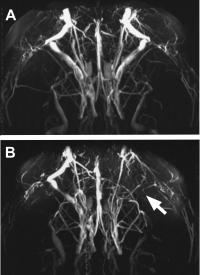
The presence of specific autoantibodies of the immune system is associated with blood vessel damage in the brain. The presence of specific autoantibodies of the immune system is associated with blood vessel damage in the brain. These findings were made by Marion Bimmler, a graduate engineer of medical laboratory diagnostics at the Max Delbrück Center for Molecular Medicine Berlin-Buch and Dr. Peter Karczewski of the biotech company E.R.D.E.-AAK-Diagnostik GmbH in studies on a rat model. The researchers' results suggest that autoimmune mechanisms play a significant role in the pathogenesis and progression of Alzheimer's and vascular dementia (PloS ONE, doi:10.1371/journal.pone.0041602)*.
| Full story | 0 Comments | 7240 views |

| Environment | July 30, 2012 03:32 PM |
A team of British and Australian scientists has discovered how carbon is drawn down from the surface of the Southern Ocean to the deep waters beneath.
| Full story | 0 Comments | 7331 views |

The African giant pouched rat is socialized and readily handled. A rat may never be man's best friend, but the Rugged Automated Training System (R.A.T.S.) research sponsored by scientists with the U.S. Army Research Laboratory, in collaboration with engineers at West Point and the Counter Explosives Hazards Center, will determine if and how these animals can be trained to save Soldiers' lives.
| Full story | 0 Comments | 6098 views |

| Molecular & Cell Biology | July 30, 2012 03:32 PM |
Two new targets have been discovered for antiviral therapies and vaccines strategies that could enhance the body's defenses against such infectious diseases as West Nile and hepatitis C. The targets are within the infection warning system inside living cells.
| Full story | 0 Comments | 6616 views |

| Biology | July 26, 2012 05:08 PM |
Ever since Darwin first published The Origin of the Species, scientists have been striving to identify a last universal common ancestor of all living species. Paleontological, biochemical, and genomic studies have produced conflicting versions of the evolutionary tree. Now a team of researchers, led by a professor at the State University of New York at Buffalo and including area high school students, has developed a novel method to search the vast archives of known gene sequences to identify and compare similar proteins across the many kingdoms of life. Using the comparisons to quantify the evolutionary closeness of different species, the researchers have identified Actinobacteria, a group of single membrane bacteria that include common soil and water life forms, as the base of the evolutionary tree. They will present their findings at the annual meeting of the American Crystallographic Association (ACA), held July 28 – Aug. 1 in Boston, Mass.
| Full story | 0 Comments | 9838 views |

| Biotechnology | July 26, 2012 05:08 PM |
The National Science Foundation (NSF) has awarded a three-year $999,531 grant to Virginia Tech to optimize the laboratory processes used to make custom DNA molecules with the tools and methods of industrial engineering. The interdisciplinary team led by Jean Peccoud, Associate Professor at the Virginia Bioinformatics Institute also includes Kimberly Ellis and Jaime Camelio, Associate Professors in the Grado Department of Industrial and Systems Engineering, at Virginia Tech.
| Full story | 0 Comments | 8502 views |
| Biology | July 26, 2012 05:08 PM |
Researchers reporting online on July 26 in Current Biology, a Cell Press publication, have for the first time shown that they can control the behavior of monkeys by using pulses of blue light to very specifically activate particular brain cells. The findings represent a key advance for optogenetics, a state-of-the-art method for making causal connections between brain activity and behavior. Based on the discovery, the researchers say that similar light-based mind control could likely also be made to work in humans for therapeutic ends.
| Full story | 0 Comments | 9885 views |

| Microbiology | July 23, 2012 06:55 PM |
A University of Connecticut researcher and his team have discovered that a species of tiny aquatic organism prominent in harmful algal blooms sometimes called "red tide" is even deadlier than first thought, with potential consequences for entire marine food chains.
| Full story | 0 Comments | 8977 views |
| Health & Medicine | July 23, 2012 06:55 PM |
A novel approach to discover the first new tuberculosis (TB) combination drug regimen cleared a major hurdle when Phase II clinical trial results found it could kill more than 99 percent of patients' TB bacteria within two weeks and could be more effective than existing treatments, according to a study published today in the Lancet. These results add to a growing body of evidence that the new regimen could reduce treatment by more than a year for some patients.
| Full story | 0 Comments | 6150 views |
| Environment | July 19, 2012 06:11 PM |
Global emissions of carbon dioxide (CO2) – the main cause of global warming – increased by 3% last year, reaching an all-time high of 34 billion tonnes in 2011. In China, the world's most populous country, average emissions of CO2 increased by 9% to 7.2 tonnes per capita. China is now within the range of 6 to 19 tonnes per capita emissions of the major industrialised countries. In the European Union, CO2 emissions dropped by 3% to 7.5 tonnes per capita. The United States remain one of the largest emitters of CO2, with 17.3 tones per capita, despite a decline due to the recession in 2008-2009, high oil prices and an increased share of natural gas. These are the main findings of the annual report 'Trends in global CO2 emissions', released today by the European Commission's Joint Research Centre (JRC) and the Netherlands Environmental Assessment Agency (PBL).
| Full story | 0 Comments | 7851 views |
| Biology | July 19, 2012 06:11 PM |
Anyone who has looked at the jagged recording of the electrical activity of a single neuron in the brain must have wondered how any useful information could be extracted from such a frazzled signal.
| Full story | 0 Comments | 7618 views |

| Stem Cell Research | July 19, 2012 06:11 PM |
Not all adult stem cells are created equal. Some are busy regenerating worn out or damaged tissues, while their quieter brethren serve as a strategic back-up crew that only steps in when demand shoots up. Now, researchers at the Stowers Institute for Medical Research have identified an important molecular cue that keeps quiescent mouse hematopoietic (or blood-forming) stem cells from proliferating when their services are not needed.
| Full story | 0 Comments | 6847 views |
| Environment | July 18, 2012 06:49 PM |

Lobaria pulmonaria, or tree lungwort, showed surprising genetic diversity in boreal rainforest fragments in Norway. The word rainforest usually conjures up visions of brightly coloured birds and hyperactive monkeys swooping through a thick green canopy of leaves, vines and flowers. But rainforests are also found closer to the poles, in the northern or boreal region where temperatures are far cooler. And while there are no monkeys swinging through the trees here, these forests are every bit as endangered as their southern cousins, and highly diverse – if you know where to look.
| Full story | 0 Comments | 7758 views |
| Health & Medicine | July 18, 2012 06:49 PM |
Researchers from UC San Diego, the University of California Los Angeles and Indiana University report having found, for the first time, that atrial fibrillation or irregular heart rhythms is caused by small electrical sources within the heart, in the form of electrical spinning tops ("rotors") or focal beats. Importantly, they found a way of detecting these key sources, then precisely targeting them for therapy that can shut them down in minutes with long lasting results.
| Full story | 0 Comments | 7429 views |
| Microbiology | July 17, 2012 05:46 PM |
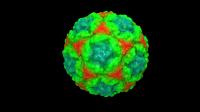
This is a surface rendering of the common cold virus. Melbourne researchers are now simulating in 3D, the motion of the complete human rhinovirus, the most frequent cause of the common cold, on Australia's fastest supercomputer, paving the way for new drug development.
| Full story | 0 Comments | 7649 views |
| Biology | July 17, 2012 05:46 PM |

The "desynchronized " calls of the Japanese tree frog has inspired the development of an artificial intelligence algorithm. Males of the Japanese tree frog have learnt not to use their calls at the same time so that the females can distinguish between them. Scientists at the Polytechnic University of Catalonia have used this form of calling behaviour to create an algorithm that assigns colours to network nodes – an operation that can be applied to developing efficient wireless networks.
| Full story | 0 Comments | 7940 views |
| Biotechnology | July 16, 2012 05:31 PM |
New research shows that exercise is a key step in building a muscle-like implant in the lab with the potential to repair muscle damage from injury or disease. In mice, these implants successfully prompt the regeneration and repair of damaged or lost muscle tissue, resulting in significant functional improvement.
| Full story | 0 Comments | 8692 views |
While Spider-Man is capturing the imagination of theatergoers, real-life spider men in Upstate New York are working intently to save a young boy's life.
| Full story | 0 Comments | 7241 views |
| Stem Cell Research | July 16, 2012 05:31 PM |
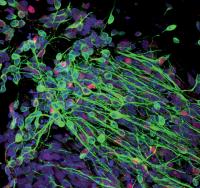
This microscope image shows a colony of neurons derived from cord-blood cells using stem cell reprogramming technology. For more than 20 years, doctors have been using cells from blood that remains in the placenta and umbilical cord after childbirth to treat a variety of illnesses, from cancer and immune disorders to blood and metabolic diseases.
| Full story | 0 Comments | 7687 views |
| Stem Cell Research | July 12, 2012 05:36 PM |
It is not unusual for babies to be born with congenital heart defects. This is because the development of the heart in the embryo is a process which is not only extremely complex, but also error-prone. Scientists from the Max Planck Institute for Heart and Lung Research in Bad Nauheim have now identified a key molecule that plays a central role in regulating the function of stem cells in the heart. As a result, not only could congenital heart defects be avoided in future, but new ways of stimulating the regeneration of damaged hearts in adults may be opened up.
| Full story | 0 Comments | 9003 views |
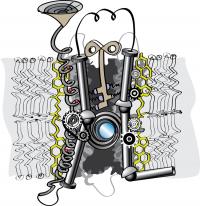
More than 50 percent of therapeutic drugs target GPCRs, including allergy and heart medication, drugs that target the central nervous system, and anti-depressants. Readers of the top-ranked scientific journals Science and Nature might have noticed a recent wave of articles, most recently in the July 13, 2012 issue of Science, with deep importance for biology and medicine. These papers, all published this year by collaborations headed by the Scripps Research Institute laboratory of Professor Raymond Stevens, illuminate a large and medically important family of proteins called G protein-coupled receptors (GPCRs).
| Full story | 0 Comments | 6985 views |
| Molecular & Cell Biology | July 11, 2012 03:51 PM |
Hormone-mimicking chemicals released into rivers have been found to impact the mating choices of fish, a new study has revealed. The controversial chemical BPA, which emits oestrogen-like properties, was found to alter an individual's appearance and behavior, leading to inter-species breeding. The study, published in Evolutionary Applications, reveals the threat to biodiversity when the boundaries between species are blurred.
| Full story | 0 Comments | 9550 views |
| Biotechnology | July 11, 2012 03:51 PM |
A team of researchers from Greece and Spain have managed to synthesize silver nanoparticles, which are of great interest thanks to their application in biotechnology, by using strawberry tree leaf extract. The new technology is ecological, simple, cheap and very fast.
| Full story | 0 Comments | 6800 views |
| Microbiology | July 11, 2012 03:51 PM |
It's a project 500 million years in the making. Only this time, instead of playing on a movie screen in Jurassic Park, it's happening in a lab at the Georgia Institute of Technology.
| Full story | 0 Comments | 7744 views |
| Microbiology | July 9, 2012 05:35 PM |
The bacterium Escherichia coli (E. coli) has a rudimentary molecular "memory" that allows it to swim toward the richest sources of food. MU biochemistry professor Gerald Hazelbauer's continuing discoveries about how bacteria do this could shed light on human and animal sensory, memory and response systems.
| Full story | 0 Comments | 7407 views |
| Stem Cell Research | July 9, 2012 05:35 PM |
The ability to control whether certain stem cells ultimately become bone cells holds great promise for regenerative medicine and potential therapies aimed at treating metabolic bone diseases.
| Full story | 0 Comments | 7179 views |
| Health & Medicine | July 9, 2012 05:35 PM |
Bovine spongiform encephalopathy (BSE, or "mad cow disease") is a fatal disease in cattle that causes portions of the brain to turn sponge-like. This transmissible disease is caused by the propagation of a misfolded form of protein known as a prion, rather than by a bacterium or virus. The average time from infection to signs of illness is about 60 months. Little is known about the pathogenesis of BSE in the early incubation period. Previous research has reported that the autonomic nervous system (ANS) becomes affected by the disease only after the central nervous system (CNS) has been infected. In a new study published online in the August issue of The American Journal of Pathology, researchers found that the ANS can show signs of infection prior to involvement of the CNS.
| Full story | 0 Comments | 5670 views |
| Biotechnology | July 9, 2012 05:34 PM |
Researchers at Tufts University School of Engineering have discovered a way to maintain the potency of vaccines and other drugs -- that otherwise require refrigeration -- for months and possibly years at temperatures above 110 degrees F, by stabilizing them in a silk protein made from silkworm cocoons. Importantly, the pharmaceutical-infused silk can be made in a variety of forms such as microneedles, microvesicles and films that allow the non-refrigerated drugs to be stored and administered in a single device.
| Full story | 0 Comments | 7131 views |
| Health & Medicine | July 9, 2012 05:34 PM |
When a person is sick, there is a tell-tale sign in their blood: a different mix of the various types of immune cells called leukocytes. A group of scientists at several institutions including Brown University has discovered a way to determine that mix from the DNA in archival or fresh blood samples, potentially providing a practical new technology not only for medical research but also for clinical diagnosis and treatment monitoring of ailments including some cancers.
| Full story | 0 Comments | 5871 views |
| Environment | July 5, 2012 04:37 PM |
Climate change drove coral reefs to a total ecosystem collapse lasting thousands of years, according to a paper published this week in Science. The paper shows how natural climatic shifts stopped reef growth in the eastern Pacific for 2,500 years. The reef shutdown, which began 4,000 years ago, corresponds to a period of dramatic swings in the El Niño–Southern Oscillation (ENSO). "As humans continue to pump greenhouse gases into the atmosphere, the climate is once again on the threshold of a new regime, with dire consequences for reef ecosystems unless we get control of climate change," said coauthor Richard Aronson, a biology professor at Florida Institute of Technology.
| Full story | 0 Comments | 7102 views |
| Health & Medicine | July 4, 2012 03:20 PM |
A policy of single embryo transfer (SET) reduces the risk of perinatal mortality in infants born as a result of IVF and ICSI. The conclusion emerged from an analysis of more than 50,000 births recorded in the Australian and New Zealand Assisted Reproduction Technology Database between 2004 and 2008, where the introduction of an SET policy has been associated with a reduction in overall perinatal mortality for IVF and ICSI babies.
| Full story | 0 Comments | 6823 views |
| Microbiology | July 3, 2012 10:07 AM |
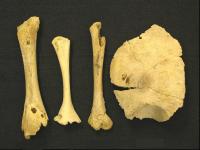
Pictured are the left femur, two right humerus and a right hemifrontal bone belonging to at least two newborns found at "La Ermita de la Soledad " in Huelva. All show... The ancient bones of newborns are very useful to recover the ancient DNA of the bacteria causing syphilis, the Treponema pallidum pallidum. This is the conclusion reached by a study led by Universitat Autònoma de Barcelona (UAB), which was able to obtain the genetic material from the bacteria in more than one individual, in what is considered to be the oldest case known to date. Several previous intents had only achieved to yield this material in one occasion and from only one individual.
| Full story | 0 Comments | 7354 views |
| Stem Cell Research | July 3, 2012 10:07 AM |
Stem cells found in amniotic fluid can be transformed into a more versatile state similar to embryonic stem cells, according to a study published today in the journal Molecular Therapy. Scientists from Imperial College London and the UCL Institute of Child Health succeeded in reprogramming amniotic fluid cells without having to introduce extra genes. The findings raise the possibility that stem cells derived from donated amniotic fluid could be stored in banks and used for therapies and in research, providing a viable alternative to the limited embryonic stem cells currently available.
| Full story | 0 Comments | 7330 views |
| Microbiology | July 3, 2012 10:07 AM |

One of the first signs of FMD is excessive salivation and lesions on the tongue and hooves. One of the most economically devastating diseases in the world for those who raise cows, sheep, pigs, goats, deer and other cloven-hoofed animals is foot and mouth Disease (FMD). This incredibly contagious and fast-spreading disease causes fever, blisters on the feet and mouth (hence the name), loss of appetite, drooling, and lameness. Most herds affected are culled, as in the case of the 2001 outbreak in Great Britain when over 10 million animals had to be destroyed.
| Full story | 0 Comments | 7338 views |

- In some genetic cases of microcephaly, stem cells fail to launch
- Yale team discovers how Zika virus causes fetal brain damage
- Scientists uncover the way a common cell enzyme alerts the body to invading bacteria
- Arctic gives clues on worst mass extinction of life
- Calcium channel blockers caught in the act at atomic level
Search Bio News Net
Free Biology Newsletter
- Flexibility That A.C.A. Lent to Work Force Is Threatened by...International Herald Tribune
- Bacteria Behind Legionnaires’ Disease Found at New York Police StationInternational Herald Tribune
- Prescription Price Crisis? 28 Million Americans See Spike in Drug...MSNBC.com: Health
- Seizing on Opioid Crisis, a Drug Maker Lobbies Hard for...International Herald Tribune
- Republicans are taking a big political risk on health careAP Health News
- Why We're So Divided Over Saving WolvesNational Geographic News