

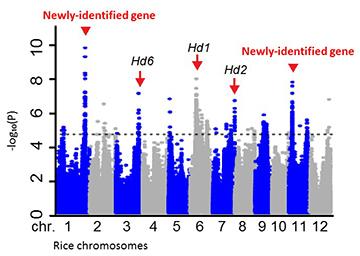
The GWAS results for genes that influence flowering dates. The known genes Hd1, Hd2, and Hd6 were located, together with two newly-identified genes that also affect flowering dates. A Japanese research team have applied a method used in human genetic analysis to rice and rapidly discovered four new genes that are potentially significant for agriculture. These findings could influence crop breeding and help combat food shortages caused by a growing population. The paper was published on June 21, 2016 (Japan Standard Time) in the online edition of Nature Genetics.

| Biotechnology | June 27, 2016 05:29 PM |
| Full story | 0 Comments | 6412 views |

| Molecular & Cell Biology | June 27, 2016 05:29 PM |
Infertility affects about 15 percent of couples around the world. A couple's fertility depends on both the female's and male's ability to reproduce, which relies on thousands of genes working properly. In the male mouse, more than 1,000 genes are predominantly expressed in the testis, but their particular functions in reproduction are still a mystery. In a report published today in the Proceedings of the National Academy of Sciences, researchers from Baylor College of Medicine, Osaka University, University of Oulu and the Wellcome Trust Sanger Institute have discovered that 54 of the mouse testis-enriched genes, that also are expressed in humans, are not necessary for male fertility.
| Full story | 0 Comments | 5813 views |

| Health & Medicine | June 27, 2016 05:29 PM |
Physicians have been mystified by chronic fatigue syndrome, a condition where normal exertion leads to debilitating fatigue that isn't alleviated by rest. There are no known triggers, and diagnosis requires lengthy tests administered by an expert.
| Full story | 0 Comments | 6977 views |

| Bioinformatics | June 27, 2016 05:29 PM |
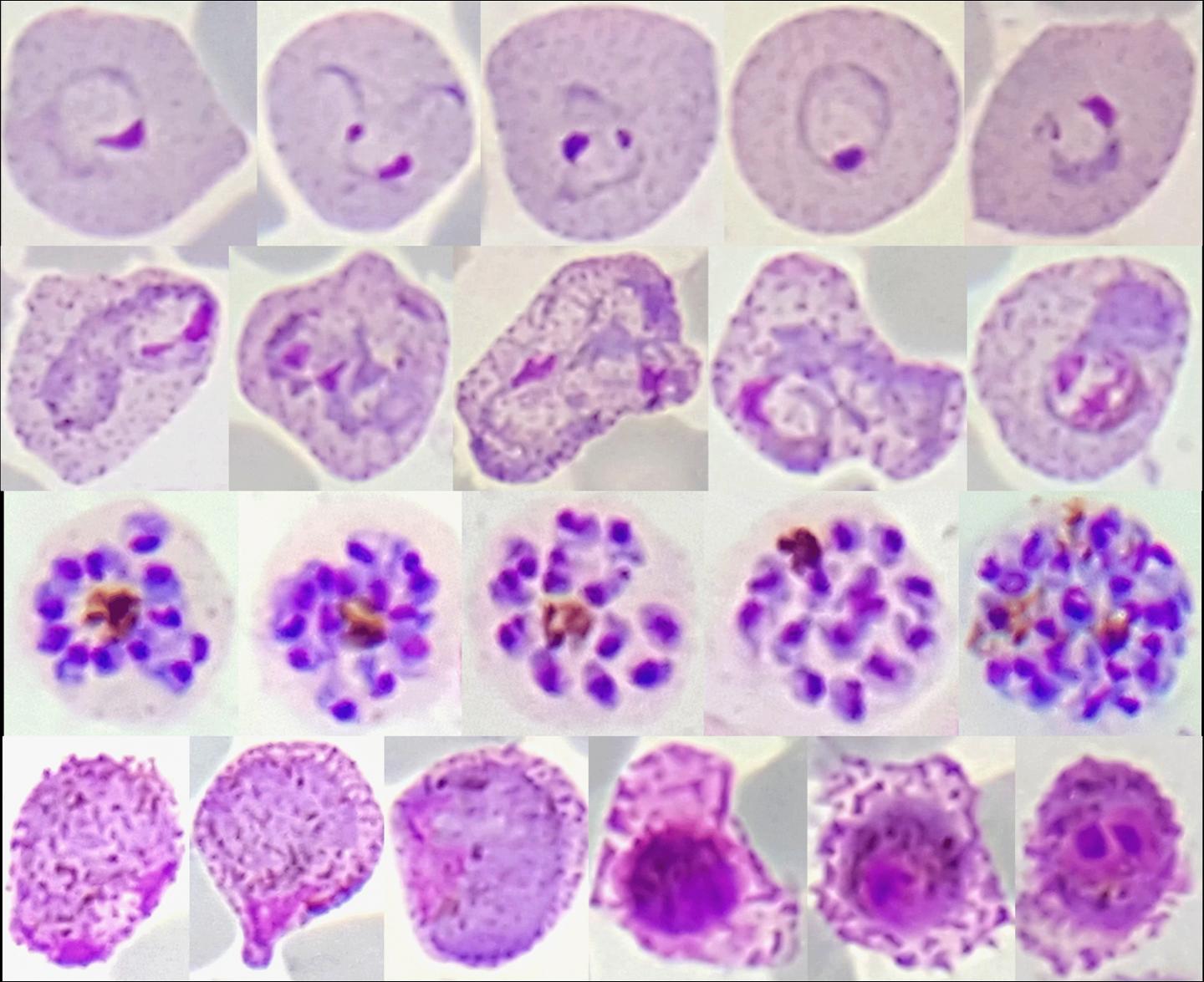
Red blood cell stages of Plasmodium vivax from malaria patients in Thailand. Plasmodium vivax (P. vivax) parasites, which cause a debilitating form of malaria, are yielding their secrets to an international team of researchers funded by the National Institute of Allergy and Infectious Diseases (NIAID), part of the National Institutes of Health. In the largest such effort to date, the team determined complete genomes of nearly 200 P. vivax strains that recently infected people in eight countries. Comparative analysis showed the parasites clustered into four genetically distinct populations that provide insights into the movement of P. vivax over time and suggest how it is still adapting to regional variations in both the mosquitoes that transmit it and the humans it infects.
| Full story | 0 Comments | 8300 views |

- In some genetic cases of microcephaly, stem cells fail to launch
- Yale team discovers how Zika virus causes fetal brain damage
- Scientists uncover the way a common cell enzyme alerts the body to invading bacteria
- Arctic gives clues on worst mass extinction of life
- Calcium channel blockers caught in the act at atomic level
Search Bio News Net
Free Biology Newsletter
- Flexibility That A.C.A. Lent to Work Force Is Threatened by...International Herald Tribune
- Bacteria Behind Legionnaires’ Disease Found at New York Police StationInternational Herald Tribune
- Prescription Price Crisis? 28 Million Americans See Spike in Drug...MSNBC.com: Health
- Seizing on Opioid Crisis, a Drug Maker Lobbies Hard for...International Herald Tribune
- Republicans are taking a big political risk on health careAP Health News
- Why We're So Divided Over Saving WolvesNational Geographic News