

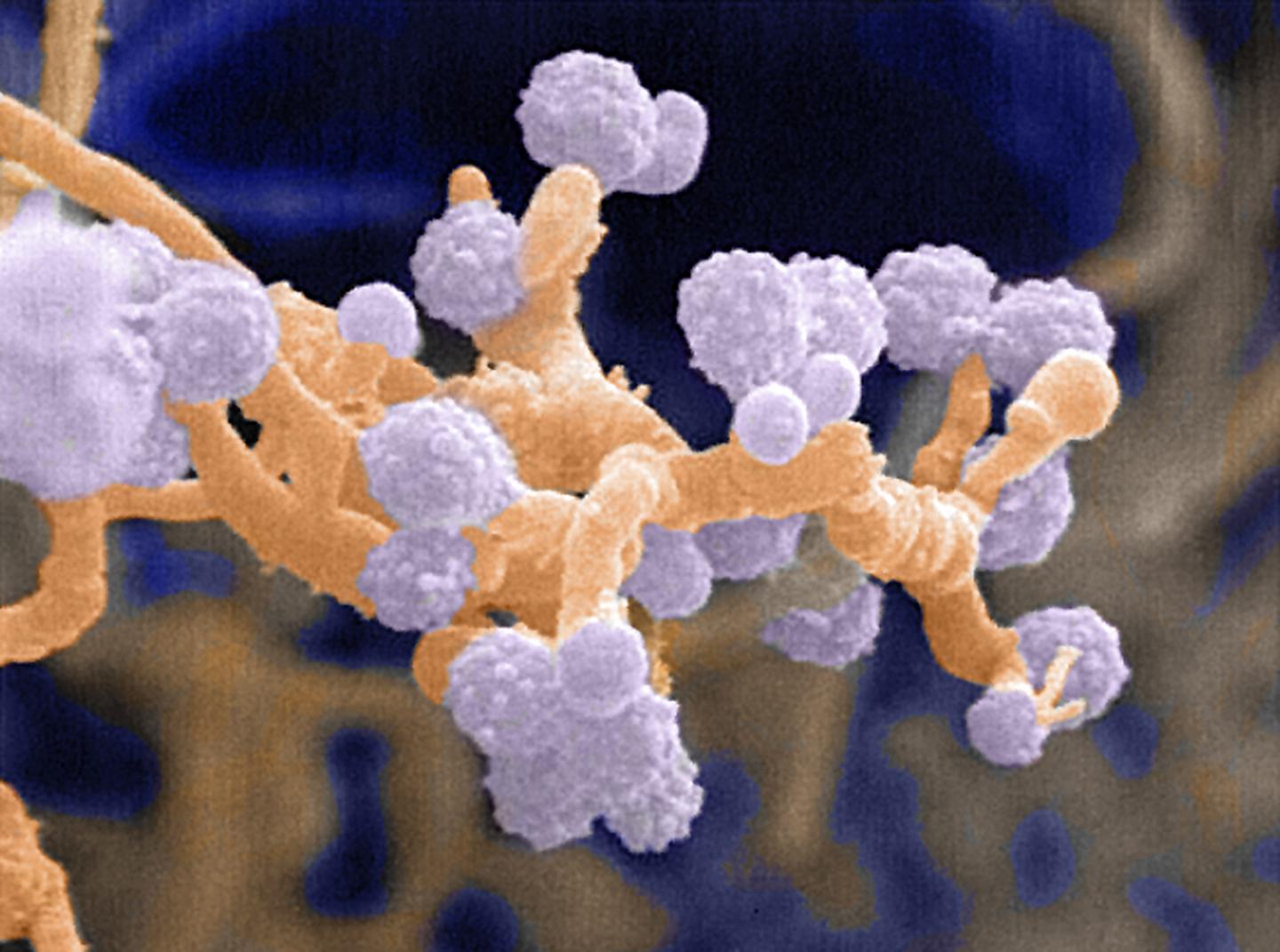
Verrucosispora maris, the bacteria in which the enzyme was found. Scientists at the Universities of Bristol and Newcastle have uncovered the secret of the 'Mona Lisa of chemical reactions' - in a bacterium that lives at the bottom of the Pacific Ocean.

| Molecular & Cell Biology | May 11, 2016 05:54 PM |
| Full story | 0 Comments | 7381 views |

| Biology | May 11, 2016 05:54 PM |
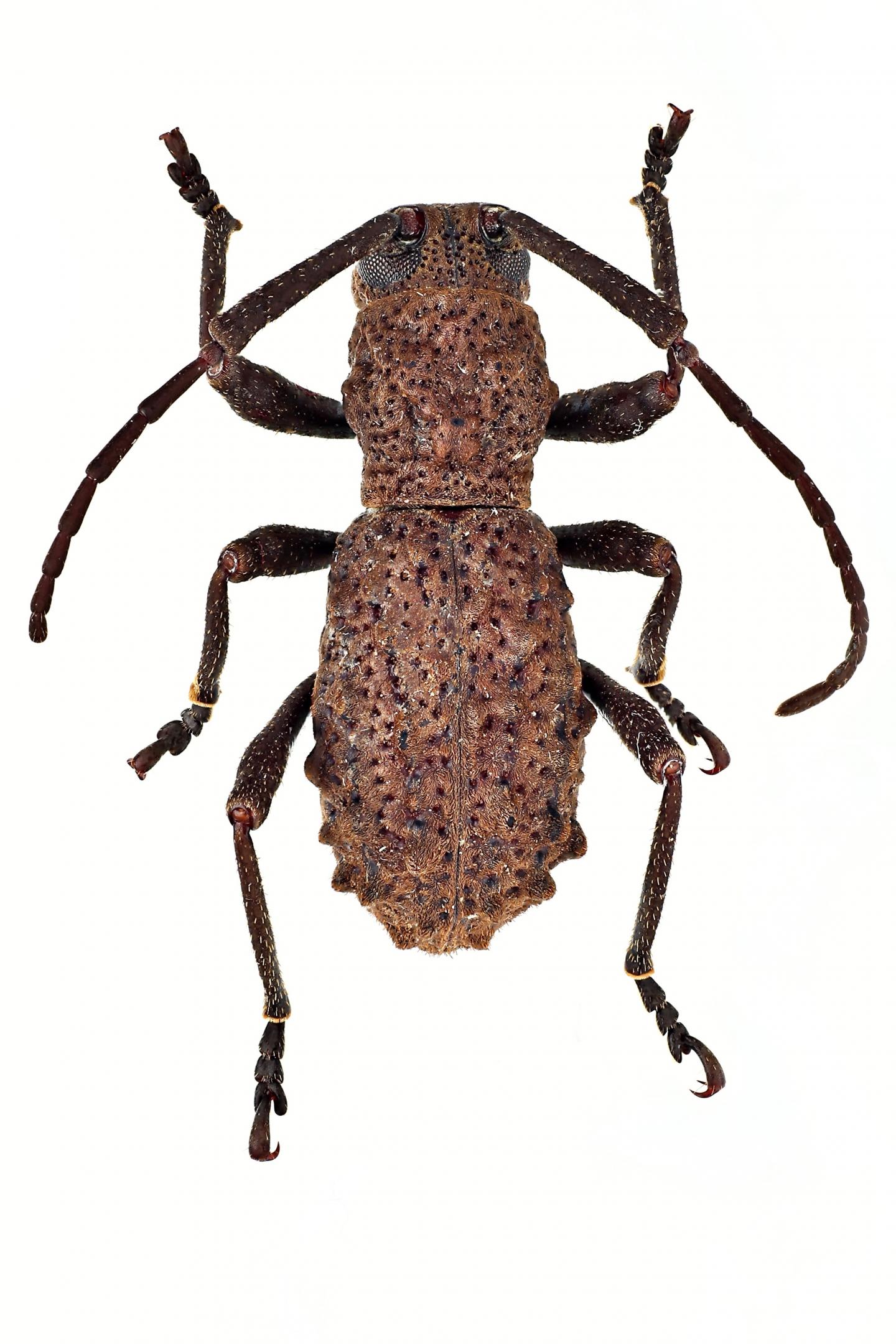
This is a male specimen of the new long-horned beetle species Borneostyrax cristatus gen. et sp. nov. A remarkably high diversity of the wingless long-horned beetles in the mountains of northern Borneo is reported by three Czech researchers from the Palacký University, Olomouc, Czech Republic. Apart from the genera and species new to science, the entomologists report the first case of reproduction by live birth in this rarely collected group of beetles.
| Full story | 0 Comments | 8895 views |

| Biotechnology | May 11, 2016 05:54 PM |
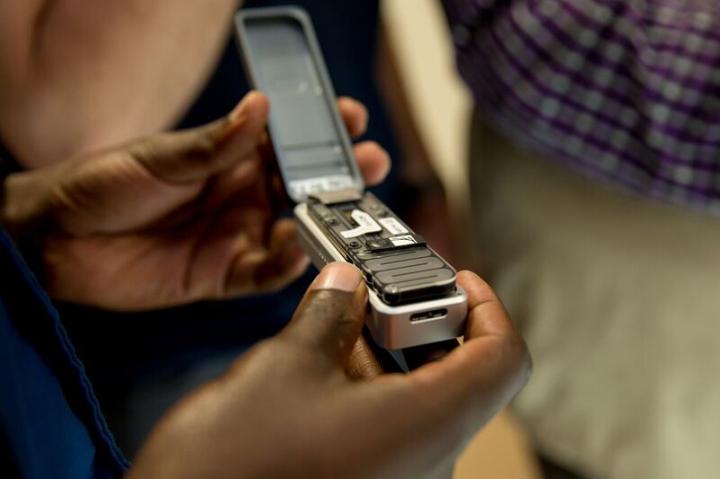
Close-up of the MinION handheld DNA sequencer. A team from the University of Leicester has been awarded a prize for their proposal to crack down on wildlife crime using a portable DNA sequencing device, the MinION - developed by Oxford Nanopore Technologies - to read the 'barcode genes' of animals affected by illegal trafficking.
| Full story | 0 Comments | 8113 views |

| Health & Medicine | May 11, 2016 05:54 PM |
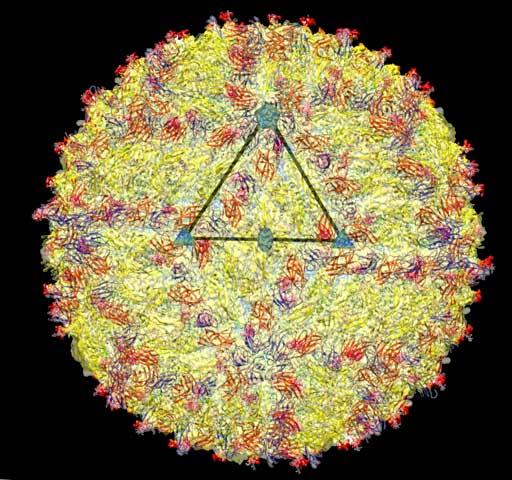
A cryo-electron microscopy image of the Zika virus structure. Researchers at Washington University in St. Louis (WashU) have established the first models of Zika virus transmission from a pregnant mouse to her fetus. The infected mice, described May 11 in Cell, demonstrate Zika virus invasion and damage to the placenta, and then infection of the mouse fetus, leading to many of the same conditions observed in human infants. The new mouse models can also be used as a tool to develop treatments or vaccines.
| Full story | 0 Comments | 8264 views |
| Health & Medicine | May 11, 2016 05:54 PM |
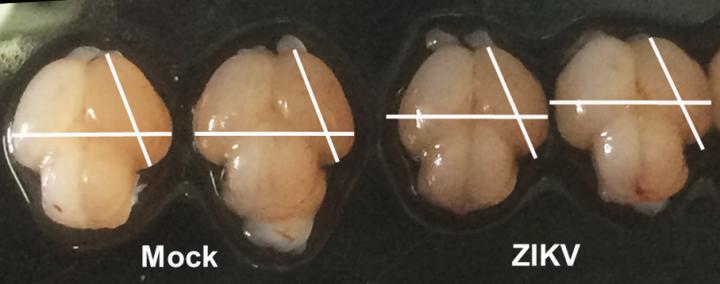
This photo demonstrates the difference in size in Zika virus-infected vs. uninfected fetal mouse brains. Mouse fetuses injected with the Asian Zika virus strain and carried to term within their pregnant mothers display the characteristic features of microcephaly, researchers in China report May 11 in Cell Stem Cell. As expected, the virus infected the neural progenitor cells, and infected brains reveal expression of genes related to viral entry, altered immune response, and cell death. The authors say this is direct evidence that Zika infection causes microcephaly in a mammalian animal model.
| Full story | 0 Comments | 9862 views |

- In some genetic cases of microcephaly, stem cells fail to launch
- Yale team discovers how Zika virus causes fetal brain damage
- Scientists uncover the way a common cell enzyme alerts the body to invading bacteria
- Arctic gives clues on worst mass extinction of life
- Calcium channel blockers caught in the act at atomic level
Search Bio News Net
Free Biology Newsletter
- Flexibility That A.C.A. Lent to Work Force Is Threatened by...International Herald Tribune
- Bacteria Behind Legionnaires’ Disease Found at New York Police StationInternational Herald Tribune
- Prescription Price Crisis? 28 Million Americans See Spike in Drug...MSNBC.com: Health
- Seizing on Opioid Crisis, a Drug Maker Lobbies Hard for...International Herald Tribune
- Republicans are taking a big political risk on health careAP Health News
- Why We're So Divided Over Saving WolvesNational Geographic News