


Think your DNA is all human? Think again. And a new discovery suggests it's even less human than scientists previously thought.

| Bioinformatics | March 22, 2016 06:46 PM |
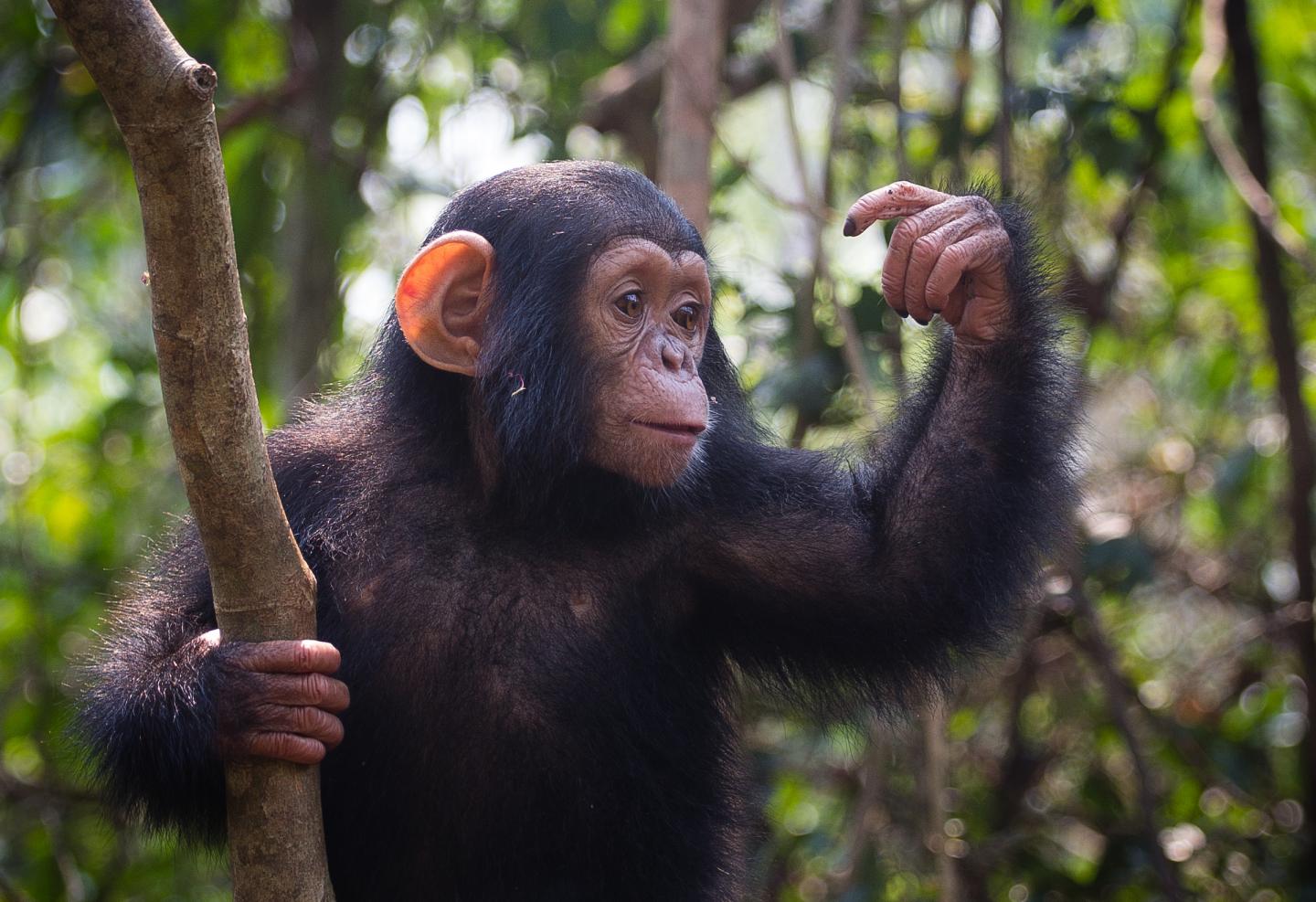
Female orphan chimpanzee are cared for at the Sanaga-Yong Chimpanzee Rescue Center. Understanding the origins of emerging diseases - as well as more established disease agents -- is critical to gauge future human infection risks and find new treatment and prevention approaches. This holds true for malaria, which kills more than 500,000 people a year. Symptoms, including severe anemia, pregnancy-associated malaria, and cerebral malaria, have been linked to the parasite's ability to cause infected red blood cells to bind to the inner lining of blood vessels.
| Full story | 0 Comments | 7574 views |

| Microbiology | March 22, 2016 06:46 PM |
In eLife today (22 March), Wellcome Trust Sanger Institute scientists show how the parasite responsible for the neglected tropical disease Black Fever (visceral leishmaniasis) can become resistant to drug treatment. Studying the whole genomes of more than 200 samples of Leishmania donovani revealed that the addition of just two bases of DNA to a gene known as LdAQP1 stops the parasite from absorbing antimonial drugs.
| Full story | 0 Comments | 7076 views |

| Health & Medicine | March 22, 2016 06:46 PM |
The cost of treating hepatitis C virus (HCV) could be cut up to 50 percent if mathematical models are used to predict when patients can safely stop taking direct-acting antiviral (DAA) medication, according to a new study by researchers at Loyola University Health System and Loyola University Chicago.
| Full story | 0 Comments | 7003 views |

- In some genetic cases of microcephaly, stem cells fail to launch
- Yale team discovers how Zika virus causes fetal brain damage
- Scientists uncover the way a common cell enzyme alerts the body to invading bacteria
- Arctic gives clues on worst mass extinction of life
- Calcium channel blockers caught in the act at atomic level
Search Bio News Net
Free Biology Newsletter
- Flexibility That A.C.A. Lent to Work Force Is Threatened by...International Herald Tribune
- Bacteria Behind Legionnaires’ Disease Found at New York Police StationInternational Herald Tribune
- Prescription Price Crisis? 28 Million Americans See Spike in Drug...MSNBC.com: Health
- Seizing on Opioid Crisis, a Drug Maker Lobbies Hard for...International Herald Tribune
- Republicans are taking a big political risk on health careAP Health News
- Why We're So Divided Over Saving WolvesNational Geographic News