

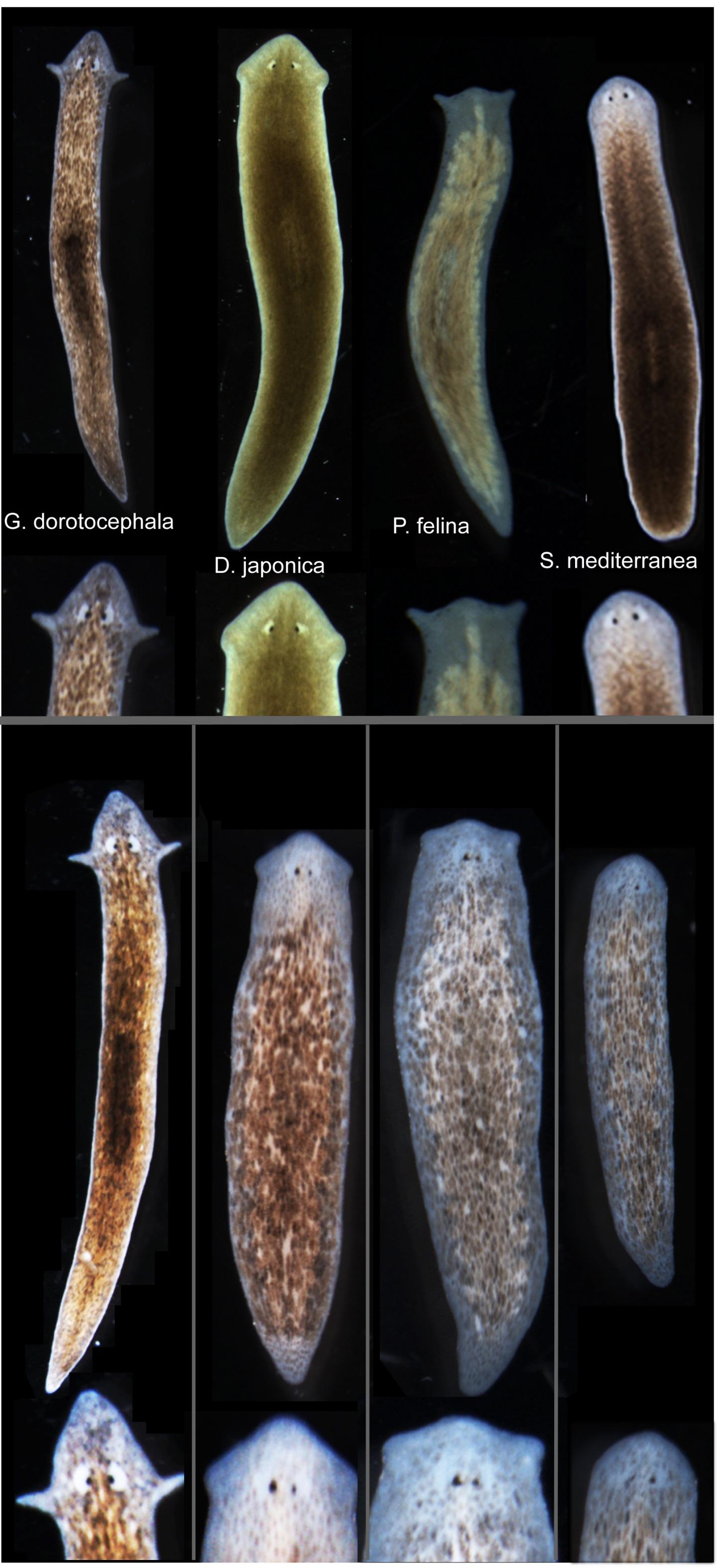
Tufts biologists induced one species of flatworm -- G. dorotocephala, top left -- to grow heads and brains characteristic of other species of flatworm, top row, without altering genomic sequence. MEDFORD/SOMERVILLE, Mass. (November 24, 2015)--Biologists at Tufts University have succeeded in inducing one species of flatworm to grow heads and brains characteristic of another species of flatworm without altering genomic sequence. The work reveals physiological circuits as a new kind of epigenetics - information existing outside of genomic sequence - that determines large-scale anatomy.

| Molecular & Cell Biology | November 24, 2015 07:18 PM |
| Full story | 0 Comments | 5623 views |

| Bioinformatics | November 24, 2015 07:18 PM |
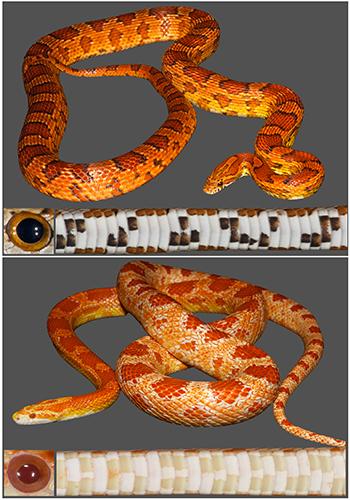
Wild-type corn snakes typically exhibit, over a light orange background coloration, a pattern of dark orange dorsal saddles and lateral blotches that are outlined with black Among the 5 000 existing species of mammals, more than 100 have their genome sequenced, whereas the genomes of only 9 species of reptiles (among 10 000 species) are available to the scientific community. This is the reason why a team at the University of Geneva (UNIGE), Switzerland, has produced a large database including, among others, the newly-sequenced genome of the corn snake, a species increasingly used to understand the evolution of reptiles. Within the same laboratory, the researchers have discovered the exact mutation that causes albinism in that species, a result published today in Scientific Reports.
| Full story | 0 Comments | 6880 views |

| Health & Medicine | November 24, 2015 07:18 PM |
Researchers at The Tisch Cancer Institute at the Icahn School of Medicine at Mount Sinai have discovered a key mechanism by which radiation treatment (radiotherapy) fails to completely destroy tumors. And, in the journal Nature Immunology, they offer a novel solution to promote successful radiotherapy for the millions of cancer patients who are treated with it.
| Full story | 0 Comments | 5728 views |

| Biology | November 24, 2015 07:18 PM |
Columns of workers penetrate the forest, furiously gathering as much food and supplies as they can. They are a massive army that living things know to avoid, and that few natural obstacles can waylay. So determined are these legions that should a chasm or gap disrupt the most direct path to their spoils they simply build a new path -- out of themselves.
| Full story | 0 Comments | 6853 views |

- In some genetic cases of microcephaly, stem cells fail to launch
- Yale team discovers how Zika virus causes fetal brain damage
- Scientists uncover the way a common cell enzyme alerts the body to invading bacteria
- Arctic gives clues on worst mass extinction of life
- Calcium channel blockers caught in the act at atomic level
Search Bio News Net
Free Biology Newsletter
- Flexibility That A.C.A. Lent to Work Force Is Threatened by...International Herald Tribune
- Bacteria Behind Legionnaires’ Disease Found at New York Police StationInternational Herald Tribune
- Prescription Price Crisis? 28 Million Americans See Spike in Drug...MSNBC.com: Health
- Seizing on Opioid Crisis, a Drug Maker Lobbies Hard for...International Herald Tribune
- Republicans are taking a big political risk on health careAP Health News
- Why We're So Divided Over Saving WolvesNational Geographic News