

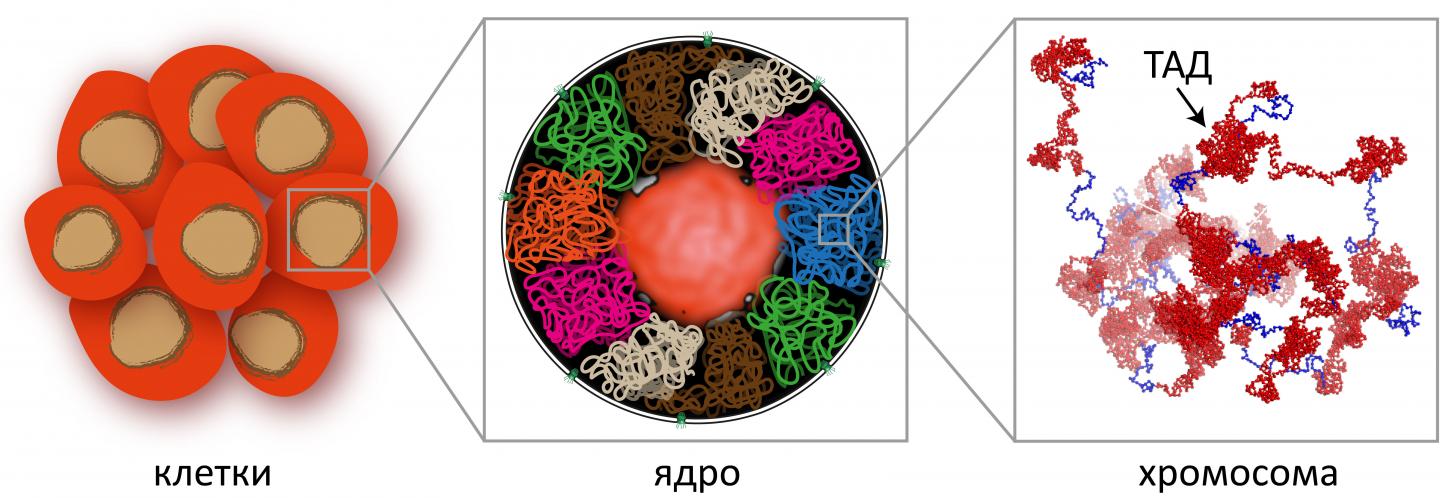
Location of topologically associated domains (TAD) in the cell nucleus is shown. Chromosome is a structure inside the cell nucleus that carries a large part of the genetic information and is responsible for its storage, transfer and implementation. Chromosome is formed from a very long DNA molecule - a double chain of a plurality of genes. Given that the diameter of the cell nucleus is usually around hundredth of a millimeter or even less, while the total length of DNA constituting human genome is about two meters, it is clear that DNA must be packaged very tightly.

| Molecular & Cell Biology | November 23, 2015 06:00 PM |
| Full story | 0 Comments | 6417 views |

| Microbiology | November 23, 2015 11:20 AM |
Migration between different communities of bacteria is the key to the type of gene transfer that can lead to the spread of traits such as antibiotic resistance, according to researchers at Oxford University.
| Full story | 0 Comments | 5958 views |

| Biology | November 23, 2015 11:20 AM |
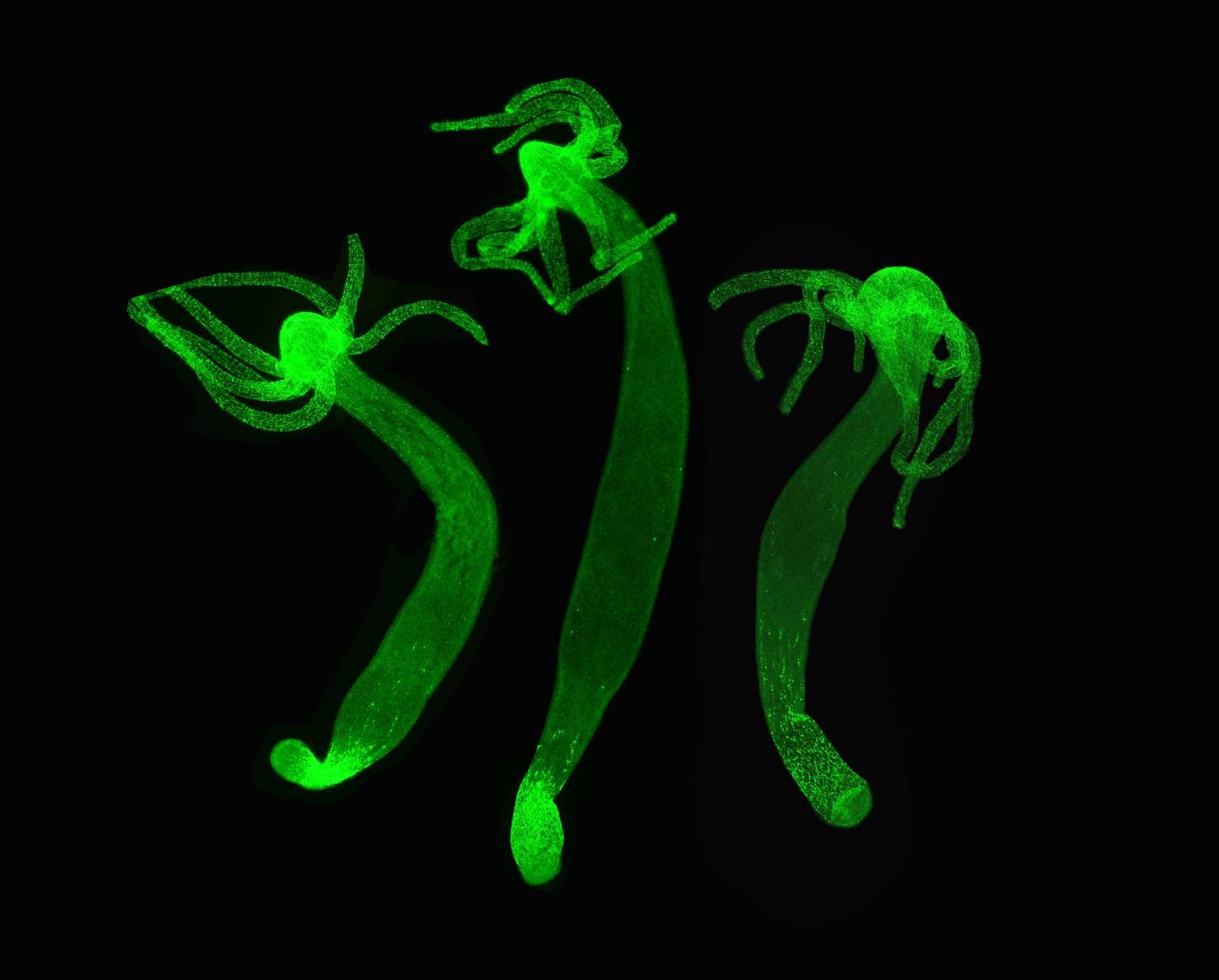
This image shows the nervous system of about 1 cm-long Hydra revealed here with a fluorescent green marker. Champion of regeneration, the freshwater polyp Hydra is capable of reforming a complete individual from any fragment of its body. It is even able to remain alive when all its neurons have disappeared. Researcher the University of Geneva (UNIGE), Switzerland, have discovered how: cells of the epithelial type modify their genetic program by overexpressing a series of genes, among which some are involved in diverse nervous functions. Studying Hydra cellular plasticity may thus influence research in the context of neurodegenerative diseases. The results are published in Philosophical Transactions of the Royal Society.
| Full story | 0 Comments | 7653 views |

- In some genetic cases of microcephaly, stem cells fail to launch
- Yale team discovers how Zika virus causes fetal brain damage
- Scientists uncover the way a common cell enzyme alerts the body to invading bacteria
- Arctic gives clues on worst mass extinction of life
- Calcium channel blockers caught in the act at atomic level
Search Bio News Net
Free Biology Newsletter
- Flexibility That A.C.A. Lent to Work Force Is Threatened by...International Herald Tribune
- Bacteria Behind Legionnaires’ Disease Found at New York Police StationInternational Herald Tribune
- Prescription Price Crisis? 28 Million Americans See Spike in Drug...MSNBC.com: Health
- Seizing on Opioid Crisis, a Drug Maker Lobbies Hard for...International Herald Tribune
- Republicans are taking a big political risk on health careAP Health News
- Why We're So Divided Over Saving WolvesNational Geographic News