


A blood-borne molecule that increases in abundance as we age blocks regeneration of brain cells and promotes cognitive decline, suggests a new study by researchers at UC San Francisco and Stanford School of Medicine.

| Bioinformatics | July 6, 2015 06:12 PM |

These are woolly mammoths. Evolutionary change in a gene resurrected in the lab from the extinct woolly mammoth altered the gene's temperature sensitivity and likely was part of a suite of adaptations that allowed the mammoth to survive in harsh arctic environments, according to new research. In a study published in Cell Reports on July 2, 2015, researchers determined the whole-genome sequence of two woolly mammoths and three modern Asian elephants, predicted the function of genetic changes found only in the mammoths, and then experimentally validated the function of a woolly mammoth gene reconstructed in the lab. The research team includes scientists from Penn State University, Nanyang Technological University in Singapore, and the University of Chicago.
| Full story | 0 Comments | 5714 views |

| Molecular & Cell Biology | July 6, 2015 06:12 PM |
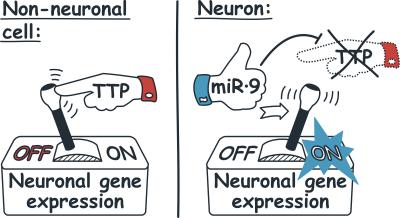
This image shows TTP activation of neuronal gene expression. The human organism contains hundreds of distinct cell types that often differ from their neighbours in shape and function. To acquire and maintain its characteristic features, each cell type must express a unique subset of genes. Neurons, the functional units of our brain, develop through differentiation of neuronal precursors, a process that depends on coordinated activation of hundreds and possibly thousands of neuron-specific genes.
| Full story | 0 Comments | 4318 views |

- In some genetic cases of microcephaly, stem cells fail to launch
- Yale team discovers how Zika virus causes fetal brain damage
- Scientists uncover the way a common cell enzyme alerts the body to invading bacteria
- Arctic gives clues on worst mass extinction of life
- Calcium channel blockers caught in the act at atomic level
Search Bio News Net
Free Biology Newsletter
- Flexibility That A.C.A. Lent to Work Force Is Threatened by...International Herald Tribune
- Bacteria Behind Legionnaires’ Disease Found at New York Police StationInternational Herald Tribune
- Prescription Price Crisis? 28 Million Americans See Spike in Drug...MSNBC.com: Health
- Seizing on Opioid Crisis, a Drug Maker Lobbies Hard for...International Herald Tribune
- Republicans are taking a big political risk on health careAP Health News
- Why We're So Divided Over Saving WolvesNational Geographic News