

Neurons are a limited commodity; each of us goes through life with essentially the same set we had at birth. But these cells, whose electrical signals drive our thoughts, perceptions, and actions, are anything but static. They change and adapt in response to experience throughout our lifetimes, a process better known as learning.

| AIDS & HIV | July 2, 2015 04:17 AM |
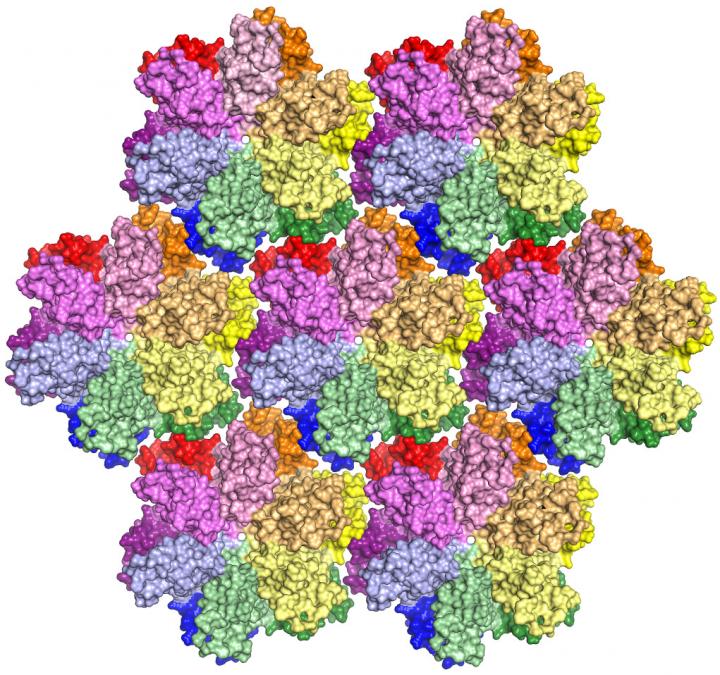
The HIV capsid protein plays a critical role in the virus' life cycle. Mizzou researchers recently developed the most complete model yet of this vital protein. HIV, or human immunodeficiency virus, is the retrovirus that leads to acquired immunodeficiency syndrome or AIDS. Globally, about 35 million people are living with HIV, which constantly adapts and mutates creating challenges for researchers. Now, scientists at the University of Missouri are gaining a clearer idea of what a key protein in HIV looks like, which will help explain its vital role in the virus' life cycle. Armed with this clearer image of the protein, researchers hope to gain a better understanding of how the body can combat the virus with the ultimate aim of producing new and more effective antiviral drugs.
| Full story | 0 Comments | 7802 views |

| Molecular & Cell Biology | July 2, 2015 04:17 AM |
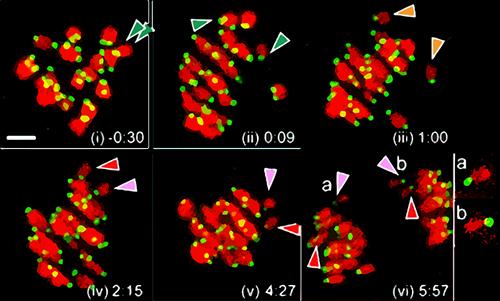
Chromosomes are seen as red, and kinetochores are green. (A-B) Bivalent appears normal (green arrows). (C) Bivalent begins to hyperstretch (orange arrows). When egg cells form with an incorrect number of chromosomes--a problem that increases with age--the result is usually a miscarriage or a genetic disease such as Down syndrome. Now, researchers at the RIKEN Center for Developmental Biology in Japan have used a novel imaging technique to pinpoint a significant event that leads to these types of age-related chromosomal errors. Published in Nature Communications, the study shows that as egg cells mature in older women, paired copies of matching chromosomes often separate from each other at the wrong time, leading to early division of chromosomes and their incorrect segregation into mature egg cells.
| Full story | 0 Comments | 5192 views |

- In some genetic cases of microcephaly, stem cells fail to launch
- Yale team discovers how Zika virus causes fetal brain damage
- Scientists uncover the way a common cell enzyme alerts the body to invading bacteria
- Arctic gives clues on worst mass extinction of life
- Calcium channel blockers caught in the act at atomic level
Search Bio News Net
Free Biology Newsletter
- Flexibility That A.C.A. Lent to Work Force Is Threatened by...International Herald Tribune
- Bacteria Behind Legionnaires’ Disease Found at New York Police StationInternational Herald Tribune
- Prescription Price Crisis? 28 Million Americans See Spike in Drug...MSNBC.com: Health
- Seizing on Opioid Crisis, a Drug Maker Lobbies Hard for...International Herald Tribune
- Republicans are taking a big political risk on health careAP Health News
- Why We're So Divided Over Saving WolvesNational Geographic News